Independent writing on tax-smart planning, mortgage strategy, and retirement building. For Canadian professionals who want the whole picture, not just a piece of it.
Why Every Proposed Fix to Canada's Tax Code Creates Three New Problems
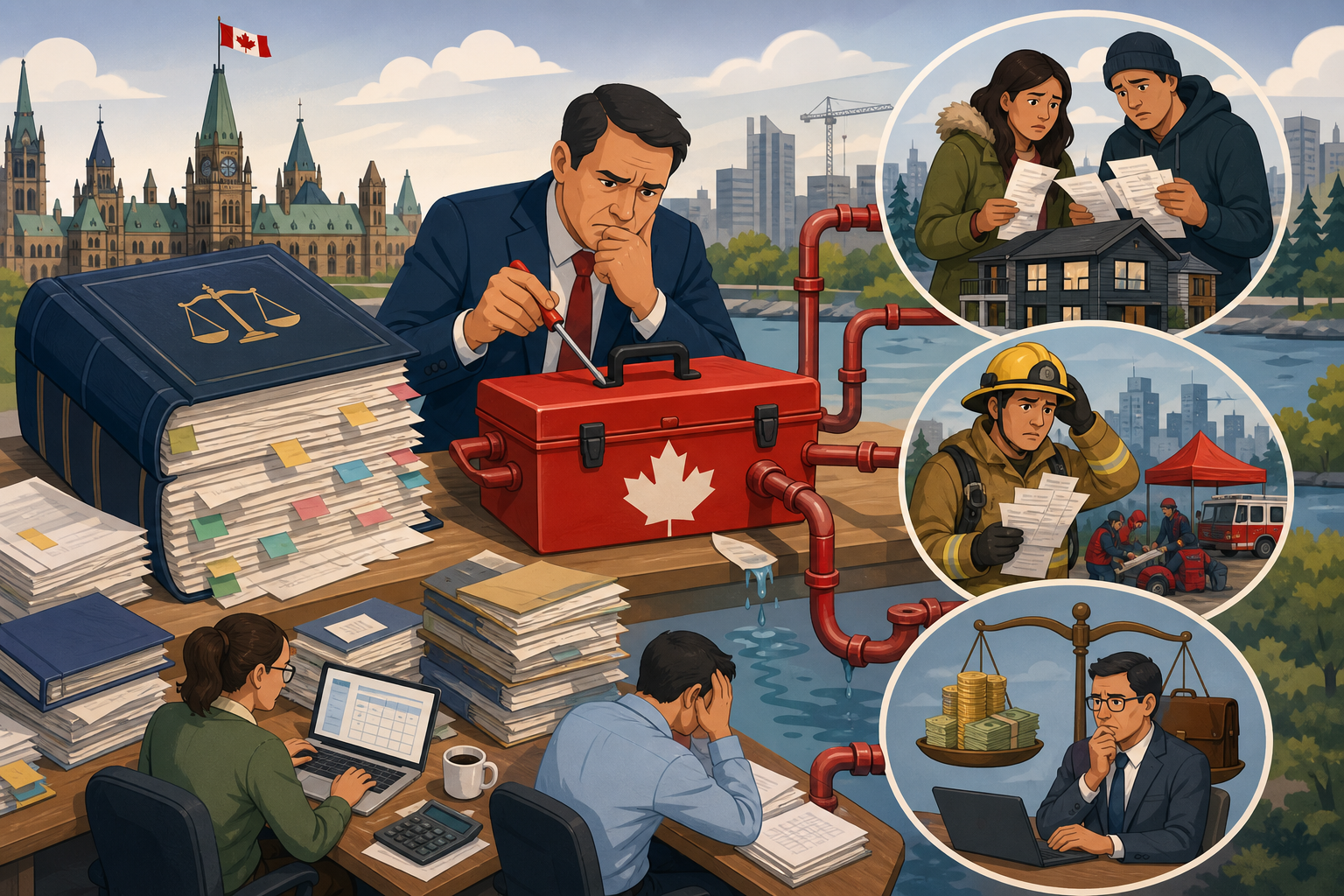
The Income Tax Act has grown from 424 pages in 1970 to over 3,000 pages today without a single comprehensive structural review. The last time anyone reimagined the system from first principles was the Carter Commission in 1966. Everything since has been additions, patches, and workarounds.
Ottawa calls this situation a priority. Tax reform gets announced every few years, usually with language about simplification and fairness. The announcements produce task forces, consultations, and eventually a handful of targeted changes that leave the core structure untouched. The Alternative Minimum Tax got revamped in 2024. The capital gains inclusion rate, after being proposed in Budget 2024 and deferred, took effect January 1, 2026 at 66.67% for corporations and trusts, and for individuals on gains over $250,000. Neither move simplified anything. Both added layers.
The boutique credit trap
The obvious fix is to eliminate tax expenditures, credits and deductions that cost the federal government billions annually in foregone revenue. Flatten the base, lower the rates, make the math cleaner. That's the textbook answer. It breaks the moment you name a specific credit to cut.
Take the first-time homebuyer credit. It's worth maybe $750 to someone buying a $500,000 house. Not life-changing. But it's visible, popular, and any government that removes it will face attack ads showing young families locked out of homeownership. The volunteer firefighter credit costs even less and benefits fewer people, but cutting it means explaining why you're punishing rural communities. Every boutique credit has a constituency. None of them will thank you for a two-percentage-point rate drop in exchange.
The cruel irony is that these credits often hurt the people they're meant to help. A low-income household may not have the resources to claim them, no accountant, no software, no time to track receipts. The result is a tax code that appears progressive but operates regressively, delivering its benefits to those organized enough to extract them.
Federal-provincial coordination hell
Even if Ottawa found the political will to rewrite the Income Tax Act, most provinces use the federal definition of taxable income as their starting point. Quebec runs its own system. Everyone else piggybacks. A major federal overhaul forces every province to rewrite its own legislation, recalibrate its budgets, and defend the changes to its own electorate. That's nine separate legislative battles happening at once, with no guarantee the provinces arrive at compatible answers.
Yukon's first income tax bracket rate is 6.4%. Any federal change that shifts what counts as "taxable income" moves the provincial revenue base without the province's consent. No finance minister will tolerate that quietly. The result is a veto dynamic where federal ambition runs into provincial resistance, and the compromise is usually to do less.
The compliance cost blind spot
Small businesses spend over $2,000 per year on average just to comply with federal and provincial tax filings, according to the Canadian Federation of Independent Business. That's not tax paid, that's hours burned on paperwork, software, and professional fees. A simplified code would act as a hidden productivity subsidy, freeing up time and money for actual business activity.
But simplification requires deciding what counts as business income, what qualifies as an expense, and where the line sits between an employee and an independent contractor. The gig economy has outpaced the Income Tax Act's definitions, and the Canada Revenue Agency is still litigating cases using frameworks written for factory workers. Any attempt to clarify these definitions creates immediate winners and losers. Uber drivers want contractor status for flexibility. The CRA wants employee status for withholding. There is no version of this rule that makes both sides happy.
What gets called reform
Real reform would mean returning to the Carter Commission's principle: a buck is a buck, regardless of source. No preferential treatment for dividends, capital gains, or employment income. Widen the base, flatten the structure, auto-fill the returns, and let the CRA stop chasing gaps.
That reform is technically possible. It would cut compliance costs, reduce the tax gap, and eliminate the hours businesses waste navigating exemptions. It will not happen. The industry that exists to navigate complexity, accountants, tax lawyers, software developers, has no incentive to simplify itself out of existence. The voters who benefit from niche credits will defend them louder than the majority who'd gain from lower rates. And the provinces will not hand Ottawa control over their revenue base without a fight.
What we'll get instead is another task force, another round of consultations, and eventually a few targeted tweaks that add pages rather than removing them. The code will grow. Compliance costs will rise. And in another decade, someone will propose reform again.



The Income Tax Act has grown from 424 pages in 1970 to over 3,000 pages today without a single comprehensive structural review. The last time anyone reimagined the system from first principles was the Carter Commission in 1966. Everything since has been additions, patches, and workarounds.
Ottawa calls this situation a priority. Tax reform gets announced every few years, usually with language about simplification and fairness. The announcements produce task forces, consultations, and eventually a handful of targeted changes that leave the core structure untouched. The Alternative Minimum Tax got revamped in 2024. The capital gains inclusion rate, after being proposed in Budget 2024 and deferred, took effect January 1, 2026 at 66.67% for corporations and trusts, and for individuals on gains over $250,000. Neither move simplified anything. Both added layers.
The boutique credit trap
The obvious fix is to eliminate tax expenditures, credits and deductions that cost the federal government billions annually in foregone revenue. Flatten the base, lower the rates, make the math cleaner. That's the textbook answer. It breaks the moment you name a specific credit to cut.
Take the first-time homebuyer credit. It's worth maybe $750 to someone buying a $500,000 house. Not life-changing. But it's visible, popular, and any government that removes it will face attack ads showing young families locked out of homeownership. The volunteer firefighter credit costs even less and benefits fewer people, but cutting it means explaining why you're punishing rural communities. Every boutique credit has a constituency. None of them will thank you for a two-percentage-point rate drop in exchange.
The cruel irony is that these credits often hurt the people they're meant to help. A low-income household may not have the resources to claim them, no accountant, no software, no time to track receipts. The result is a tax code that appears progressive but operates regressively, delivering its benefits to those organized enough to extract them.
Federal-provincial coordination hell
Even if Ottawa found the political will to rewrite the Income Tax Act, most provinces use the federal definition of taxable income as their starting point. Quebec runs its own system. Everyone else piggybacks. A major federal overhaul forces every province to rewrite its own legislation, recalibrate its budgets, and defend the changes to its own electorate. That's nine separate legislative battles happening at once, with no guarantee the provinces arrive at compatible answers.
Yukon's first income tax bracket rate is 6.4%. Any federal change that shifts what counts as "taxable income" moves the provincial revenue base without the province's consent. No finance minister will tolerate that quietly. The result is a veto dynamic where federal ambition runs into provincial resistance, and the compromise is usually to do less.
The compliance cost blind spot
Small businesses spend over $2,000 per year on average just to comply with federal and provincial tax filings, according to the Canadian Federation of Independent Business. That's not tax paid, that's hours burned on paperwork, software, and professional fees. A simplified code would act as a hidden productivity subsidy, freeing up time and money for actual business activity.
But simplification requires deciding what counts as business income, what qualifies as an expense, and where the line sits between an employee and an independent contractor. The gig economy has outpaced the Income Tax Act's definitions, and the Canada Revenue Agency is still litigating cases using frameworks written for factory workers. Any attempt to clarify these definitions creates immediate winners and losers. Uber drivers want contractor status for flexibility. The CRA wants employee status for withholding. There is no version of this rule that makes both sides happy.
What gets called reform
Real reform would mean returning to the Carter Commission's principle: a buck is a buck, regardless of source. No preferential treatment for dividends, capital gains, or employment income. Widen the base, flatten the structure, auto-fill the returns, and let the CRA stop chasing gaps.
That reform is technically possible. It would cut compliance costs, reduce the tax gap, and eliminate the hours businesses waste navigating exemptions. It will not happen. The industry that exists to navigate complexity, accountants, tax lawyers, software developers, has no incentive to simplify itself out of existence. The voters who benefit from niche credits will defend them louder than the majority who'd gain from lower rates. And the provinces will not hand Ottawa control over their revenue base without a fight.
What we'll get instead is another task force, another round of consultations, and eventually a few targeted tweaks that add pages rather than removing them. The code will grow. Compliance costs will rise. And in another decade, someone will propose reform again.
Sources
Read Next
The 2027 Housing Recovery in Canada Runs Through Business Investment
A Small Cut to 0.9% Growth Points to Canada's Longer Problem
Ottawa Already Holds the Income Data That Could Curb Mortgage Fraud
Ferries, Septic and Storm Insurance: What a Vancouver Island Cottage Really Costs Yearly