Independent writing on tax-smart planning, mortgage strategy, and retirement building. For Canadian professionals who want the whole picture, not just a piece of it.
Trade wars end when voters punish governments, not when diplomats shake hands
Trade wars end when voters punish governments, not when diplomats shake hands
The last time Washington slapped 50 percent tariffs on Canadian steel, the retaliation list Canada drew up had one job: hurt the right congressional districts. Bourbon from Kentucky. Orange juice from Florida. Playing cards from Ohio. The arithmetic was simple. Make enough voters in swing states feel the squeeze, and the phone calls to Capitol Hill start. Six months later, the tariffs were gone.
That's how these things actually finish. Not with a joint statement in Brussels. With grocery bills.
The domestic cost curve always wins
Tariffs are a tax on your own consumers. Steel gets more expensive, so cars cost more, so voters complain. The political shelf life of a tariff is roughly equal to the time it takes for those complaints to outnumber the applause from the protected industry. In the case of broad tariffs on a trade partner as integrated as Canada, where $3.6 billion in goods crosses the border daily, that shelf life is measured in months.
The 2026 CUSMA review clause gives Washington a formal reason to threaten tariffs. But the structure underneath the threat hasn't changed. Canada supplies approximately 60 percent of U.S. crude oil imports. Canadian energy keeps refineries running in the Midwest. Aluminum from Quebec goes into Ford plants in Michigan. The supply chain is so tangled that a sustained tariff regime would cost American manufacturers more than it punishes Canadian exporters. Eventually, those manufacturers call their representatives. The representatives call the White House. The tariff threat gets quietly shelved or "renegotiated" into something cosmetic.
This isn't speculation. It's the pattern from every prior round. The softwood lumber dispute. The 2018 steel and aluminum tariffs. The dairy access fights. Each one followed the same arc: loud opening threats, targeted Canadian retaliation, rising costs for U.S. businesses, domestic pressure, negotiated exit.
Retaliation isn't diplomacy, it's constituency math
Canada's C$29.8 billion retaliation package in March 2025 wasn't designed to hurt the U.S. economy in aggregate. It was designed to hurt specific voters in specific districts where specific members of Congress needed those voters next cycle. That's the actual negotiating table. Not Geneva. Not a summit. A narrow list of American products chosen because their producers have the power to move a senator.
The mistake people make is thinking these retaliations are symbolic. They're surgical. Canada doesn't have the GDP to fight a trade war by volume. It has 71.7 percent (as of October 2025) of its exports going to one buyer. But that buyer is a democracy where elected officials respond to pain felt at home, and Canada has spent decades mapping which products cause that pain in which postal codes.
The counter-move isn't a better diplomatic argument. It's making Ohio manufacturers of electrical components explain to their workforce why orders from Canada just stopped, two quarters before a close House race.
What actually changes
The era of frictionless trade is over. Both parties in Washington have moved toward protectionism. The protection is transactional: tariffs get used as leverage for non-trade concessions like border security, defense spending, and critical mineral access. That makes each fight shorter but more frequent.
For Canadian businesses, this means the six-to-twelve month disruption window is the new normal. Small exporters without the capital to weather that gap are the ones who get hurt permanently, even when the tariff itself gets rolled back. The trade war ends. The casualty list doesn't.
The 2026 threat will follow the same script. Tariffs announced. Retaliation targeted. U.S. domestic costs rise. Midterm pressure builds. Deal gets cut. But the next one is already being teed up, because the political incentive structure in Washington hasn't changed. Tariffs poll well until they don't. The timing is predictable. The voters always figure it out.


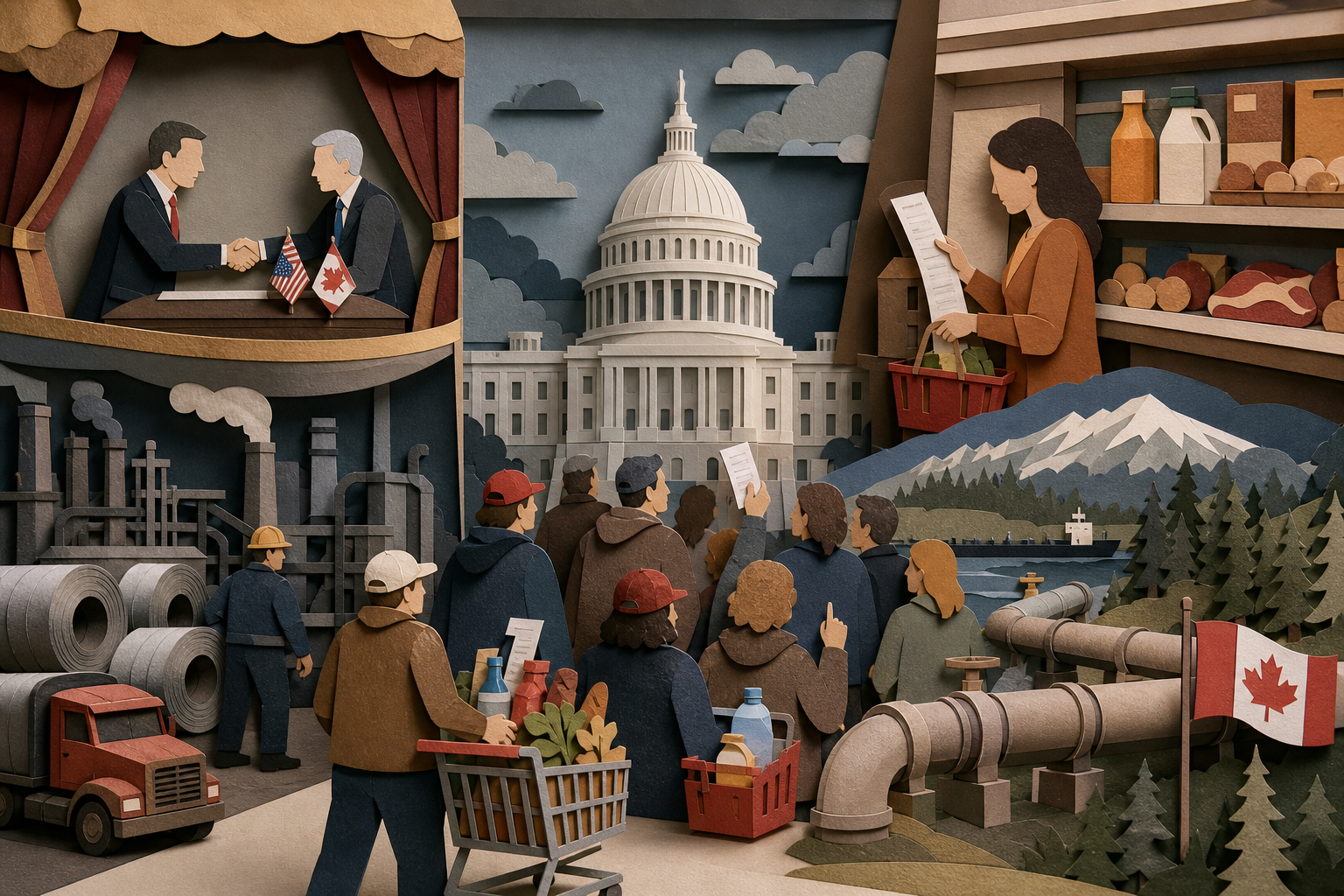

Trade wars end when voters punish governments, not when diplomats shake hands
The last time Washington slapped 50 percent tariffs on Canadian steel, the retaliation list Canada drew up had one job: hurt the right congressional districts. Bourbon from Kentucky. Orange juice from Florida. Playing cards from Ohio. The arithmetic was simple. Make enough voters in swing states feel the squeeze, and the phone calls to Capitol Hill start. Six months later, the tariffs were gone.
That's how these things actually finish. Not with a joint statement in Brussels. With grocery bills.
The domestic cost curve always wins
Tariffs are a tax on your own consumers. Steel gets more expensive, so cars cost more, so voters complain. The political shelf life of a tariff is roughly equal to the time it takes for those complaints to outnumber the applause from the protected industry. In the case of broad tariffs on a trade partner as integrated as Canada, where $3.6 billion in goods crosses the border daily, that shelf life is measured in months.
The 2026 CUSMA review clause gives Washington a formal reason to threaten tariffs. But the structure underneath the threat hasn't changed. Canada supplies approximately 60 percent of U.S. crude oil imports. Canadian energy keeps refineries running in the Midwest. Aluminum from Quebec goes into Ford plants in Michigan. The supply chain is so tangled that a sustained tariff regime would cost American manufacturers more than it punishes Canadian exporters. Eventually, those manufacturers call their representatives. The representatives call the White House. The tariff threat gets quietly shelved or "renegotiated" into something cosmetic.
This isn't speculation. It's the pattern from every prior round. The softwood lumber dispute. The 2018 steel and aluminum tariffs. The dairy access fights. Each one followed the same arc: loud opening threats, targeted Canadian retaliation, rising costs for U.S. businesses, domestic pressure, negotiated exit.
Retaliation isn't diplomacy, it's constituency math
Canada's C$29.8 billion retaliation package in March 2025 wasn't designed to hurt the U.S. economy in aggregate. It was designed to hurt specific voters in specific districts where specific members of Congress needed those voters next cycle. That's the actual negotiating table. Not Geneva. Not a summit. A narrow list of American products chosen because their producers have the power to move a senator.
The mistake people make is thinking these retaliations are symbolic. They're surgical. Canada doesn't have the GDP to fight a trade war by volume. It has 71.7 percent (as of October 2025) of its exports going to one buyer. But that buyer is a democracy where elected officials respond to pain felt at home, and Canada has spent decades mapping which products cause that pain in which postal codes.
The counter-move isn't a better diplomatic argument. It's making Ohio manufacturers of electrical components explain to their workforce why orders from Canada just stopped, two quarters before a close House race.
What actually changes
The era of frictionless trade is over. Both parties in Washington have moved toward protectionism. The protection is transactional: tariffs get used as leverage for non-trade concessions like border security, defense spending, and critical mineral access. That makes each fight shorter but more frequent.
For Canadian businesses, this means the six-to-twelve month disruption window is the new normal. Small exporters without the capital to weather that gap are the ones who get hurt permanently, even when the tariff itself gets rolled back. The trade war ends. The casualty list doesn't.
The 2026 threat will follow the same script. Tariffs announced. Retaliation targeted. U.S. domestic costs rise. Midterm pressure builds. Deal gets cut. But the next one is already being teed up, because the political incentive structure in Washington hasn't changed. Tariffs poll well until they don't. The timing is predictable. The voters always figure it out.
Sources
Read Next
A Small Cut to 0.9% Growth Points to Canada's Longer Problem
Ottawa Already Holds the Income Data That Could Curb Mortgage Fraud
Ferries, Septic and Storm Insurance: What a Vancouver Island Cottage Really Costs Yearly
Six Bulk Buyers Took 339 Toronto Condos at 40% Off: Their Risk Checklist