Independent writing on tax-smart planning, mortgage strategy, and retirement building. For Canadian professionals who want the whole picture, not just a piece of it.
Why Markets Shrugged Off U.S.-Iran Strikes: The Case for Calculated Indifference
The S&P/TSX Composite added 0.85% on Tuesday while the S&P 500 climbed 0.6%, which tells you something about what equity markets actually care about. Drone strikes and diplomatic escalation between Washington and Tehran generated headlines, but they didn't generate selling pressure. That disconnect isn't irrational optimism or wishful thinking. It's pattern recognition.
The Earnings Anchor
Corporate earnings season opens this week, and institutional money has already made its choice about what matters more. Analysts are projecting mid-single-digit growth for TSX companies in the current cycle, with energy and financials, roughly half the index, positioned to benefit from sustained oil premiums and a stable rate environment from the Bank of Canada. The conflict in the Middle East is geopolitical theatre. The quarterly results from the TSX 60 are forensic evidence of what the economy is actually doing.
Markets have seen this script before. Regional military tensions spark a 24-to-48-hour flight to quality, gold and bonds rally, then the mean reversion begins as soon as it becomes clear that the Strait of Hormuz remains open and semiconductor supply chains aren't threatened. WTI Crude typically adds a $5 to $10 per barrel "risk premium" during these episodes, which fades within days if no physical supply disruption materializes. That premium showed up on Monday. By Tuesday it was already compressing. The market has scar tissue from two decades of Middle Eastern friction that escalated in the headlines but not on the ground.
The Canadian Energy Paradox
Canada's market structure creates a perverse dynamic. Rising crude prices function as an involuntary stimulus for the energy sector, which accounts for a quarter of the TSX Composite. What hurts global consumers and transport costs simultaneously bolsters the earnings of Suncor, Cenovus, and Canadian Natural Resources. Advisors at iA Wealth noted that markets were "downplaying" the conflict, but that framing undersells the complexity. It's not that investors are ignoring the risk. It's that they're pricing in a net-zero effect: geopolitical instability lifts one half of the index while pressuring the other, and the energy weighting tilts the balance toward gains.
This is morally uncomfortable and financially rational. A 35-year-old in Toronto with a diversified portfolio benefits from escalating oil prices even as they pay more at the pump. The market isn't indifferent to human outcomes. It's just accounting for which ones show up in earnings.
What Actually Moves the Needle
The Bank of Canada is targeting 2% inflation and holding rates in what policymakers are now calling a "neutral" phase. That backdrop matters more for TSX valuations than anything happening in the Strait of Hormuz. Inflation expectations drive central bank policy, which governs discount rates, which set equity multiples. If geopolitical tension pushed crude to $120 per barrel and kept it there, inflation expectations would shift, the BoC's calculus would change, and then, only then, would the conflict become systematically relevant. Short of that scenario, it's noise.
Algorithmic trading amplifies the pattern. High-frequency programs trigger sell orders on initial headlines, causing the sharp drops you see in the first hour. Then "buy the dip" algorithms kick in on fundamental support levels, and the recovery is just as fast. The result is sharper intraday volatility but faster mean reversion than retail investors expect.
The Tail Risk Nobody Prices
The counterargument worth taking seriously is that calculated indifference can underestimate tail risk. A miscalculation that closes the Strait of Hormuz for more than a week would trigger an inflationary shock that quarterly earnings can't overcome. Roughly 20% of the world's crude passes through that corridor. Blocking it is low-probability, but it's not zero-probability, and the current market pricing reflects the former, not the latter.
Markets are calm because they've learned to distinguish between tension and disruption. That distinction has held for twenty years. The risk is that everyone has learned the same lesson at the same time, which is usually when the lesson stops working.


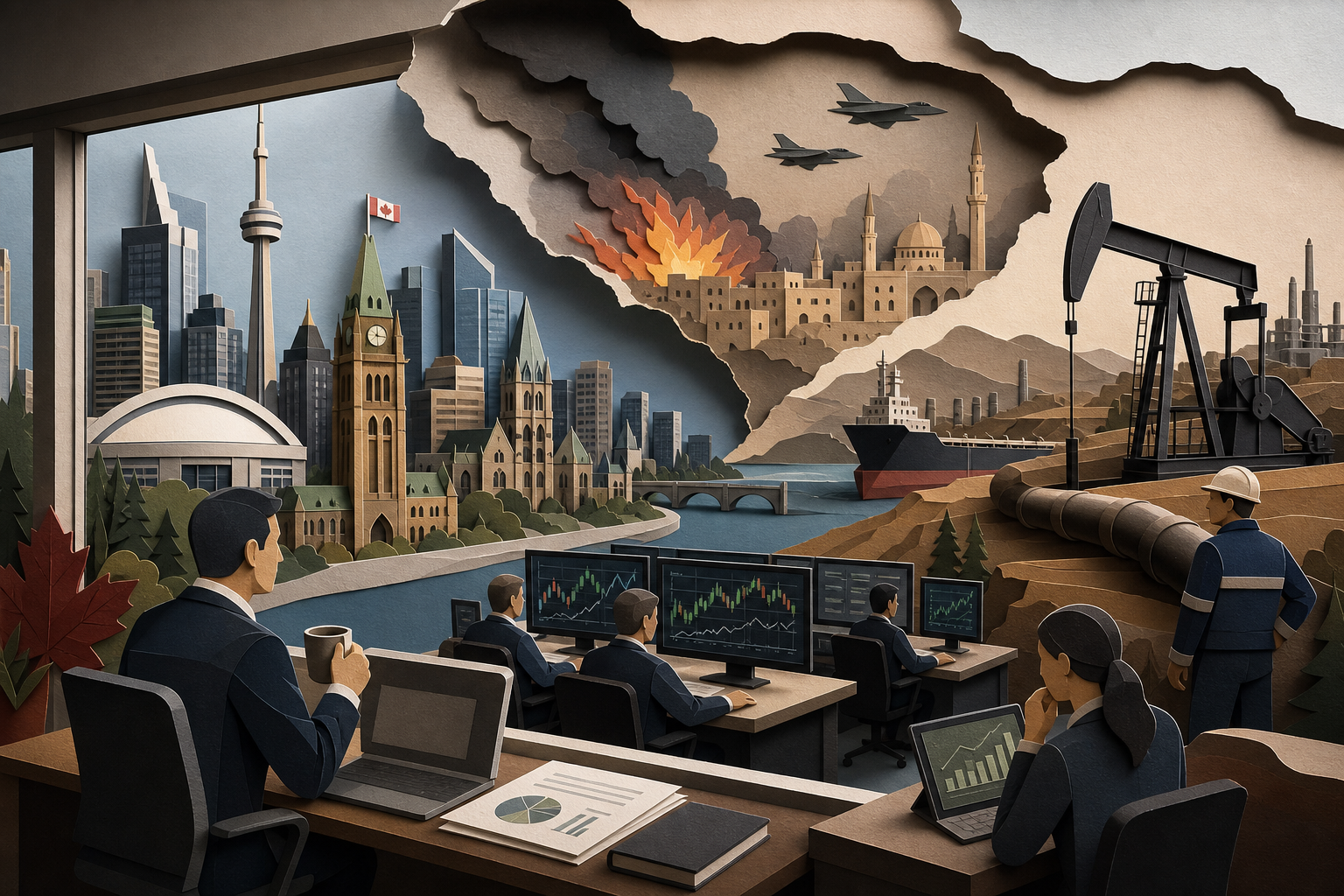

The S&P/TSX Composite added 0.85% on Tuesday while the S&P 500 climbed 0.6%, which tells you something about what equity markets actually care about. Drone strikes and diplomatic escalation between Washington and Tehran generated headlines, but they didn't generate selling pressure. That disconnect isn't irrational optimism or wishful thinking. It's pattern recognition.
The Earnings Anchor
Corporate earnings season opens this week, and institutional money has already made its choice about what matters more. Analysts are projecting mid-single-digit growth for TSX companies in the current cycle, with energy and financials, roughly half the index, positioned to benefit from sustained oil premiums and a stable rate environment from the Bank of Canada. The conflict in the Middle East is geopolitical theatre. The quarterly results from the TSX 60 are forensic evidence of what the economy is actually doing.
Markets have seen this script before. Regional military tensions spark a 24-to-48-hour flight to quality, gold and bonds rally, then the mean reversion begins as soon as it becomes clear that the Strait of Hormuz remains open and semiconductor supply chains aren't threatened. WTI Crude typically adds a $5 to $10 per barrel "risk premium" during these episodes, which fades within days if no physical supply disruption materializes. That premium showed up on Monday. By Tuesday it was already compressing. The market has scar tissue from two decades of Middle Eastern friction that escalated in the headlines but not on the ground.
The Canadian Energy Paradox
Canada's market structure creates a perverse dynamic. Rising crude prices function as an involuntary stimulus for the energy sector, which accounts for a quarter of the TSX Composite. What hurts global consumers and transport costs simultaneously bolsters the earnings of Suncor, Cenovus, and Canadian Natural Resources. Advisors at iA Wealth noted that markets were "downplaying" the conflict, but that framing undersells the complexity. It's not that investors are ignoring the risk. It's that they're pricing in a net-zero effect: geopolitical instability lifts one half of the index while pressuring the other, and the energy weighting tilts the balance toward gains.
This is morally uncomfortable and financially rational. A 35-year-old in Toronto with a diversified portfolio benefits from escalating oil prices even as they pay more at the pump. The market isn't indifferent to human outcomes. It's just accounting for which ones show up in earnings.
What Actually Moves the Needle
The Bank of Canada is targeting 2% inflation and holding rates in what policymakers are now calling a "neutral" phase. That backdrop matters more for TSX valuations than anything happening in the Strait of Hormuz. Inflation expectations drive central bank policy, which governs discount rates, which set equity multiples. If geopolitical tension pushed crude to $120 per barrel and kept it there, inflation expectations would shift, the BoC's calculus would change, and then, only then, would the conflict become systematically relevant. Short of that scenario, it's noise.
Algorithmic trading amplifies the pattern. High-frequency programs trigger sell orders on initial headlines, causing the sharp drops you see in the first hour. Then "buy the dip" algorithms kick in on fundamental support levels, and the recovery is just as fast. The result is sharper intraday volatility but faster mean reversion than retail investors expect.
The Tail Risk Nobody Prices
The counterargument worth taking seriously is that calculated indifference can underestimate tail risk. A miscalculation that closes the Strait of Hormuz for more than a week would trigger an inflationary shock that quarterly earnings can't overcome. Roughly 20% of the world's crude passes through that corridor. Blocking it is low-probability, but it's not zero-probability, and the current market pricing reflects the former, not the latter.
Markets are calm because they've learned to distinguish between tension and disruption. That distinction has held for twenty years. The risk is that everyone has learned the same lesson at the same time, which is usually when the lesson stops working.
Read Next
Ottawa Can Win Against Cleveland-Cliffs and Still Lose on Steel Tariffs
143,929 Approved Homes Sit Unbuilt: What Is Really Holding Back Canada's Supply
Northeastern PA or the Big City: What the Same Budget Buys in Each
7 Co-Ownership Agreements That Protect Both the Friendship and the Equity