Independent writing on tax-smart planning, mortgage strategy, and retirement building. For Canadian professionals who want the whole picture, not just a piece of it.
How a $49 Water Sensor Cut My Home Insurance Premium by 15%
I installed the device on a Tuesday morning in January 2024, called my insurer that afternoon, and had $340 knocked off my annual premium by Friday. The sensor itself cost $49 at Canadian Tire.
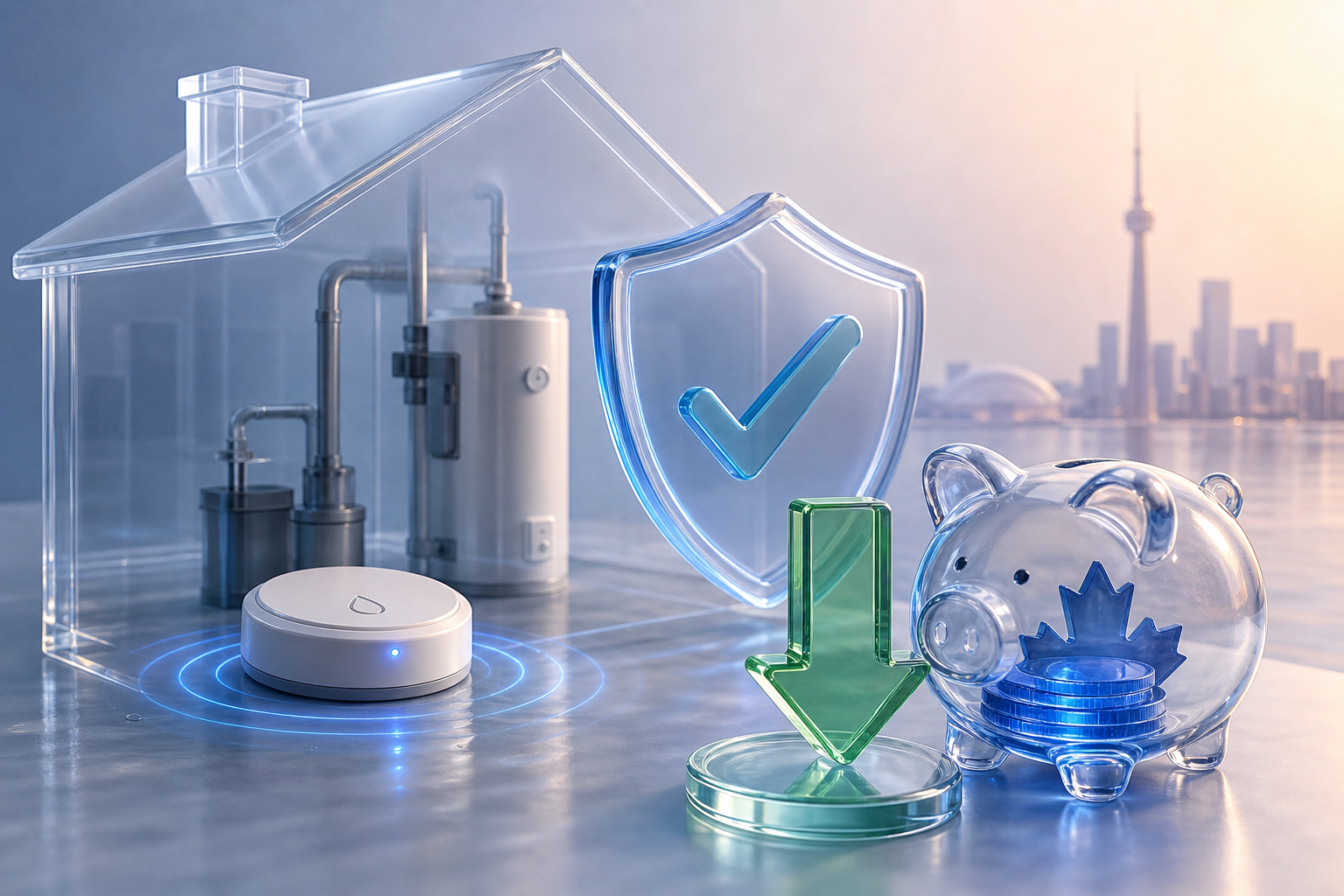
The device is a Flo by Moen water leak detector, a disc-shaped puck that sits on the basement floor near the sump pump and hot water tank. It pings my phone if it detects moisture. That's it. No subscription, no professional installation, no connection to a monitored system. Just a battery-powered sensor that yells when water appears where it shouldn't.
Why Insurers Care About Water More Than Fire
Water damage passed fire as the top source of home insurance claims in Canada three years ago. The average basement flood claim now runs over $40,000, driven by aging municipal infrastructure and more frequent extreme weather events. Insurers lose money on water claims at a higher rate than any other peril, which is why they're willing to discount premiums for homeowners who install early-warning systems.
My insurer, Aviva, though most of the major carriers now offer some version of this, classifies leak detectors as "loss prevention technology." The discount they applied was 15%, which on my $2,270 annual premium worked out to $340. The sensor paid for itself in seven weeks.
The key was calling them after installation with the make, model, and serial number. Some carriers require proof of purchase. Others want a photo showing the device in place. The discount doesn't auto-apply when you buy the hardware, you have to notify underwriting and ask for the policy amendment.
What Qualifies and What Doesn't
Not every smart home device triggers a discount. Video doorbells don't count. Neither do smart thermostats, despite what some fintech blogs claim. The two categories that consistently qualify across Canadian insurers are water leak detectors and monitored smoke alarms, specifically devices that send alerts to your phone or a third-party monitoring service.
Basic battery-operated smoke detectors, even the "smart" ones that link to an app but don't involve professional monitoring, usually don't qualify. The distinction matters. If the device only alerts people inside the home, it's consumer electronics. If it alerts you remotely or triggers a third-party response, it's prevention infrastructure.
Automatic water shut-off valves, the kind that physically close your main water line when a leak is detected, qualify for a larger discount, often 20-25%, but those systems run $600-$1,200 installed. The ROI is slower unless you're already renovating.
The Privacy Trade Nobody Mentions
Installing these devices means sharing data with your insurer. My policy amendment included a clause allowing Aviva to request proof the sensor is "active and functional" at renewal. In practice, that means they can ask for screenshots showing the device is still paired to my phone and reporting status.
Some carriers go further. Usage-based auto insurance programs, the ones that track your driving through an app or OBD-II dongle, now routinely share braking patterns, speeds, and trip times with underwriters. The home insurance equivalent isn't widespread yet, but the groundwork is being laid. You're not paying cash for the discount; you're paying with data access and the implicit agreement to maintain the device.
I'm comfortable with that trade for $340 a year. Someone else might not be. The calculation depends on how you value the privacy cost versus the financial return, and whether you trust your insurer to limit data use to underwriting rather than future rate adjustments.
What Changed After I Filed the Claim
None of this felt abstract eight months later when the sensor went off at 11 p.m. on a Wednesday. The hot water tank had developed a slow drip that pooled under the unit. I caught it before it spread to the drywall or soaked into the subfloor. A plumber came the next morning, replaced a corroded pressure relief valve, and billed me $280.
Without the sensor, I would have found the problem three days later when the smell started, or two weeks later when the drywall buckled. Either scenario turns into a claim that costs more than my annual premium and triggers a rate increase at renewal. The $49 device didn't just save me $340 upfront, it saved me from filing the kind of claim that doubles your premium for the next five years.



I installed the device on a Tuesday morning in January 2024, called my insurer that afternoon, and had $340 knocked off my annual premium by Friday. The sensor itself cost $49 at Canadian Tire.
The device is a Flo by Moen water leak detector, a disc-shaped puck that sits on the basement floor near the sump pump and hot water tank. It pings my phone if it detects moisture. That's it. No subscription, no professional installation, no connection to a monitored system. Just a battery-powered sensor that yells when water appears where it shouldn't.
Why Insurers Care About Water More Than Fire
Water damage passed fire as the top source of home insurance claims in Canada three years ago. The average basement flood claim now runs over $40,000, driven by aging municipal infrastructure and more frequent extreme weather events. Insurers lose money on water claims at a higher rate than any other peril, which is why they're willing to discount premiums for homeowners who install early-warning systems.
My insurer, Aviva, though most of the major carriers now offer some version of this, classifies leak detectors as "loss prevention technology." The discount they applied was 15%, which on my $2,270 annual premium worked out to $340. The sensor paid for itself in seven weeks.
The key was calling them after installation with the make, model, and serial number. Some carriers require proof of purchase. Others want a photo showing the device in place. The discount doesn't auto-apply when you buy the hardware, you have to notify underwriting and ask for the policy amendment.
What Qualifies and What Doesn't
Not every smart home device triggers a discount. Video doorbells don't count. Neither do smart thermostats, despite what some fintech blogs claim. The two categories that consistently qualify across Canadian insurers are water leak detectors and monitored smoke alarms, specifically devices that send alerts to your phone or a third-party monitoring service.
Basic battery-operated smoke detectors, even the "smart" ones that link to an app but don't involve professional monitoring, usually don't qualify. The distinction matters. If the device only alerts people inside the home, it's consumer electronics. If it alerts you remotely or triggers a third-party response, it's prevention infrastructure.
Automatic water shut-off valves, the kind that physically close your main water line when a leak is detected, qualify for a larger discount, often 20-25%, but those systems run $600-$1,200 installed. The ROI is slower unless you're already renovating.
The Privacy Trade Nobody Mentions
Installing these devices means sharing data with your insurer. My policy amendment included a clause allowing Aviva to request proof the sensor is "active and functional" at renewal. In practice, that means they can ask for screenshots showing the device is still paired to my phone and reporting status.
Some carriers go further. Usage-based auto insurance programs, the ones that track your driving through an app or OBD-II dongle, now routinely share braking patterns, speeds, and trip times with underwriters. The home insurance equivalent isn't widespread yet, but the groundwork is being laid. You're not paying cash for the discount; you're paying with data access and the implicit agreement to maintain the device.
I'm comfortable with that trade for $340 a year. Someone else might not be. The calculation depends on how you value the privacy cost versus the financial return, and whether you trust your insurer to limit data use to underwriting rather than future rate adjustments.
What Changed After I Filed the Claim
None of this felt abstract eight months later when the sensor went off at 11 p.m. on a Wednesday. The hot water tank had developed a slow drip that pooled under the unit. I caught it before it spread to the drywall or soaked into the subfloor. A plumber came the next morning, replaced a corroded pressure relief valve, and billed me $280.
Without the sensor, I would have found the problem three days later when the smell started, or two weeks later when the drywall buckled. Either scenario turns into a claim that costs more than my annual premium and triggers a rate increase at renewal. The $49 device didn't just save me $340 upfront, it saved me from filing the kind of claim that doubles your premium for the next five years.
Read Next
Ottawa Can Win Against Cleveland-Cliffs and Still Lose on Steel Tariffs
143,929 Approved Homes Sit Unbuilt: What Is Really Holding Back Canada's Supply
Northeastern PA or the Big City: What the Same Budget Buys in Each
7 Co-Ownership Agreements That Protect Both the Friendship and the Equity