Independent writing on tax-smart planning, mortgage strategy, and retirement building. For Canadian professionals who want the whole picture, not just a piece of it.
What a 50% US Tariff Actually Costs Canada: Beyond the Headline Number
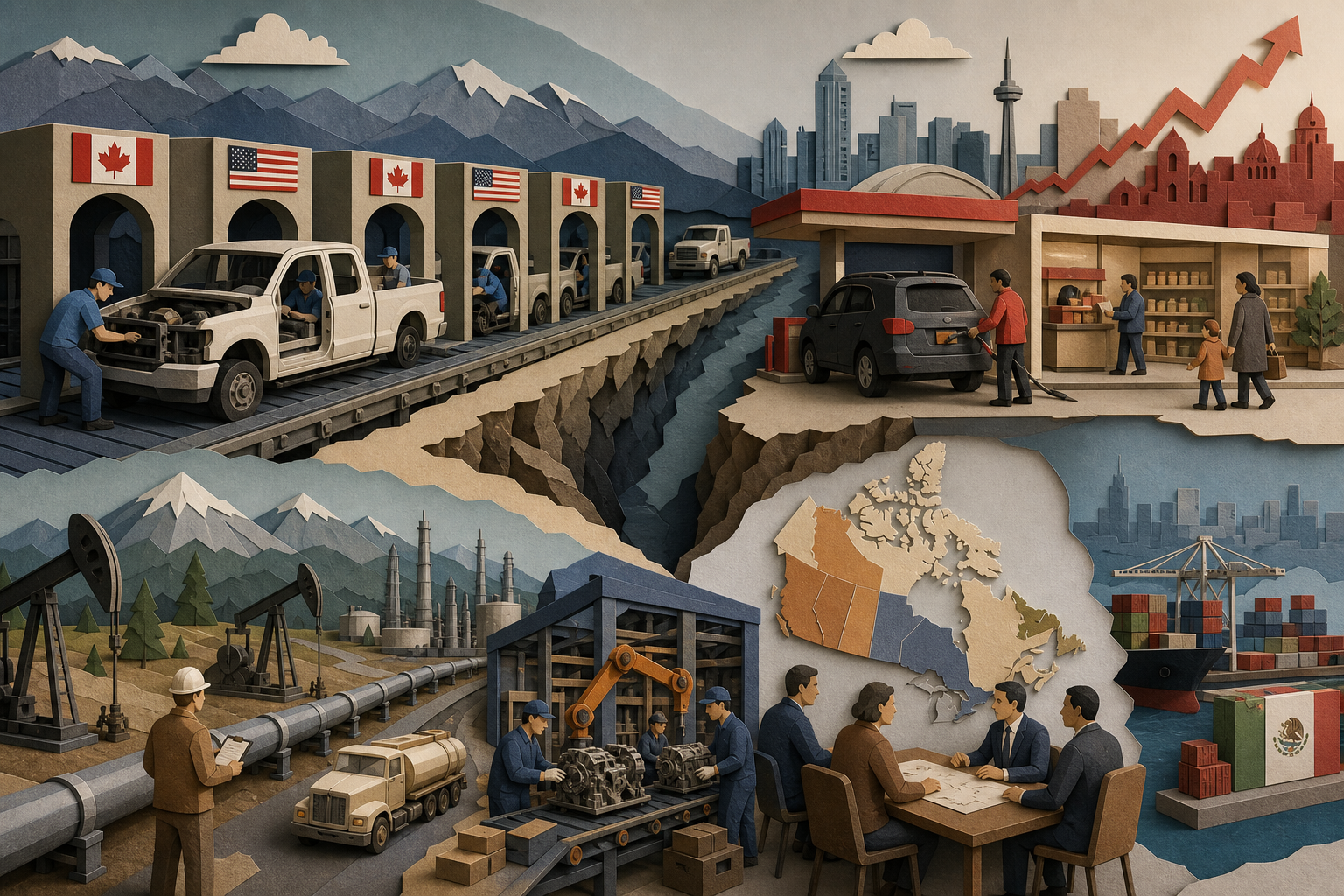
The Ford F-150 crosses the Canada-US border six times during assembly. Each crossing now triggers a 50% levy. The truck that cost $52,000 last year is heading toward $78,000, and that's before the dealership adds markup.
The Trump administration's announcement of a 50% tariff on Canadian exports is being reported as trade policy. It's actually a redesign of the price structure for the North American economy. The number that matters isn't the tariff rate. It's the multiplier effect once you account for how many times the same component gets taxed as it moves through an integrated supply chain.
The real math is in the crossings
Take Alberta crude. Canada supplies roughly 60% of total US oil imports. A barrel crosses once, gets refined in Texas or Oklahoma, then crosses back as gasoline to fill stations in Ontario or Manitoba. Under the old framework, that round trip happened inside a free-trade zone. Now it's two separate taxable events at 50% each.
A $70 barrel becomes $105 at the border. Refined into gasoline and shipped back, the US refinery is working with a $105 input cost, which flows directly into the pump price on both sides of the border. Canada doesn't avoid the hit by being the exporter. Canadians buy the refined product at the post-tariff price.
Energy gets taxed twice. Automotive parts get taxed six times. A single vehicle contains components that were forged in Hamilton, machined in Michigan, assembled in Windsor, fitted with electronics in Ohio, and shipped to a final assembly plant in Kentucky. The 50% tariff applies at each border crossing because the tariff is on the good at the time of crossing, not the final sale. Automakers spent three decades optimizing for logistics cost and speed. That optimization assumed the border was invisible. It no longer is.
What breaks first
The automotive sector doesn't have a plan B. Moving an assembly line takes 18-24 months and roughly $1 billion per plant. Manufacturers can't wait out a negotiation when their margins are erased in four months.
Ontario's manufacturing base is the obvious casualty, but Alberta's energy sector is structurally worse off. Oil is priced globally, so Canadian producers can't pass the tariff to the buyer. The tariff is simply a 50% cut to the netback price Alberta producers receive. At $70 WTI, a 50% tariff turns a $12/barrel profit margin into a $23/barrel loss. The sector shuts in production, not because demand disappears, but because the math stops working.
Lumber follows the same path. British Columbia ships roughly $8 billion in softwood to the US annually. A 50% tariff doesn't reduce US demand for lumber, it raises the price American builders pay and destroys the margin Canadian mills operate on. If the mill can't pass the cost through, it closes. If it does pass the cost through, US housing starts fall and the volume disappears anyway.
The inflation no one's pricing in
The US doesn't avoid the cost by being the tariff collector. Gasoline that was $3.20/gallon in Michigan is heading toward $4.80/gallon once refineries work through current inventory. Lumber that framers were buying at $420 per thousand board feet will push past $630. The F-150 that moved 900,000 units in 2024 at an average transaction price near $52,000 will be lucky to move 500,000 units at $78,000.
This isn't a revenue policy. It's a price shock large enough to show up in the core CPI within 90 days. The Trump administration is treating this as leverage for a CUSMA renegotiation. The leverage only works if Canada capitulates before the US consumer realizes their cost of living just jumped 8-12% on energy, autos, and housing materials. That timeline is roughly four months. If Canada holds past that, the political pressure flips domestic.



The Ford F-150 crosses the Canada-US border six times during assembly. Each crossing now triggers a 50% levy. The truck that cost $52,000 last year is heading toward $78,000, and that's before the dealership adds markup.
The Trump administration's announcement of a 50% tariff on Canadian exports is being reported as trade policy. It's actually a redesign of the price structure for the North American economy. The number that matters isn't the tariff rate. It's the multiplier effect once you account for how many times the same component gets taxed as it moves through an integrated supply chain.
The real math is in the crossings
Take Alberta crude. Canada supplies roughly 60% of total US oil imports. A barrel crosses once, gets refined in Texas or Oklahoma, then crosses back as gasoline to fill stations in Ontario or Manitoba. Under the old framework, that round trip happened inside a free-trade zone. Now it's two separate taxable events at 50% each.
A $70 barrel becomes $105 at the border. Refined into gasoline and shipped back, the US refinery is working with a $105 input cost, which flows directly into the pump price on both sides of the border. Canada doesn't avoid the hit by being the exporter. Canadians buy the refined product at the post-tariff price.
Energy gets taxed twice. Automotive parts get taxed six times. A single vehicle contains components that were forged in Hamilton, machined in Michigan, assembled in Windsor, fitted with electronics in Ohio, and shipped to a final assembly plant in Kentucky. The 50% tariff applies at each border crossing because the tariff is on the good at the time of crossing, not the final sale. Automakers spent three decades optimizing for logistics cost and speed. That optimization assumed the border was invisible. It no longer is.
What breaks first
The automotive sector doesn't have a plan B. Moving an assembly line takes 18-24 months and roughly $1 billion per plant. Manufacturers can't wait out a negotiation when their margins are erased in four months.
Ontario's manufacturing base is the obvious casualty, but Alberta's energy sector is structurally worse off. Oil is priced globally, so Canadian producers can't pass the tariff to the buyer. The tariff is simply a 50% cut to the netback price Alberta producers receive. At $70 WTI, a 50% tariff turns a $12/barrel profit margin into a $23/barrel loss. The sector shuts in production, not because demand disappears, but because the math stops working.
Lumber follows the same path. British Columbia ships roughly $8 billion in softwood to the US annually. A 50% tariff doesn't reduce US demand for lumber, it raises the price American builders pay and destroys the margin Canadian mills operate on. If the mill can't pass the cost through, it closes. If it does pass the cost through, US housing starts fall and the volume disappears anyway.
The inflation no one's pricing in
The US doesn't avoid the cost by being the tariff collector. Gasoline that was $3.20/gallon in Michigan is heading toward $4.80/gallon once refineries work through current inventory. Lumber that framers were buying at $420 per thousand board feet will push past $630. The F-150 that moved 900,000 units in 2024 at an average transaction price near $52,000 will be lucky to move 500,000 units at $78,000.
This isn't a revenue policy. It's a price shock large enough to show up in the core CPI within 90 days. The Trump administration is treating this as leverage for a CUSMA renegotiation. The leverage only works if Canada capitulates before the US consumer realizes their cost of living just jumped 8-12% on energy, autos, and housing materials. That timeline is roughly four months. If Canada holds past that, the political pressure flips domestic.
Read Next
Ottawa Can Win Against Cleveland-Cliffs and Still Lose on Steel Tariffs
143,929 Approved Homes Sit Unbuilt: What Is Really Holding Back Canada's Supply
Northeastern PA or the Big City: What the Same Budget Buys in Each
7 Co-Ownership Agreements That Protect Both the Friendship and the Equity