Independent writing on tax-smart planning, mortgage strategy, and retirement building. For Canadian professionals who want the whole picture, not just a piece of it.
The Dairy and Liquor Ban: What Trump's Selective Tariff Strategy Actually Targets
Canadian whisky distillers learned on September 8th that their largest export market would disappear on September 29th. The U.S. executive branch imposed what it called a "national security" import ban on spirits and a narrow list of high-value dairy products, specialty cheeses, certain yogurts, while granting exemptions to roughly 60 to 70 percent of the goods originally slated for tariffs. The ban takes effect on September 29, 2026, roughly three weeks later.
The pattern matters more than the product list. This is targeted economic disruption designed to inflict maximum political damage while preserving the industrial supply chains the U.S. cannot replace quickly.
Why Liquor and Why Now
Canadian spirits account for the majority of the category's U.S. imports, measured both by volume and shelf presence. A ban timed for September hits inventories heading into the holiday season, when liquor sales peak and retail buyers have already placed orders. The U.S. hospitality sector warned the administration that the ban would spike prices for consumers during an election-sensitive period, but the measure went forward anyway.
The targeting is deliberate. Whisky production concentrates in Ontario and Alberta, provinces whose economies are politically important to Prime Minister Trudeau's Liberals and whose voters have shown volatility in recent federal polling. A ban that leaves auto parts and construction steel untouched but removes Crown Royal from American bars sends a specific message: the U.S. will cause pain where it registers politically, not where it damages its own manufacturing base.
Dairy follows the same logic. The ban excludes fluid milk, butter, and commodity cheese, products that move in bulk and support cross-border food processing. It targets the specialty segment: aged cheddars, artisan cheeses, Greek yogurt brands that carry premium shelf prices. These are the products Canada's supply management system was designed to protect, and they are the exports that irk U.S. dairy lobbies most. By banning them, the administration escalates a fight over agricultural quotas that predates the current USMCA framework.
What the Exemptions Reveal
The reprieve list is longer than the ban list, and that tells you how the calculus works. Steel and aluminum inputs, auto components, forestry products, industrial machinery, none of these appear on the restricted side. The U.S. manufacturing sector depends on just-in-time delivery of Canadian intermediates. Disrupting that flow would mean idled production lines in Michigan and supply shortages in construction across the Midwest.
The exemptions are leverage held in reserve. The threat of future tariffs on "reprieved" categories keeps Canada negotiating under pressure, with the knowledge that any sector could be added to the restricted list with minimal notice.
Mark Carney, now Prime Minister of Canada, has framed the response as "strategic decoupling" in sectors where Canada can reduce dependency on U.S. demand. But decoupling takes years. Distilleries cannot reroute to Europe or Asia in a season. Dairy processors selling into the U.S. premium segment operate on contracts signed months in advance.
The Structure Underneath
This is precision protectionism. The U.S. is using surgical bans on discretionary goods to create political pressure in Canada without triggering inflation spikes at home or crippling its own supply chains. Liquor is visible. Dairy is symbolic. Both are culturally loaded exports that generate headlines and constituency anger.
The Canadian government has characterized the move as a violation of USMCA commitments. The U.S. justifies it under Section 232 or related emergency authorities, which bypass standard trade dispute mechanisms. Whether the ban survives legal challenge matters less than whether it achieves its short-term goal: forcing Canada to concede on digital services taxes, dairy quotas, or other friction points the administration has catalogued.
The real target is the negotiating position of a government that needs those whisky sales to continue.


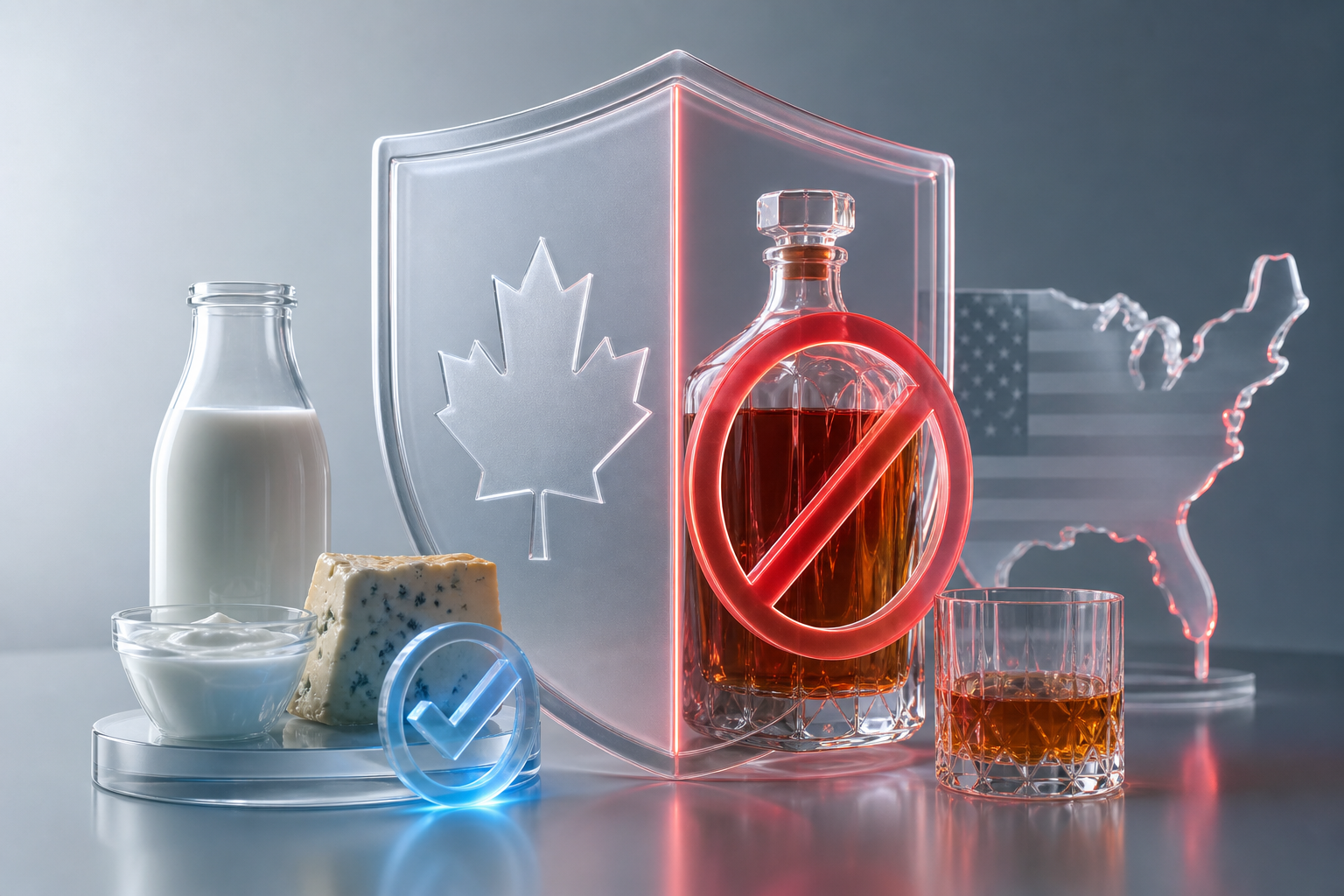

Canadian whisky distillers learned on September 8th that their largest export market would disappear on September 29th. The U.S. executive branch imposed what it called a "national security" import ban on spirits and a narrow list of high-value dairy products, specialty cheeses, certain yogurts, while granting exemptions to roughly 60 to 70 percent of the goods originally slated for tariffs. The ban takes effect on September 29, 2026, roughly three weeks later.
The pattern matters more than the product list. This is targeted economic disruption designed to inflict maximum political damage while preserving the industrial supply chains the U.S. cannot replace quickly.
Why Liquor and Why Now
Canadian spirits account for the majority of the category's U.S. imports, measured both by volume and shelf presence. A ban timed for September hits inventories heading into the holiday season, when liquor sales peak and retail buyers have already placed orders. The U.S. hospitality sector warned the administration that the ban would spike prices for consumers during an election-sensitive period, but the measure went forward anyway.
The targeting is deliberate. Whisky production concentrates in Ontario and Alberta, provinces whose economies are politically important to Prime Minister Trudeau's Liberals and whose voters have shown volatility in recent federal polling. A ban that leaves auto parts and construction steel untouched but removes Crown Royal from American bars sends a specific message: the U.S. will cause pain where it registers politically, not where it damages its own manufacturing base.
Dairy follows the same logic. The ban excludes fluid milk, butter, and commodity cheese, products that move in bulk and support cross-border food processing. It targets the specialty segment: aged cheddars, artisan cheeses, Greek yogurt brands that carry premium shelf prices. These are the products Canada's supply management system was designed to protect, and they are the exports that irk U.S. dairy lobbies most. By banning them, the administration escalates a fight over agricultural quotas that predates the current USMCA framework.
What the Exemptions Reveal
The reprieve list is longer than the ban list, and that tells you how the calculus works. Steel and aluminum inputs, auto components, forestry products, industrial machinery, none of these appear on the restricted side. The U.S. manufacturing sector depends on just-in-time delivery of Canadian intermediates. Disrupting that flow would mean idled production lines in Michigan and supply shortages in construction across the Midwest.
The exemptions are leverage held in reserve. The threat of future tariffs on "reprieved" categories keeps Canada negotiating under pressure, with the knowledge that any sector could be added to the restricted list with minimal notice.
Mark Carney, now Prime Minister of Canada, has framed the response as "strategic decoupling" in sectors where Canada can reduce dependency on U.S. demand. But decoupling takes years. Distilleries cannot reroute to Europe or Asia in a season. Dairy processors selling into the U.S. premium segment operate on contracts signed months in advance.
The Structure Underneath
This is precision protectionism. The U.S. is using surgical bans on discretionary goods to create political pressure in Canada without triggering inflation spikes at home or crippling its own supply chains. Liquor is visible. Dairy is symbolic. Both are culturally loaded exports that generate headlines and constituency anger.
The Canadian government has characterized the move as a violation of USMCA commitments. The U.S. justifies it under Section 232 or related emergency authorities, which bypass standard trade dispute mechanisms. Whether the ban survives legal challenge matters less than whether it achieves its short-term goal: forcing Canada to concede on digital services taxes, dairy quotas, or other friction points the administration has catalogued.
The real target is the negotiating position of a government that needs those whisky sales to continue.
Sources
Read Next
Why a Military Drone Contract Could Send This TSX Small-Cap Higher
BMO InvestorLine drops all trading commissions, forcing Canada's discount brokers to respond
Groupe Dynamite and Transat: Why Sector Labels Matter Less Than Company Fundamentals
Eby's Job Loss Warning Exposes How Vulnerable B.C. Really Is