Independent writing on tax-smart planning, mortgage strategy, and retirement building. For Canadian professionals who want the whole picture, not just a piece of it.
Carney's C$27.6-Billion Tariff Response Wasn't Weakness, It Was the Only Move Left
Canada imposed C$27.6 billion in counter-tariffs on U.S. goods in August 2026, and Mark Carney's approval rating went up. That isn't the pattern Washington expected. The White House had been betting that economic pain would fracture Canadian resolve and push the Prime Minister into a deal on American terms. Instead, trade pressure triggered a rally-round-the-flag response that gave Carney the strongest domestic position he's had since taking office.
The miscalculation wasn't about economics. It was about sequence. By the time Canada's retaliation landed, Trump had already imposed a 50% tariff on Canadian exports, an escalation so steep it left no room for a face-saving Canadian compromise. A Prime Minister who backed down after that would have been finished domestically within a week. Carney's counter-move wasn't aggression. It was survival.
Why the U.S. Strategy Keeps Missing
Trump's trade tactics assume the other side will fold when the cost gets high enough. That works when you're negotiating with a CEO over a supply contract. It fails when you're negotiating with a democratically elected leader whose political survival depends on not looking like he capitulated to a foreign power.
Canada has run this playbook before. In 2018, Justin Trudeau applied $16.6 billion in retaliatory tariffs on U.S. steel, aluminum, and consumer goods, targeting politically sensitive states, and his approval numbers climbed. The pattern held because economic nationalism overrides price signals in the short run. Voters will tolerate higher grocery bills if it means their government didn't cave.
The current package follows the same targeting logic: hit products from swing states, turn American business owners into lobbyists for Canada, and wait. Carney's team went after U.S. steel with a 50% surcharge, a mirror image of what Washington imposed on Canadian exports. The counter-tariffs aren't random. They're designed to maximize political pressure on the administration by putting pain exactly where it changes votes.
The Technocrat's Advantage
Carney's background, former Governor of the Bank of Canada, former Governor of the Bank of England, makes him unusually suited to this kind of economic brinkmanship. He understands leverage. He knows that a trade war between asymmetric economies doesn't automatically favour the bigger one if the smaller one can hold its position long enough to make the other side blink first.
Canada-U.S. daily goods trade is worth $3.6 billion CAD. The Canadian economy is more dependent on that flow than the American one, which is the standard argument for why Canada should fold. But the asymmetry cuts both ways. Because Canada is so concentrated on the U.S. market, a tariff war becomes an all-or-nothing fight for Canadian leaders. There's no hedging. You either stand or you lose the next election.
What Comes Next
The risk isn't that Carney's strategy fails politically. It's that it works politically and fails economically. Retaliatory tariffs act as a tax on Canadian consumers and businesses that rely on U.S. intermediate goods. Trade volatility is expected to add pressure to consumer prices in affected categories. Specific sectors, automotive, softwood lumber, are facing layoffs that will test how long the solidarity lasts.
But the political logic is locked in now. Walking back the tariffs without a U.S. concession would make Carney look weaker than doing nothing in the first place. Trump's 50% tariff closed the exit. The $27.6-billion response wasn't weakness. It was the last move available that kept the board in play.


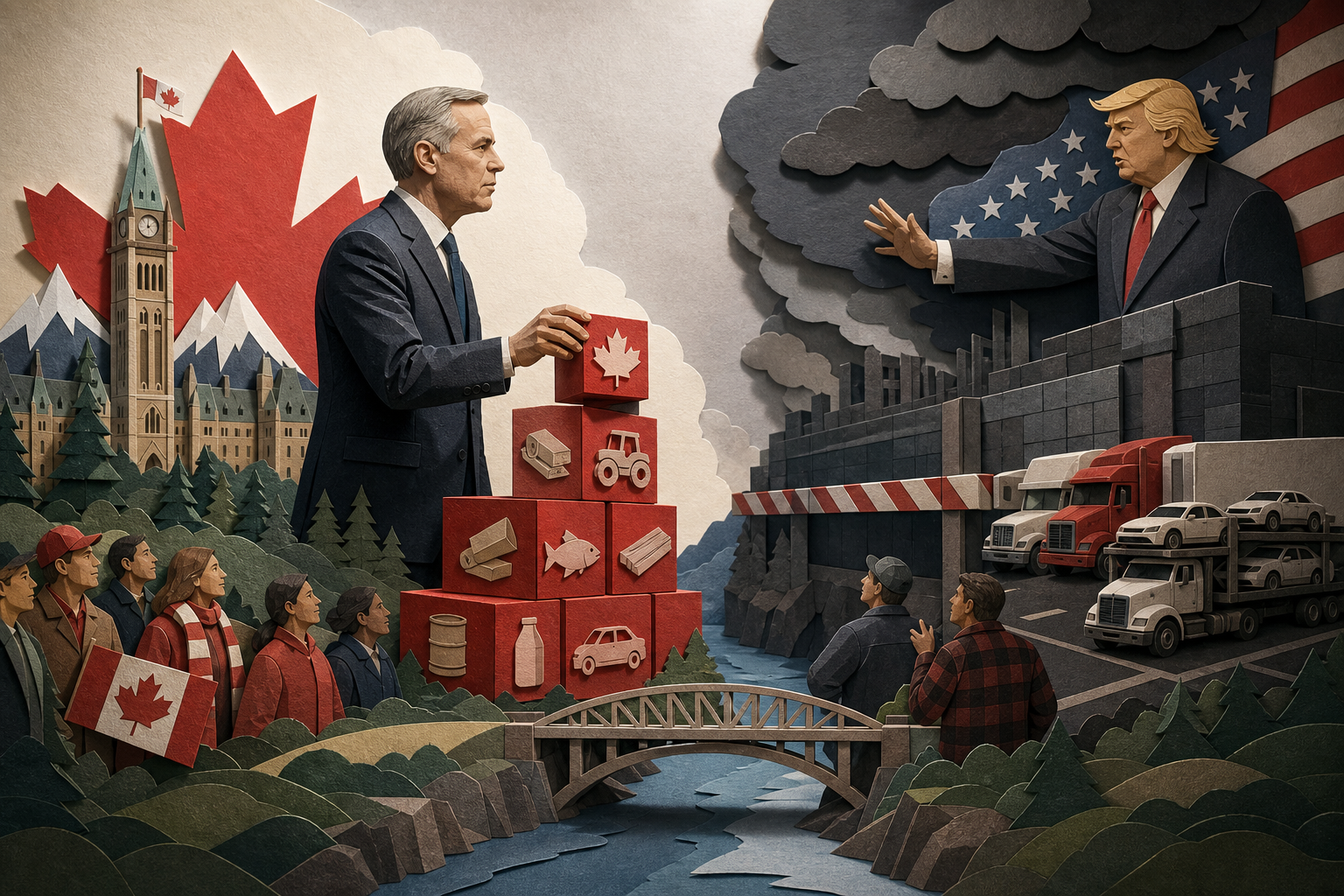

Canada imposed C$27.6 billion in counter-tariffs on U.S. goods in August 2026, and Mark Carney's approval rating went up. That isn't the pattern Washington expected. The White House had been betting that economic pain would fracture Canadian resolve and push the Prime Minister into a deal on American terms. Instead, trade pressure triggered a rally-round-the-flag response that gave Carney the strongest domestic position he's had since taking office.
The miscalculation wasn't about economics. It was about sequence. By the time Canada's retaliation landed, Trump had already imposed a 50% tariff on Canadian exports, an escalation so steep it left no room for a face-saving Canadian compromise. A Prime Minister who backed down after that would have been finished domestically within a week. Carney's counter-move wasn't aggression. It was survival.
Why the U.S. Strategy Keeps Missing
Trump's trade tactics assume the other side will fold when the cost gets high enough. That works when you're negotiating with a CEO over a supply contract. It fails when you're negotiating with a democratically elected leader whose political survival depends on not looking like he capitulated to a foreign power.
Canada has run this playbook before. In 2018, Justin Trudeau applied $16.6 billion in retaliatory tariffs on U.S. steel, aluminum, and consumer goods, targeting politically sensitive states, and his approval numbers climbed. The pattern held because economic nationalism overrides price signals in the short run. Voters will tolerate higher grocery bills if it means their government didn't cave.
The current package follows the same targeting logic: hit products from swing states, turn American business owners into lobbyists for Canada, and wait. Carney's team went after U.S. steel with a 50% surcharge, a mirror image of what Washington imposed on Canadian exports. The counter-tariffs aren't random. They're designed to maximize political pressure on the administration by putting pain exactly where it changes votes.
The Technocrat's Advantage
Carney's background, former Governor of the Bank of Canada, former Governor of the Bank of England, makes him unusually suited to this kind of economic brinkmanship. He understands leverage. He knows that a trade war between asymmetric economies doesn't automatically favour the bigger one if the smaller one can hold its position long enough to make the other side blink first.
Canada-U.S. daily goods trade is worth $3.6 billion CAD. The Canadian economy is more dependent on that flow than the American one, which is the standard argument for why Canada should fold. But the asymmetry cuts both ways. Because Canada is so concentrated on the U.S. market, a tariff war becomes an all-or-nothing fight for Canadian leaders. There's no hedging. You either stand or you lose the next election.
What Comes Next
The risk isn't that Carney's strategy fails politically. It's that it works politically and fails economically. Retaliatory tariffs act as a tax on Canadian consumers and businesses that rely on U.S. intermediate goods. Trade volatility is expected to add pressure to consumer prices in affected categories. Specific sectors, automotive, softwood lumber, are facing layoffs that will test how long the solidarity lasts.
But the political logic is locked in now. Walking back the tariffs without a U.S. concession would make Carney look weaker than doing nothing in the first place. Trump's 50% tariff closed the exit. The $27.6-billion response wasn't weakness. It was the last move available that kept the board in play.
Sources
Read Next
Why a Military Drone Contract Could Send This TSX Small-Cap Higher
BMO InvestorLine drops all trading commissions, forcing Canada's discount brokers to respond
Groupe Dynamite and Transat: Why Sector Labels Matter Less Than Company Fundamentals
The Dairy and Liquor Ban: What Trump's Selective Tariff Strategy Actually Targets