Independent writing on tax-smart planning, mortgage strategy, and retirement building. For Canadian professionals who want the whole picture, not just a piece of it.
Bank of Canada meets September 2: Why 2.25% may not hold this time
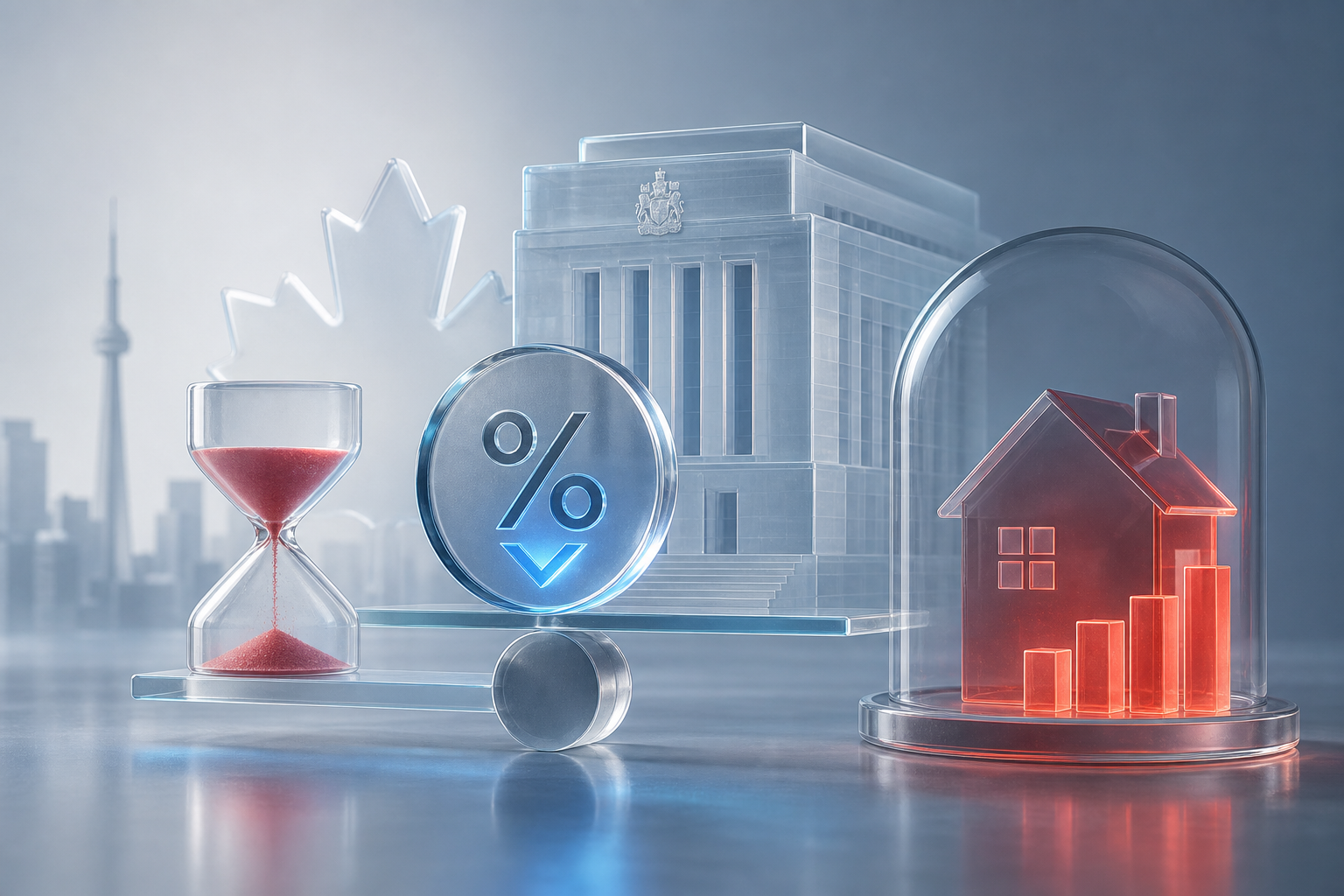
The Governing Council held the policy rate steady for eleven months, beginning in October 2025. That stretch of stability is now long enough that households have started treating 2.25% as the new floor. Fixed mortgage applicants lock in five-year terms assuming it will hold. Bond markets price in a plateau. The assumption is everywhere, and it may be wrong.
What changed since October
The neutral rate, the level at which policy neither stimulates nor restrains, sits somewhere between 2.25% and 3.25% according to the Bank's own estimates published in July. That range matters because the current policy rate is at the bottom edge. If inflation stays above the 2% midpoint target, or if core measures like CPI-trim and CPI-median tick higher, the Bank has room to move and a mandate to use it.
The data for August shows inflation hovering near 2%, but "near" is doing work in that sentence. The control range runs from 1% to 3%, and the midpoint is the objective. A reading of 3.0% in July sustained for two quarters represents persistence above target, and the lag effect from past hikes may already be fading. Corporate defaults have not spiked. Unemployment has not surged. The soft landing everyone wanted in late 2024 may have landed too soft.
The household debt problem reappears
Canada's household debt-to-income ratio remains among the highest in the G7. That figure was supposed to discipline the housing market, high rates would cool borrowing, prices would flatten, and the system would rebalance. It did, briefly. Year-over-year home sales dropped 5.3% in July, and the CREA Home Price Index fell 3.3% over the same period. But those declines are slowing. In Greater Vancouver, residential sales were down only 4.6% year-over-year in August, a deceleration that suggests buyers are adjusting to the rate environment rather than being pushed out of it.
The psychological shift is measurable. After a year of stability, variable-rate borrowers who spent 2023 and 2024 in survival mode are refinancing into fixed terms at 2.25%-anchored spreads. Renewals in first half of 2025 are being priced for the current rate to last. Markets are priced for a hold, which means a hike would be more disruptive than the basis points alone would suggest. If the Bank moves in September, those households are immediately underwater on their interest cost assumptions.
Why a hike would break the pattern
Most commentary assumes the Bank will hold because it has been holding. That logic only works if the conditions that justified the hold still apply. They might not. Quantitative tightening concluded in the first half of 2025, which means the overnight rate is now the only lever in play. If the Bank sees inflation sticking above target while business investment stays weak and productivity growth lags, issues flagged repeatedly in the Monetary Policy Reports, it has two choices: hold and hope the lag effect catches up, or hike and force the adjustment.
The U.S. Federal Reserve adds a complication. If the Fed holds while the Bank of Canada hikes, the Canadian dollar strengthens, import costs drop, and inflation cools through the exchange rate. That channel worked in reverse during the hiking cycle of 2022-2023. It could work again, but only if the Bank is willing to diverge. A September hike would test that willingness in front of a watching bond market and a highly leveraged population.
The announcement lands September 2. If the rate moves, what matters is what happens to the mortgages priced like it never would.



The Governing Council held the policy rate steady for eleven months, beginning in October 2025. That stretch of stability is now long enough that households have started treating 2.25% as the new floor. Fixed mortgage applicants lock in five-year terms assuming it will hold. Bond markets price in a plateau. The assumption is everywhere, and it may be wrong.
What changed since October
The neutral rate, the level at which policy neither stimulates nor restrains, sits somewhere between 2.25% and 3.25% according to the Bank's own estimates published in July. That range matters because the current policy rate is at the bottom edge. If inflation stays above the 2% midpoint target, or if core measures like CPI-trim and CPI-median tick higher, the Bank has room to move and a mandate to use it.
The data for August shows inflation hovering near 2%, but "near" is doing work in that sentence. The control range runs from 1% to 3%, and the midpoint is the objective. A reading of 3.0% in July sustained for two quarters represents persistence above target, and the lag effect from past hikes may already be fading. Corporate defaults have not spiked. Unemployment has not surged. The soft landing everyone wanted in late 2024 may have landed too soft.
The household debt problem reappears
Canada's household debt-to-income ratio remains among the highest in the G7. That figure was supposed to discipline the housing market, high rates would cool borrowing, prices would flatten, and the system would rebalance. It did, briefly. Year-over-year home sales dropped 5.3% in July, and the CREA Home Price Index fell 3.3% over the same period. But those declines are slowing. In Greater Vancouver, residential sales were down only 4.6% year-over-year in August, a deceleration that suggests buyers are adjusting to the rate environment rather than being pushed out of it.
The psychological shift is measurable. After a year of stability, variable-rate borrowers who spent 2023 and 2024 in survival mode are refinancing into fixed terms at 2.25%-anchored spreads. Renewals in first half of 2025 are being priced for the current rate to last. Markets are priced for a hold, which means a hike would be more disruptive than the basis points alone would suggest. If the Bank moves in September, those households are immediately underwater on their interest cost assumptions.
Why a hike would break the pattern
Most commentary assumes the Bank will hold because it has been holding. That logic only works if the conditions that justified the hold still apply. They might not. Quantitative tightening concluded in the first half of 2025, which means the overnight rate is now the only lever in play. If the Bank sees inflation sticking above target while business investment stays weak and productivity growth lags, issues flagged repeatedly in the Monetary Policy Reports, it has two choices: hold and hope the lag effect catches up, or hike and force the adjustment.
The U.S. Federal Reserve adds a complication. If the Fed holds while the Bank of Canada hikes, the Canadian dollar strengthens, import costs drop, and inflation cools through the exchange rate. That channel worked in reverse during the hiking cycle of 2022-2023. It could work again, but only if the Bank is willing to diverge. A September hike would test that willingness in front of a watching bond market and a highly leveraged population.
The announcement lands September 2. If the rate moves, what matters is what happens to the mortgages priced like it never would.
Sources
Read Next
Why a Military Drone Contract Could Send This TSX Small-Cap Higher
BMO InvestorLine drops all trading commissions, forcing Canada's discount brokers to respond
Groupe Dynamite and Transat: Why Sector Labels Matter Less Than Company Fundamentals
The Dairy and Liquor Ban: What Trump's Selective Tariff Strategy Actually Targets