Independent writing on tax-smart planning, mortgage strategy, and retirement building. For Canadian professionals who want the whole picture, not just a piece of it.
Axia's $5.28 Offer for Plaza Retail REIT: What a 20.8% Premium Reveals About Acquiring Scale in Canadian Retail
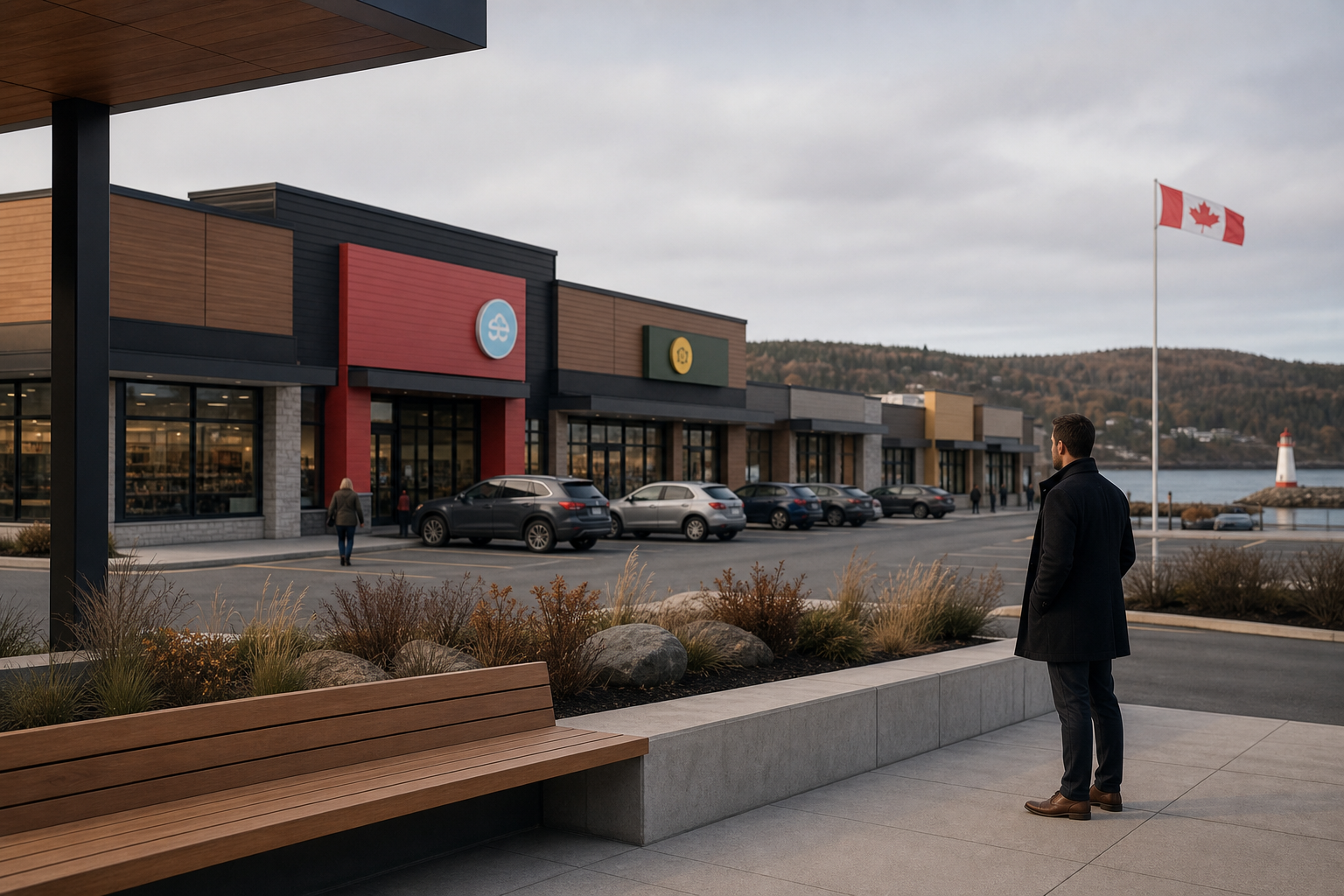
A Toronto fund is offering $5.28 cash for every share of a strip-mall REIT most people outside Atlantic Canada have never heard of. The number itself is unremarkable. What matters is the $670 million in debt Axia Real Assets LP is willing to assume alongside the equity purchase, a signal that institutional capital now sees stabilized, necessity-anchored retail as safer than the public markets do.
Plaza Retail REIT owns what private equity calls "boring boxes": open-air retail centers in secondary Canadian markets, most of them anchored by Shoppers Drug Mart or Dollarama. These are not lifestyle centers. They are the strip where you pick up prescriptions and discounted cleaning supplies on a Tuesday. Plaza's portfolio sits heavily in New Brunswick, Nova Scotia, and smaller Ontario municipalities, places where this particular configuration of tenants often represents the only retail infrastructure within a 20-minute drive. That geographic concentration, which looks like a liability in a prospectus, functions as a localized monopoly in practice.
The $1.23 billion enterprise value breaks into two pieces. Roughly half is equity at $5.28 per unit. The other half is existing debt. Axia is not buying Plaza despite the leverage. It is buying Plaza because the debt is already in place at rates locked before the Bank of Canada's tightening cycle, and because the cash flow from pharmacy and grocery-anchored tenants has remained predictable enough to service it. The 20.8% premium to the 90-day volume-weighted average price reflects a bet that public markets are underpricing the replacement cost of the real estate and the reliability of the income stream.
Why Private Equity Wants What Public Markets Don't
Plaza's units trade publicly, but the market has treated them as if retail real estate still carries the risk profile it had in 2019. It doesn't. The pandemic sorted retail into two categories: enclosed malls that required HVAC spending and food-court management, and open-air strips where tenants handled their own utilities and customers never had to walk past a gap in the lineup. Plaza is the latter. Occupancy rates for this kind of asset regularly exceed 95% because the anchor tenants, national pharmacy chains, discount grocers, dollar stores, provide services that proved essential during lockdowns and remained essential after.
Private equity funds like Axia are structured to hold these assets indefinitely, refinance the debt when rates allow, and extract value through operational efficiency rather than by timing an exit. Public REIT investors, by contrast, are pricing in interest-rate risk, liquidity risk, and the possibility that e-commerce will eventually erode foot traffic. Axia's bid implies it believes the first two risks are overstated and the third does not apply to pharmacies.
The non-binding nature of the offer leaves room for Plaza's board to argue the price still undervalues the land. In high-inflation environments, the cost to replace a 40,000-square-foot retail building on a two-acre lot in a supply-constrained municipality often exceeds what the public market will pay for the REIT that owns it. If Plaza's board believes that gap is wider than 20.8%, shareholders may never see this deal close.
What Scale Looks Like in Canadian Retail
Axia is not buying Plaza to operate six more Shoppers-anchored plazas. It is buying Plaza because assembling this portfolio one property at a time, in municipalities where zoning changes slowly and competition for sites is limited, would take a decade. The bid is about acquiring a pre-built position in markets where being the incumbent landlord for essential retail is the entire competitive advantage.
The structure of the offer, cash, not units in a larger entity, tells you Axia expects to hold these assets outside the public markets. Taking Plaza private removes the quarterly earnings pressure that forces REITs to maintain distributions even when reinvesting capital would make more sense. It also removes the liquidity discount that comes from trading thinly on the TSX.
If the deal closes, it will mark another step in the consolidation of Canadian retail real estate under private ownership. The logic is straightforward: necessity-based retail in sub-100,000-population markets generates predictable income, and predictable income is worth more to a fund with patient capital than it is to a public market pricing in volatility it doesn't actually face.



A Toronto fund is offering $5.28 cash for every share of a strip-mall REIT most people outside Atlantic Canada have never heard of. The number itself is unremarkable. What matters is the $670 million in debt Axia Real Assets LP is willing to assume alongside the equity purchase, a signal that institutional capital now sees stabilized, necessity-anchored retail as safer than the public markets do.
Plaza Retail REIT owns what private equity calls "boring boxes": open-air retail centers in secondary Canadian markets, most of them anchored by Shoppers Drug Mart or Dollarama. These are not lifestyle centers. They are the strip where you pick up prescriptions and discounted cleaning supplies on a Tuesday. Plaza's portfolio sits heavily in New Brunswick, Nova Scotia, and smaller Ontario municipalities, places where this particular configuration of tenants often represents the only retail infrastructure within a 20-minute drive. That geographic concentration, which looks like a liability in a prospectus, functions as a localized monopoly in practice.
The $1.23 billion enterprise value breaks into two pieces. Roughly half is equity at $5.28 per unit. The other half is existing debt. Axia is not buying Plaza despite the leverage. It is buying Plaza because the debt is already in place at rates locked before the Bank of Canada's tightening cycle, and because the cash flow from pharmacy and grocery-anchored tenants has remained predictable enough to service it. The 20.8% premium to the 90-day volume-weighted average price reflects a bet that public markets are underpricing the replacement cost of the real estate and the reliability of the income stream.
Why Private Equity Wants What Public Markets Don't
Plaza's units trade publicly, but the market has treated them as if retail real estate still carries the risk profile it had in 2019. It doesn't. The pandemic sorted retail into two categories: enclosed malls that required HVAC spending and food-court management, and open-air strips where tenants handled their own utilities and customers never had to walk past a gap in the lineup. Plaza is the latter. Occupancy rates for this kind of asset regularly exceed 95% because the anchor tenants, national pharmacy chains, discount grocers, dollar stores, provide services that proved essential during lockdowns and remained essential after.
Private equity funds like Axia are structured to hold these assets indefinitely, refinance the debt when rates allow, and extract value through operational efficiency rather than by timing an exit. Public REIT investors, by contrast, are pricing in interest-rate risk, liquidity risk, and the possibility that e-commerce will eventually erode foot traffic. Axia's bid implies it believes the first two risks are overstated and the third does not apply to pharmacies.
The non-binding nature of the offer leaves room for Plaza's board to argue the price still undervalues the land. In high-inflation environments, the cost to replace a 40,000-square-foot retail building on a two-acre lot in a supply-constrained municipality often exceeds what the public market will pay for the REIT that owns it. If Plaza's board believes that gap is wider than 20.8%, shareholders may never see this deal close.
What Scale Looks Like in Canadian Retail
Axia is not buying Plaza to operate six more Shoppers-anchored plazas. It is buying Plaza because assembling this portfolio one property at a time, in municipalities where zoning changes slowly and competition for sites is limited, would take a decade. The bid is about acquiring a pre-built position in markets where being the incumbent landlord for essential retail is the entire competitive advantage.
The structure of the offer, cash, not units in a larger entity, tells you Axia expects to hold these assets outside the public markets. Taking Plaza private removes the quarterly earnings pressure that forces REITs to maintain distributions even when reinvesting capital would make more sense. It also removes the liquidity discount that comes from trading thinly on the TSX.
If the deal closes, it will mark another step in the consolidation of Canadian retail real estate under private ownership. The logic is straightforward: necessity-based retail in sub-100,000-population markets generates predictable income, and predictable income is worth more to a fund with patient capital than it is to a public market pricing in volatility it doesn't actually face.
Read Next
Ottawa Can Win Against Cleveland-Cliffs and Still Lose on Steel Tariffs
143,929 Approved Homes Sit Unbuilt: What Is Really Holding Back Canada's Supply
Northeastern PA or the Big City: What the Same Budget Buys in Each
7 Co-Ownership Agreements That Protect Both the Friendship and the Equity