Independent writing on tax-smart planning, mortgage strategy, and retirement building. For Canadian professionals who want the whole picture, not just a piece of it.
AI Border Enforcement Isn't Stopping Tariff Evasion, It's Creating a New Trade War
AI Border Enforcement Isn't Stopping Tariff Evasion, It's Creating a New Trade War
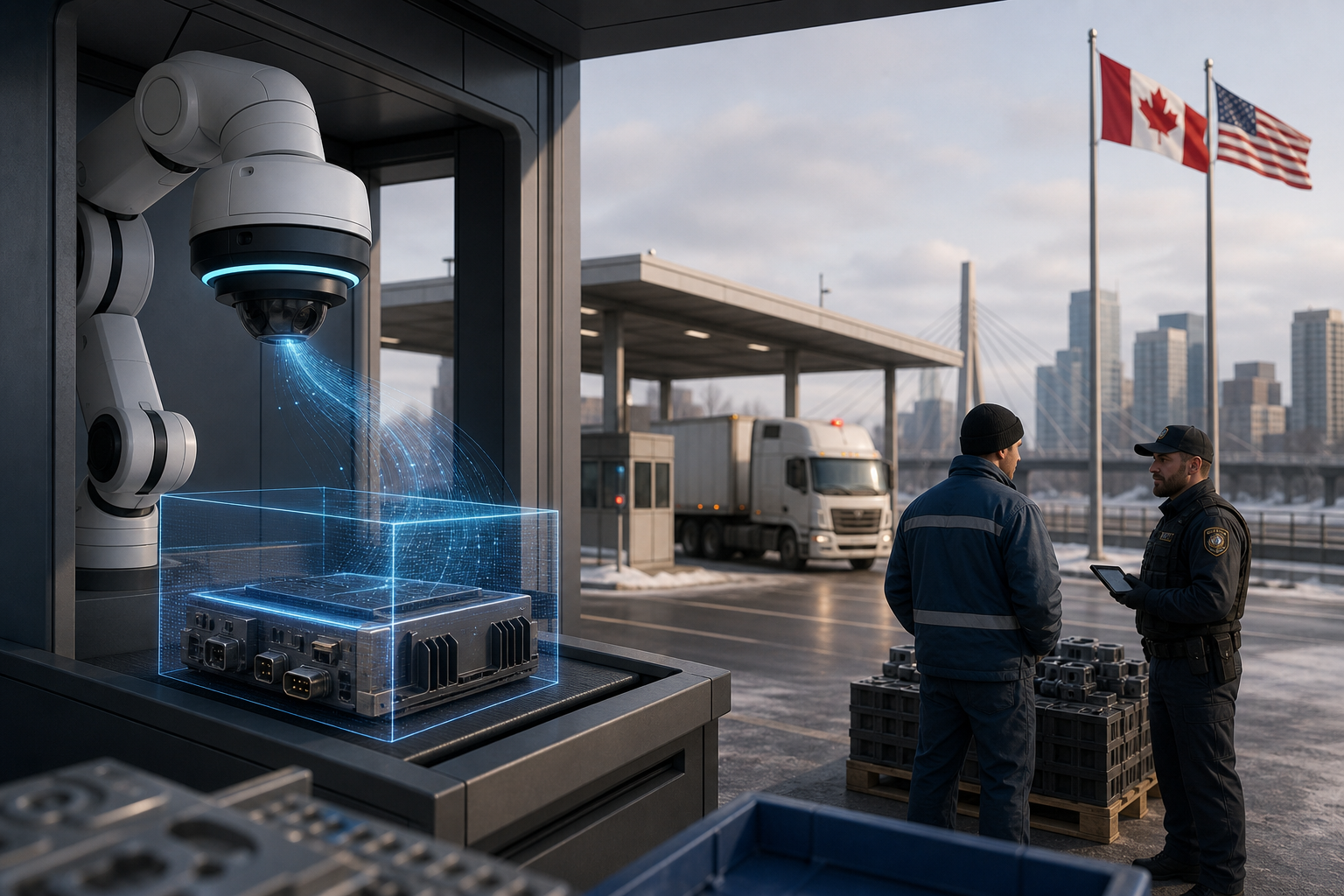
A Manitoba bus manufacturer ships components through the Emerson-Pembina port. Last week, the shipment was flagged by U.S. Customs. The reason: a Chinese-made electronic assembly, representing 4% of the final product's value. No human auditor caught this. An algorithm did.
The Trump administration has deployed AI tools that process millions of shipping manifests, bills of lading, and satellite images in real time. The stated goal is shutting down "transshipment," the practice of routing Chinese goods through Vietnam, Mexico, or Thailand to dodge tariffs that now reach 100% on some categories. The actual effect is turning every cross-border supplier into a data point in a predictive enforcement dragnet that assumes guilt until the supply chain proves otherwise.
The Algorithmic Squeeze on Secondary Markets
Southeast Asia saw Chinese foreign direct investment surge 38% between 2018 and 2024. Mexican manufacturing investment from Chinese firms doubled in the same window. U.S. trade officials now treat these patterns as evidence of tariff evasion, not genuine industrial realignment. If a Vietnamese factory opened in 2022 and started exporting precision electronics to the U.S. in 2023, the AI flags it. The question isn't whether the factory exists. The question is whether it's a "screwdriver plant," doing final assembly on Chinese components to claim Vietnamese origin.
Manitoba's $16 billion in annual U.S. exports makes the province vulnerable to this logic. Agri-food and heavy manufacturing supply chains rely on inputs from multiple countries. A traceable "digital twin" of the entire supply chain is becoming a prerequisite for frictionless crossings, and most mid-sized exporters don't have one. The AI doesn't care whether your paperwork was sufficient last year. It's correlating your supplier network against a global database of flagged entities, and it's doing this faster than you can file an appeal.
The automation closes the old loophole: plausible deniability. Before, a company could claim ignorance of a subcontractor's actual manufacturing location. Now, the algorithm cross-references shipping times, factory satellite footage, and power-consumption data. If your declared lead time doesn't match the visible industrial capacity at the origin site, you get flagged. There's no willful blindness defense against an AI that saw the pattern six months before you filed the entry.
Geopolitics Dressed as Logistics
This isn't just enforcement. It's trade policy by algorithm. The models can be tuned. Set the sensitivity threshold higher, and legitimate Canadian exporters using a small percentage of Chinese raw materials start getting stopped. Set it lower, and actual transshipment slips through. The U.S. has given no transparency into how these thresholds are calibrated or whether "America First" objectives influence the weighting.
Mexico and Canada face the same problem Southeast Asia does: prove your manufacturing is real, on a timeline set by an opaque model, or lose market access. That's not a rules-based system. That's algorithmic protectionism, where the accused has no visibility into the evidence and no mechanism to correct a false positive in real time.
The whack-a-mole problem remains. Trade diverted from Vietnam moves to Bangladesh. Trade diverted from Mexico moves to Guatemala. The AI just expands its surveillance perimeter. Every new jurisdiction becomes a suspect, every supply chain a potential evasion vector. The result isn't less tariff evasion. It's more countries forced to choose between Chinese capital and U.S. market access.
The Real Cost
For Manitoba firms, the shift is already measurable. Customs processing times at Emerson have increased 22% since the AI rollout began in late 2025. Administrative costs for "rules of origin" documentation are up across the sector. Companies that can't afford real-time supply chain tracking software are losing contracts to those that can.
The trade war isn't U.S. versus China anymore. It's centralized enforcement algorithms versus decentralized global manufacturing, and every exporter in between is collateral.



AI Border Enforcement Isn't Stopping Tariff Evasion, It's Creating a New Trade War
A Manitoba bus manufacturer ships components through the Emerson-Pembina port. Last week, the shipment was flagged by U.S. Customs. The reason: a Chinese-made electronic assembly, representing 4% of the final product's value. No human auditor caught this. An algorithm did.
The Trump administration has deployed AI tools that process millions of shipping manifests, bills of lading, and satellite images in real time. The stated goal is shutting down "transshipment," the practice of routing Chinese goods through Vietnam, Mexico, or Thailand to dodge tariffs that now reach 100% on some categories. The actual effect is turning every cross-border supplier into a data point in a predictive enforcement dragnet that assumes guilt until the supply chain proves otherwise.
The Algorithmic Squeeze on Secondary Markets
Southeast Asia saw Chinese foreign direct investment surge 38% between 2018 and 2024. Mexican manufacturing investment from Chinese firms doubled in the same window. U.S. trade officials now treat these patterns as evidence of tariff evasion, not genuine industrial realignment. If a Vietnamese factory opened in 2022 and started exporting precision electronics to the U.S. in 2023, the AI flags it. The question isn't whether the factory exists. The question is whether it's a "screwdriver plant," doing final assembly on Chinese components to claim Vietnamese origin.
Manitoba's $16 billion in annual U.S. exports makes the province vulnerable to this logic. Agri-food and heavy manufacturing supply chains rely on inputs from multiple countries. A traceable "digital twin" of the entire supply chain is becoming a prerequisite for frictionless crossings, and most mid-sized exporters don't have one. The AI doesn't care whether your paperwork was sufficient last year. It's correlating your supplier network against a global database of flagged entities, and it's doing this faster than you can file an appeal.
The automation closes the old loophole: plausible deniability. Before, a company could claim ignorance of a subcontractor's actual manufacturing location. Now, the algorithm cross-references shipping times, factory satellite footage, and power-consumption data. If your declared lead time doesn't match the visible industrial capacity at the origin site, you get flagged. There's no willful blindness defense against an AI that saw the pattern six months before you filed the entry.
Geopolitics Dressed as Logistics
This isn't just enforcement. It's trade policy by algorithm. The models can be tuned. Set the sensitivity threshold higher, and legitimate Canadian exporters using a small percentage of Chinese raw materials start getting stopped. Set it lower, and actual transshipment slips through. The U.S. has given no transparency into how these thresholds are calibrated or whether "America First" objectives influence the weighting.
Mexico and Canada face the same problem Southeast Asia does: prove your manufacturing is real, on a timeline set by an opaque model, or lose market access. That's not a rules-based system. That's algorithmic protectionism, where the accused has no visibility into the evidence and no mechanism to correct a false positive in real time.
The whack-a-mole problem remains. Trade diverted from Vietnam moves to Bangladesh. Trade diverted from Mexico moves to Guatemala. The AI just expands its surveillance perimeter. Every new jurisdiction becomes a suspect, every supply chain a potential evasion vector. The result isn't less tariff evasion. It's more countries forced to choose between Chinese capital and U.S. market access.
The Real Cost
For Manitoba firms, the shift is already measurable. Customs processing times at Emerson have increased 22% since the AI rollout began in late 2025. Administrative costs for "rules of origin" documentation are up across the sector. Companies that can't afford real-time supply chain tracking software are losing contracts to those that can.
The trade war isn't U.S. versus China anymore. It's centralized enforcement algorithms versus decentralized global manufacturing, and every exporter in between is collateral.
Read Next
7 Co-Ownership Agreements That Protect Both the Friendship and the Equity
The 2027 Housing Recovery in Canada Runs Through Business Investment
A Small Cut to 0.9% Growth Points to Canada's Longer Problem
Ottawa Already Holds the Income Data That Could Curb Mortgage Fraud