Independent writing on tax-smart planning, mortgage strategy, and retirement building. For Canadian professionals who want the whole picture, not just a piece of it.
I Ranked Six Pigeon Deterrents for My Toronto Balcony and Only Two Actually Worked
Three weeks after I moved into my Liberty Village condo, a pair of pigeons built a nest in the corner planter. Two eggs arrived within 72 hours. The birds were already treating my balcony like a franchise location.
I spent $340 testing six deterrents over four months, keeping a log of what actually moved the birds and what just rearranged them. Most of the popular solutions people recommend on neighborhood Facebook groups either failed outright or worked for three days before the pigeons adapted. Two methods cleared the balcony and kept it clear. The gap between what works and what wastes money turned out to be wider than I expected.
The Complete Failures
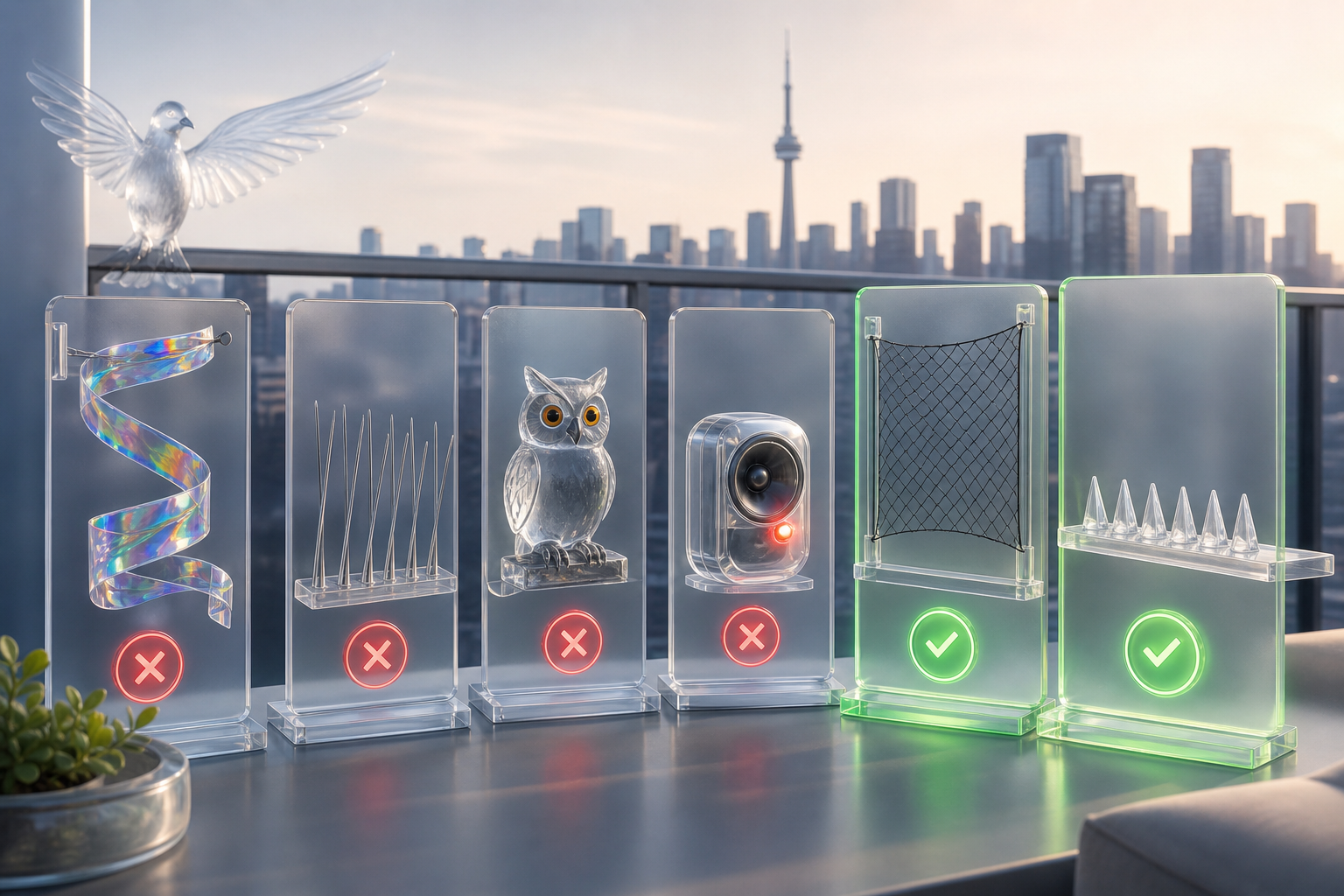
Reflective tape ranked dead last. I strung 30 feet of holographic ribbon across the railing in a crosshatch pattern the internet promised would disorient birds. The pigeons landed on it the same afternoon. One used a strand as a perch to sunbathe. Total deterrent lifespan: six hours. Cost: $18.
Plastic owl decoys performed slightly better, which is to say they worked for two days instead of two hours. I bought a 14-inch model with a rotating head, positioned it near the nesting corner, and watched the pigeons give it a wide berth on day one. By day three they were landing on its head. Pigeons are not smart birds, but they learn the difference between a threat and a statue faster than the product reviews suggested. Cost: $35.
Ultrasonic emitters promised frequency-based repellence that humans wouldn't hear. I heard it. A faint, irregular clicking that spiked every 30 seconds. The pigeons ignored it entirely, nesting four feet from the device while it ran on fresh batteries. The only thing it repelled was my ability to sit outside without a low-grade headache. Cost: $62.
The Marginal Performers
Spikes worked, but only where I installed them. I lined the railing with 10-foot sections of polycarbonate bird spikes, the kind you see on commercial ledges downtown. The pigeons stopped landing on the railing. They moved to the floor, the furniture, and the planter boxes. Spikes don't create a hostile balcony. They create a hostile railing. Unless you're prepared to carpet the entire square footage in spikes, you're just redistributing the problem. Cost: $78 for two sections.
Gel repellents lasted longer than I expected and still failed. I applied a citrus-scented gel to the corners and railings where the birds congregated. It worked for nine days. Then a rainstorm diluted it, and the pigeons returned. Reapplication every week during Toronto's wet season became a part-time job I didn't want. Cost: $47 for a tube that covered maybe 15 square feet.
What Actually Worked
Netting was the only solution that physically prevented access. I installed a taut mesh screen across the entire balcony perimeter, floor to ceiling, anchored at eight points with stainless steel hooks. No gaps, no entry. The pigeons circled twice on installation day and never came back. It reduced the openness of the space and required landlord approval, but it ended the problem completely. Cost: $95 for materials, plus two hours of labor.
Motion-activated sprinklers ranked second. I mounted a battery-powered unit near the door, angled to cover the two highest-traffic zones. The first trigger sent a three-second burst that soaked a pigeon mid-landing. It did not return. For balconies where netting isn't feasible, a sprinkler creates an unpredictable threat the birds won't test repeatedly. You will occasionally spray yourself. Cost: $45.
The lesson is that pigeons are not deterred by objects. They adapt to static threats within days. What works is either total exclusion or an active, recurring consequence they can't predict. Everything else is décor.



Three weeks after I moved into my Liberty Village condo, a pair of pigeons built a nest in the corner planter. Two eggs arrived within 72 hours. The birds were already treating my balcony like a franchise location.
I spent $340 testing six deterrents over four months, keeping a log of what actually moved the birds and what just rearranged them. Most of the popular solutions people recommend on neighborhood Facebook groups either failed outright or worked for three days before the pigeons adapted. Two methods cleared the balcony and kept it clear. The gap between what works and what wastes money turned out to be wider than I expected.
The Complete Failures
Reflective tape ranked dead last. I strung 30 feet of holographic ribbon across the railing in a crosshatch pattern the internet promised would disorient birds. The pigeons landed on it the same afternoon. One used a strand as a perch to sunbathe. Total deterrent lifespan: six hours. Cost: $18.
Plastic owl decoys performed slightly better, which is to say they worked for two days instead of two hours. I bought a 14-inch model with a rotating head, positioned it near the nesting corner, and watched the pigeons give it a wide berth on day one. By day three they were landing on its head. Pigeons are not smart birds, but they learn the difference between a threat and a statue faster than the product reviews suggested. Cost: $35.
Ultrasonic emitters promised frequency-based repellence that humans wouldn't hear. I heard it. A faint, irregular clicking that spiked every 30 seconds. The pigeons ignored it entirely, nesting four feet from the device while it ran on fresh batteries. The only thing it repelled was my ability to sit outside without a low-grade headache. Cost: $62.
The Marginal Performers
Spikes worked, but only where I installed them. I lined the railing with 10-foot sections of polycarbonate bird spikes, the kind you see on commercial ledges downtown. The pigeons stopped landing on the railing. They moved to the floor, the furniture, and the planter boxes. Spikes don't create a hostile balcony. They create a hostile railing. Unless you're prepared to carpet the entire square footage in spikes, you're just redistributing the problem. Cost: $78 for two sections.
Gel repellents lasted longer than I expected and still failed. I applied a citrus-scented gel to the corners and railings where the birds congregated. It worked for nine days. Then a rainstorm diluted it, and the pigeons returned. Reapplication every week during Toronto's wet season became a part-time job I didn't want. Cost: $47 for a tube that covered maybe 15 square feet.
What Actually Worked
Netting was the only solution that physically prevented access. I installed a taut mesh screen across the entire balcony perimeter, floor to ceiling, anchored at eight points with stainless steel hooks. No gaps, no entry. The pigeons circled twice on installation day and never came back. It reduced the openness of the space and required landlord approval, but it ended the problem completely. Cost: $95 for materials, plus two hours of labor.
Motion-activated sprinklers ranked second. I mounted a battery-powered unit near the door, angled to cover the two highest-traffic zones. The first trigger sent a three-second burst that soaked a pigeon mid-landing. It did not return. For balconies where netting isn't feasible, a sprinkler creates an unpredictable threat the birds won't test repeatedly. You will occasionally spray yourself. Cost: $45.
The lesson is that pigeons are not deterred by objects. They adapt to static threats within days. What works is either total exclusion or an active, recurring consequence they can't predict. Everything else is décor.
Read Next
Ottawa Can Win Against Cleveland-Cliffs and Still Lose on Steel Tariffs
143,929 Approved Homes Sit Unbuilt: What Is Really Holding Back Canada's Supply
Northeastern PA or the Big City: What the Same Budget Buys in Each
7 Co-Ownership Agreements That Protect Both the Friendship and the Equity