Independent writing on tax-smart planning, mortgage strategy, and retirement building. For Canadian professionals who want the whole picture, not just a piece of it.
143,929 Approved Homes Sit Unbuilt: What Is Really Holding Back Canada's Supply
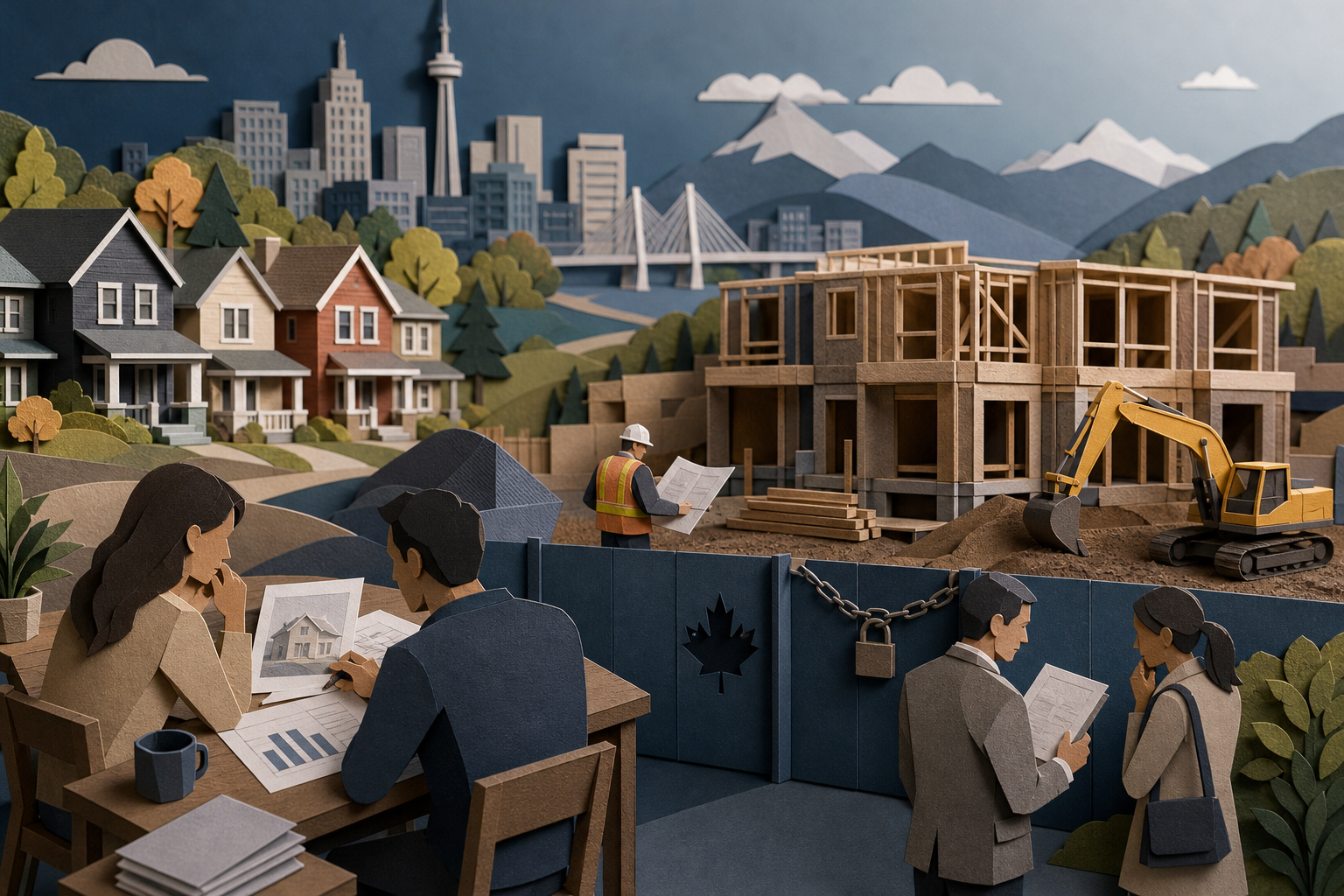
In September, Canada had 143,929 homes with building permits in hand and no construction underway. CMHC reported that the count rose 1.1% from August. In the same month, actual housing starts in centres of 10,000 or more fell to 19,984 units, down from 22,375 a year earlier. That works out to roughly 11% fewer shovels in the ground.
Put those numbers side by side and a common belief starts to wobble. Much of the housing debate has focused on zoning and slow approvals, on the idea that if cities said yes faster, homes would follow. The approvals are coming through. What's missing is the money and the math that turn a permit into a foundation. For anyone who owns property, invests in it or writes the rules around it, that changes which signals are worth watching.
A permit is permission. A start needs a lender.
A building permit tells a developer the city will allow the project. It doesn't pay for anything. To break ground, most builders need a construction loan, and lenders want proof the project will work: enough presales on a condo, or believable rents on a rental building, plus a cushion between total cost and expected value.
That cushion is where projects get stuck. Interest builds up every month the building is under construction, and high-density projects take years to finish. Materials and skilled trades remain expensive. Meanwhile, prices aren't rising fast enough to absorb those costs. CREA's national average sale price was up just 0.6% year over year in August 2026. When costs climb and sale prices hold flat, the margin shrinks until the lender says no, or the builder decides to wait. Multi-family towers carry the most unstarted units because they feel financing costs most sharply.
So the useful habit is to treat permits and starts as two separate readings. Permits show what a city has agreed to. Starts show what someone has agreed to pay for.
What actually moves the backlog
Some rough arithmetic shows the scale. Centres of 10,000 or more recorded 170,964 starts from January through September, about 19,000 a month. The unstarted pile equals about seven to eight months of building at that pace. Because the backlog figure and the starts figure cover slightly different groups of cities, treat that as a sense of size rather than a precise measure.
For policymakers, the lesson is that another round of faster approvals adds to a queue that's already long. Measures that lower the cost of carrying a project through construction, or that make lenders more comfortable funding it, go straight at the reason the queue exists. Time matters too. Permits can expire, and a developer forced to reapply may face renewal fees or a newer, more demanding building code, which pushes the numbers further out of reach.
Reading the gap as an owner or investor
Homes not started today are homes not finished in roughly two to three years. CMHC has estimated Canada needs 3.5 million additional units by 2030, and the country started 259,028 homes back in 2025. A slide in starts widens that distance. For people holding well-located property, it means less new competition for renters and buyers over the next few years. That supports long-term rental demand and the equity already built up in existing homes, though it guarantees no particular price.
Regional detail matters. Markets such as Winnipeg tend to swing less than Toronto or Vancouver, and parts of the Prairies may keep building steadily while the large hubs absorb most of the slowdown.
The backlog can also move quickly. If borrowing costs ease, a good share of those 143,929 approved homes could begin within a short window and arrive on the market close together. Owners, investors and builders who are watching the gap between permits and starts, and keeping their cash flow and debt structure flexible, will be in a position to respond when that happens. Anyone watching approvals alone may be caught off guard.



In September, Canada had 143,929 homes with building permits in hand and no construction underway. CMHC reported that the count rose 1.1% from August. In the same month, actual housing starts in centres of 10,000 or more fell to 19,984 units, down from 22,375 a year earlier. That works out to roughly 11% fewer shovels in the ground.
Put those numbers side by side and a common belief starts to wobble. Much of the housing debate has focused on zoning and slow approvals, on the idea that if cities said yes faster, homes would follow. The approvals are coming through. What's missing is the money and the math that turn a permit into a foundation. For anyone who owns property, invests in it or writes the rules around it, that changes which signals are worth watching.
A permit is permission. A start needs a lender.
A building permit tells a developer the city will allow the project. It doesn't pay for anything. To break ground, most builders need a construction loan, and lenders want proof the project will work: enough presales on a condo, or believable rents on a rental building, plus a cushion between total cost and expected value.
That cushion is where projects get stuck. Interest builds up every month the building is under construction, and high-density projects take years to finish. Materials and skilled trades remain expensive. Meanwhile, prices aren't rising fast enough to absorb those costs. CREA's national average sale price was up just 0.6% year over year in August 2026. When costs climb and sale prices hold flat, the margin shrinks until the lender says no, or the builder decides to wait. Multi-family towers carry the most unstarted units because they feel financing costs most sharply.
So the useful habit is to treat permits and starts as two separate readings. Permits show what a city has agreed to. Starts show what someone has agreed to pay for.
What actually moves the backlog
Some rough arithmetic shows the scale. Centres of 10,000 or more recorded 170,964 starts from January through September, about 19,000 a month. The unstarted pile equals about seven to eight months of building at that pace. Because the backlog figure and the starts figure cover slightly different groups of cities, treat that as a sense of size rather than a precise measure.
For policymakers, the lesson is that another round of faster approvals adds to a queue that's already long. Measures that lower the cost of carrying a project through construction, or that make lenders more comfortable funding it, go straight at the reason the queue exists. Time matters too. Permits can expire, and a developer forced to reapply may face renewal fees or a newer, more demanding building code, which pushes the numbers further out of reach.
Reading the gap as an owner or investor
Homes not started today are homes not finished in roughly two to three years. CMHC has estimated Canada needs 3.5 million additional units by 2030, and the country started 259,028 homes back in 2025. A slide in starts widens that distance. For people holding well-located property, it means less new competition for renters and buyers over the next few years. That supports long-term rental demand and the equity already built up in existing homes, though it guarantees no particular price.
Regional detail matters. Markets such as Winnipeg tend to swing less than Toronto or Vancouver, and parts of the Prairies may keep building steadily while the large hubs absorb most of the slowdown.
The backlog can also move quickly. If borrowing costs ease, a good share of those 143,929 approved homes could begin within a short window and arrive on the market close together. Owners, investors and builders who are watching the gap between permits and starts, and keeping their cash flow and debt structure flexible, will be in a position to respond when that happens. Anyone watching approvals alone may be caught off guard.
Read Next
Ottawa Can Win Against Cleveland-Cliffs and Still Lose on Steel Tariffs
Northeastern PA or the Big City: What the Same Budget Buys in Each
7 Co-Ownership Agreements That Protect Both the Friendship and the Equity
The 2027 Housing Recovery in Canada Runs Through Business Investment