Independent writing on tax-smart planning, mortgage strategy, and retirement building. For Canadian professionals who want the whole picture, not just a piece of it.
Canada's 3.4% Growth Is an Oil Story, Not an Economic Turnaround
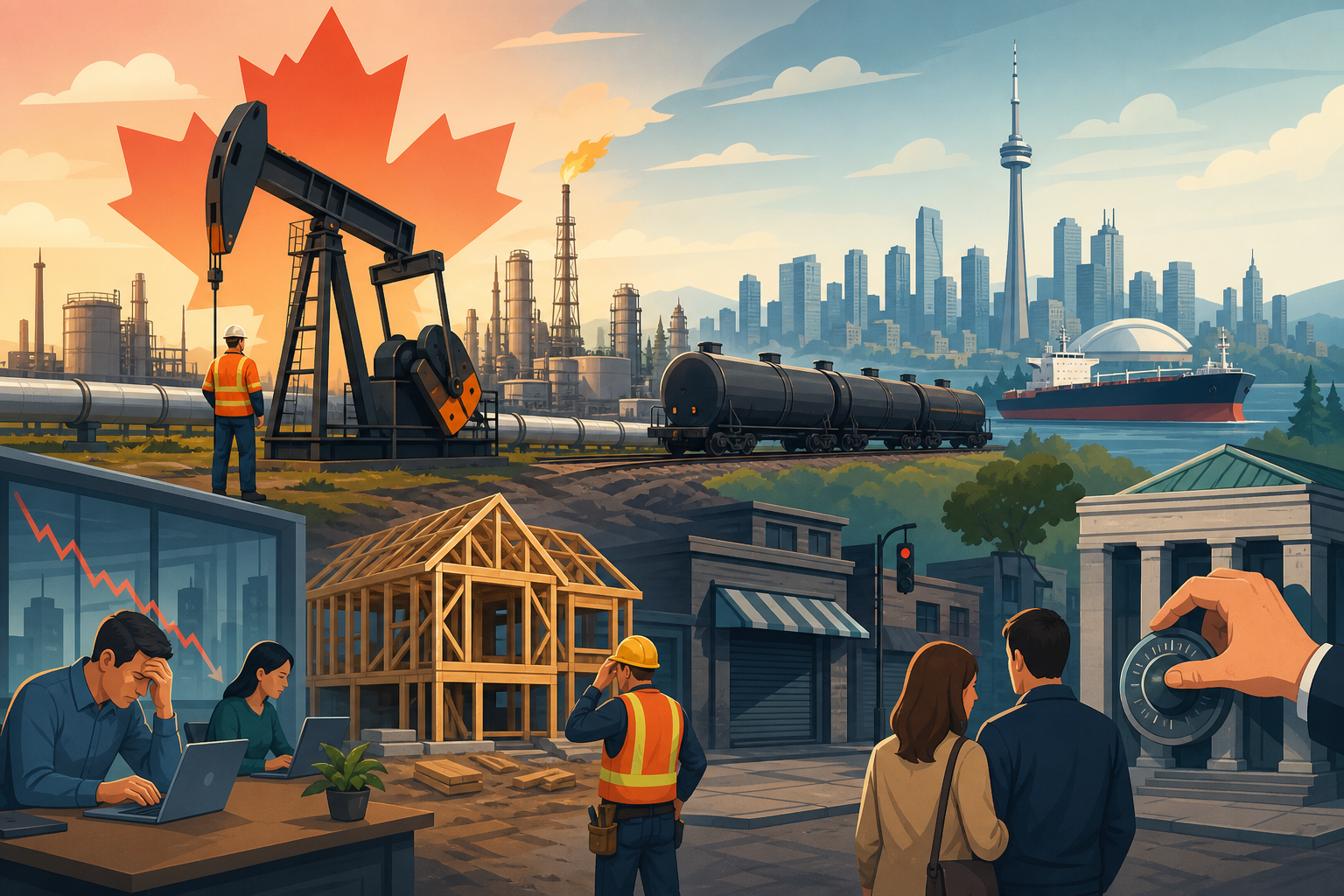
Statistics Canada's preliminary read says May GDP climbed 0.3%, putting Q2 on pace for 3.4% annualized growth. That's double what the Bank of Canada forecast in April. Energy extraction did the work, oil and gas output posted gains for the second straight month while most other sectors stayed flat or wobbled.
This is the third time in a decade Canada has printed surprise upside GDP and declared the economy "back." Each time, what looked like broad recovery turned out to be resource extraction masking stagnation everywhere else. The 2013-2014 oil rally did the same thing. So did the post-lockdown 2021 commodity spike. Both times, when energy prices cooled, the underlying fragility showed up fast.
The Energy Sector Is Carrying the Number
Oil and gas extraction contributes roughly 5% of Canadian GDP in normal years. When crude trades above $80 USD and pipeline capacity expands, Trans Mountain came online fully in late 2025, that 5% can swing the national headline by a full percentage point on its own. May's 0.3% monthly gain was almost entirely energy. Manufacturing added a rounding error. Retail was negative.
For households sitting in Southern Ontario or Metro Vancouver, this growth is happening elsewhere. Alberta and Newfoundland see the direct benefit. The rest of the country sees it as a statistic that makes borrowing more expensive without improving local labor markets or wage growth. When the headline GDP beats expectations by this margin, bond markets reprice the overnight rate path. Fixed mortgage rates follow within weeks.
Growth That Slows Rate Cuts Is Bad News for Homeowners
The Bank of Canada started trimming rates earlier this year on the assumption that slack was building and inflation was contained. A 3.4% print disrupts that logic. The output gap, the space between what the economy is producing and what it could produce without overheating, closes faster when GDP runs hot. A closing output gap gives the Bank reason to pause cuts or move slower than previously telegraphed.
Mortgage holders renewing in the back half of 2026 were counting on a rate environment trending downward. Strong GDP data, even if it's concentrated in a single sector, makes that less likely. The five-year Government of Canada bond yield, which anchors fixed-rate mortgage pricing, has already moved up 18 basis points since the May data dropped. Lenders will pass that through.
The paradox: good news for the national account is bad news for the household balance sheet. A family in Mississauga renewing a $650,000 mortgage doesn't benefit from higher oil output in Fort McMurray. They just pay more interest.
Headline Growth Hides Per-Capita Stagnation
Canada added roughly 1.2 million people between mid-2024 and mid-2026, one of the fastest population growth rates in the OECD. GDP growth of 3.4% sounds robust until you divide by population growth of 2.8%. That leaves per-capita GDP growth at 0.6%, barely ahead of inflation, and well below the productivity gains needed to improve household living standards.
The distinction matters. Headline GDP measures the size of the pie. Per-capita GDP measures whether individuals are better off. When resource extraction drives the former without lifting the latter, what you have is a larger economy with the same household purchasing power. That's not a turnaround. That's demographic expansion disguised as prosperity.
Most G7 economies would trade places with Canada's 3.4% in a heartbeat. But the composition of that growth determines whether it lasts and who benefits. Energy-led expansions are cyclical, geographically concentrated, and vulnerable to global pricing swings Canada doesn't control. The next quarter could print 1.8% if crude weakens or output plateaus.
Treating this as proof of structural recovery mistakes a sector rally for an economic shift. We've made that mistake before.



Statistics Canada's preliminary read says May GDP climbed 0.3%, putting Q2 on pace for 3.4% annualized growth. That's double what the Bank of Canada forecast in April. Energy extraction did the work, oil and gas output posted gains for the second straight month while most other sectors stayed flat or wobbled.
This is the third time in a decade Canada has printed surprise upside GDP and declared the economy "back." Each time, what looked like broad recovery turned out to be resource extraction masking stagnation everywhere else. The 2013-2014 oil rally did the same thing. So did the post-lockdown 2021 commodity spike. Both times, when energy prices cooled, the underlying fragility showed up fast.
The Energy Sector Is Carrying the Number
Oil and gas extraction contributes roughly 5% of Canadian GDP in normal years. When crude trades above $80 USD and pipeline capacity expands, Trans Mountain came online fully in late 2025, that 5% can swing the national headline by a full percentage point on its own. May's 0.3% monthly gain was almost entirely energy. Manufacturing added a rounding error. Retail was negative.
For households sitting in Southern Ontario or Metro Vancouver, this growth is happening elsewhere. Alberta and Newfoundland see the direct benefit. The rest of the country sees it as a statistic that makes borrowing more expensive without improving local labor markets or wage growth. When the headline GDP beats expectations by this margin, bond markets reprice the overnight rate path. Fixed mortgage rates follow within weeks.
Growth That Slows Rate Cuts Is Bad News for Homeowners
The Bank of Canada started trimming rates earlier this year on the assumption that slack was building and inflation was contained. A 3.4% print disrupts that logic. The output gap, the space between what the economy is producing and what it could produce without overheating, closes faster when GDP runs hot. A closing output gap gives the Bank reason to pause cuts or move slower than previously telegraphed.
Mortgage holders renewing in the back half of 2026 were counting on a rate environment trending downward. Strong GDP data, even if it's concentrated in a single sector, makes that less likely. The five-year Government of Canada bond yield, which anchors fixed-rate mortgage pricing, has already moved up 18 basis points since the May data dropped. Lenders will pass that through.
The paradox: good news for the national account is bad news for the household balance sheet. A family in Mississauga renewing a $650,000 mortgage doesn't benefit from higher oil output in Fort McMurray. They just pay more interest.
Headline Growth Hides Per-Capita Stagnation
Canada added roughly 1.2 million people between mid-2024 and mid-2026, one of the fastest population growth rates in the OECD. GDP growth of 3.4% sounds robust until you divide by population growth of 2.8%. That leaves per-capita GDP growth at 0.6%, barely ahead of inflation, and well below the productivity gains needed to improve household living standards.
The distinction matters. Headline GDP measures the size of the pie. Per-capita GDP measures whether individuals are better off. When resource extraction drives the former without lifting the latter, what you have is a larger economy with the same household purchasing power. That's not a turnaround. That's demographic expansion disguised as prosperity.
Most G7 economies would trade places with Canada's 3.4% in a heartbeat. But the composition of that growth determines whether it lasts and who benefits. Energy-led expansions are cyclical, geographically concentrated, and vulnerable to global pricing swings Canada doesn't control. The next quarter could print 1.8% if crude weakens or output plateaus.
Treating this as proof of structural recovery mistakes a sector rally for an economic shift. We've made that mistake before.
Read Next
Northeastern PA or the Big City: What the Same Budget Buys in Each
7 Co-Ownership Agreements That Protect Both the Friendship and the Equity
The 2027 Housing Recovery in Canada Runs Through Business Investment
A Small Cut to 0.9% Growth Points to Canada's Longer Problem