Independent writing on tax-smart planning, mortgage strategy, and retirement building. For Canadian professionals who want the whole picture, not just a piece of it.
2 Ledge Road: A Wright Protégé's Mid-Century on Half an Acre in Cliffcrest
The architect who designed this house studied under Frank Lloyd Wright. That credential matters less than what he did with it.
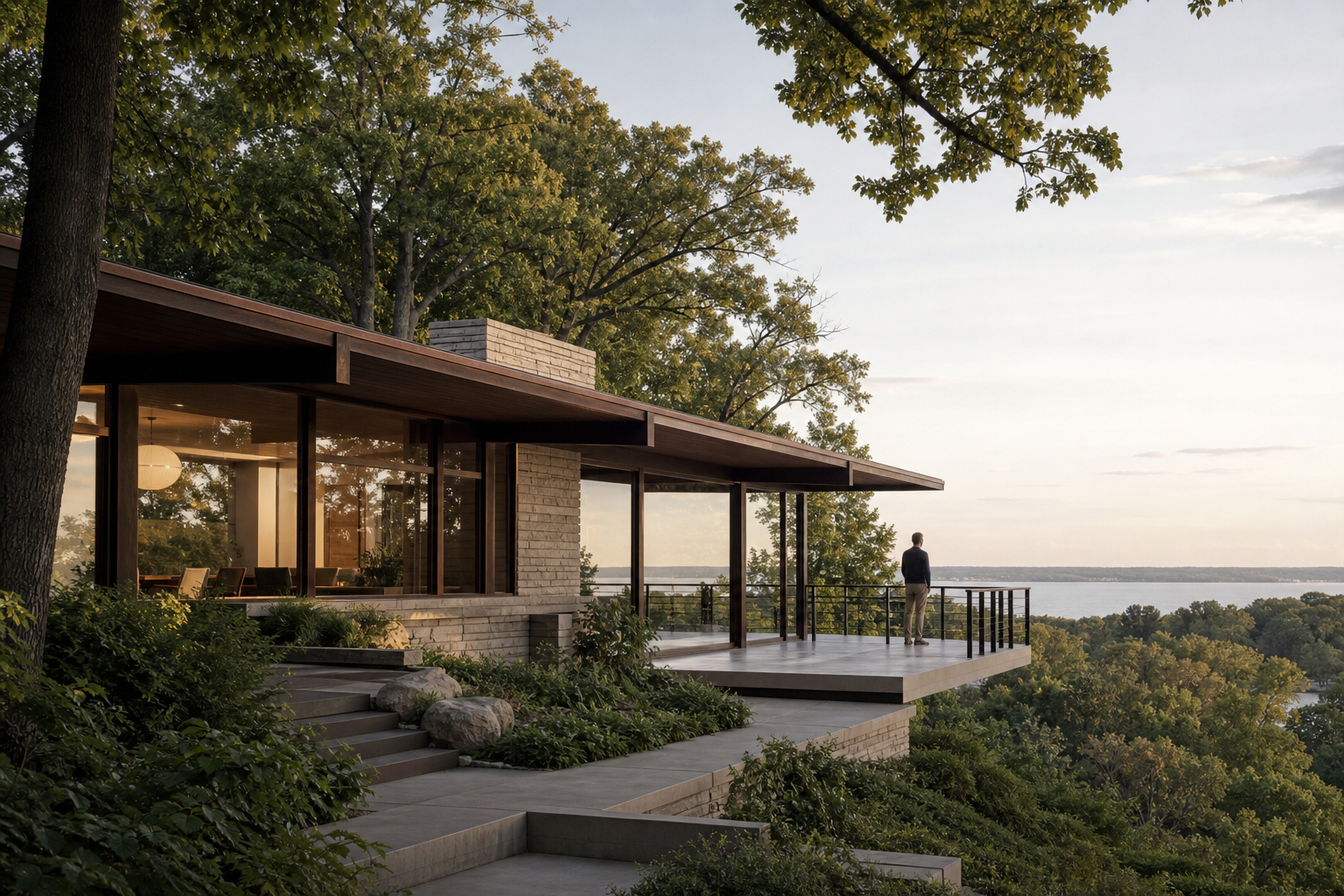
2 Ledge Road sits on a full half-acre ravine lot in Cliffcrest with unobstructed southeast-facing views of the water. The asking price is $1,999,999. The Wright connection shows up not in the marketing pitch but in the bones: how the house meets the slope, how the roofline sits low against mature trees, how the interior reads as continuous with the ravine beyond the glass.
Mid-century modern as a category has been strip-mined by flippers who think it means Eames chairs and a fresh coat of white paint. This isn't that. The design here is about orientation and restraint. The house doesn't sit on top of the lot like a monument. It tucks into the topography. Windows face the water, not the street. The structure works with the grade instead of fighting it.
What Half an Acre Buys You in Cliffcrest
A half-acre inside Toronto's city limits is rare enough to change the math on what privacy costs. This lot is surrounded by mature trees, which means the sightlines you're buying were planted decades ago and can't be replicated by a new buyer with a landscaping budget. The ravine lot designation also limits what can be built next to you, which is the only durable form of view protection available in a city where zoning changes every election cycle.
The water view faces southeast, which is the underrated orientation. You get morning light without the afternoon glare that turns west-facing glass into a liability from May through September. Southeast also means you're looking at the lake during the part of the day when you're actually home and awake, not staring at a sunset you're too tired to appreciate.
The Cliffcrest location itself sits in the territory where the Scarborough Bluffs start doing the work. You're far enough east that land costs reflect East York pricing, not Beaches premiums, but close enough to the water that the lot has the same functional amenity set.
The Wright Influence, Decoded
Frank Lloyd Wright's students didn't all design the same way, but they learned a consistent set of principles: horizontal lines, deep overhangs, integration with the landscape, compression and release in interior volume. Those principles show up here not as mimicry but as application.
The home blends into its surroundings instead of announcing itself. That decision costs curb appeal, which is the trade every serious mid-century design makes. You sacrifice the street-facing photo for the lived experience inside. Buyers who want the house to look impressive from the driveway are sorting themselves out before they call their agent.
Inside, the layout treats the ravine and the water as part of the interior program, not as a view you occasionally remember to appreciate. Glass placement isn't decorative. It's structural to how the house works.
What Two Million Buys You Now
At just under $2 million, this house competes with renovated semi-detached homes in Leslieville and dated detached properties in the inner suburbs that sit on 30-foot lots. What you're not getting in those comps is land, privacy, or a design with any architectural intent.
The mid-century category in Toronto has bifurcated. Tear-down-quality ranches in decent neighborhoods get flipped into something unrecognizable. Architect-designed homes from the same era, if they've been maintained, hold value differently because the design itself has scarcity. The Wright protégé credential is a footnote. The half-acre ravine lot with mature trees and protected views is the headline.



The architect who designed this house studied under Frank Lloyd Wright. That credential matters less than what he did with it.
2 Ledge Road sits on a full half-acre ravine lot in Cliffcrest with unobstructed southeast-facing views of the water. The asking price is $1,999,999. The Wright connection shows up not in the marketing pitch but in the bones: how the house meets the slope, how the roofline sits low against mature trees, how the interior reads as continuous with the ravine beyond the glass.
Mid-century modern as a category has been strip-mined by flippers who think it means Eames chairs and a fresh coat of white paint. This isn't that. The design here is about orientation and restraint. The house doesn't sit on top of the lot like a monument. It tucks into the topography. Windows face the water, not the street. The structure works with the grade instead of fighting it.
What Half an Acre Buys You in Cliffcrest
A half-acre inside Toronto's city limits is rare enough to change the math on what privacy costs. This lot is surrounded by mature trees, which means the sightlines you're buying were planted decades ago and can't be replicated by a new buyer with a landscaping budget. The ravine lot designation also limits what can be built next to you, which is the only durable form of view protection available in a city where zoning changes every election cycle.
The water view faces southeast, which is the underrated orientation. You get morning light without the afternoon glare that turns west-facing glass into a liability from May through September. Southeast also means you're looking at the lake during the part of the day when you're actually home and awake, not staring at a sunset you're too tired to appreciate.
The Cliffcrest location itself sits in the territory where the Scarborough Bluffs start doing the work. You're far enough east that land costs reflect East York pricing, not Beaches premiums, but close enough to the water that the lot has the same functional amenity set.
The Wright Influence, Decoded
Frank Lloyd Wright's students didn't all design the same way, but they learned a consistent set of principles: horizontal lines, deep overhangs, integration with the landscape, compression and release in interior volume. Those principles show up here not as mimicry but as application.
The home blends into its surroundings instead of announcing itself. That decision costs curb appeal, which is the trade every serious mid-century design makes. You sacrifice the street-facing photo for the lived experience inside. Buyers who want the house to look impressive from the driveway are sorting themselves out before they call their agent.
Inside, the layout treats the ravine and the water as part of the interior program, not as a view you occasionally remember to appreciate. Glass placement isn't decorative. It's structural to how the house works.
What Two Million Buys You Now
At just under $2 million, this house competes with renovated semi-detached homes in Leslieville and dated detached properties in the inner suburbs that sit on 30-foot lots. What you're not getting in those comps is land, privacy, or a design with any architectural intent.
The mid-century category in Toronto has bifurcated. Tear-down-quality ranches in decent neighborhoods get flipped into something unrecognizable. Architect-designed homes from the same era, if they've been maintained, hold value differently because the design itself has scarcity. The Wright protégé credential is a footnote. The half-acre ravine lot with mature trees and protected views is the headline.
Read Next
Ottawa Can Win Against Cleveland-Cliffs and Still Lose on Steel Tariffs
143,929 Approved Homes Sit Unbuilt: What Is Really Holding Back Canada's Supply
Northeastern PA or the Big City: What the Same Budget Buys in Each
7 Co-Ownership Agreements That Protect Both the Friendship and the Equity