Independent writing on tax-smart planning, mortgage strategy, and retirement building. For Canadian professionals who want the whole picture, not just a piece of it.
Why a Manitoba Lake Cottage May Be Easier for Americans Than a Winnipeg Condo
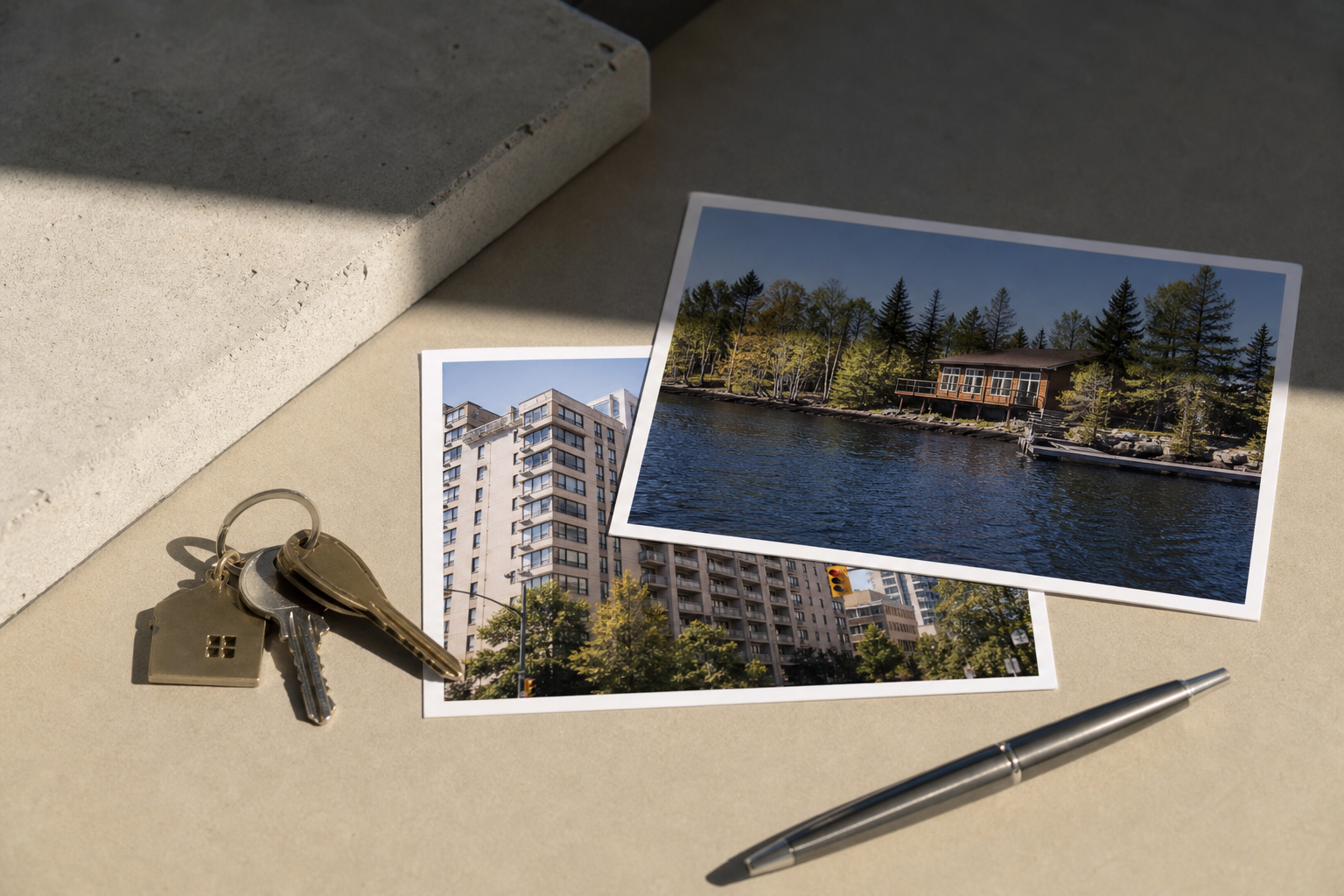
The plan made complete sense when they sketched it out at the kitchen table. A couple in their late fifties, living in Minnesota, with a daughter and two grandkids in Winnipeg. They'd buy a small condo near her, lock the door when they went home, and skip the lawn and the roof. A cottage would mean septic tanks, docks and long weekends of chores. The condo was the low-risk choice.
This is a pattern, and it breaks the same way each time. For Americans, Canadian property rules are written around where a home sits on a census map and around what happens years after the purchase. The property that looks simplest can be the one the law forbids, and the one the law allows comes with tax rules that only show up once you rent it or sell it. If you're weighing a Canadian purchase, the useful question is whether the home still works at the closing table, in the first rental season, and on the day you sell.
The ban follows the map, not the listing
Since January 1, 2023, the Prohibition on the Purchase of Residential Property by Non-Canadians Act has stopped most non-Canadians from buying homes in Canada. It was extended in 2024 and now runs until January 1, 2027. It covers residential buildings with three dwelling units or fewer, which includes the typical condo. The penalty for breaking it is up to $10,000, and a court can order the property sold.
The ban aims at urban housing. Statistics Canada draws boundaries called census metropolitan areas and census agglomerations, and properties outside them are generally outside the ban. In Manitoba, that puts the Winnipeg and Brandon areas off-limits, while many cottage areas, including much of the Interlake, may be open to an American buyer. Some exceptions exist, such as Americans in Canada on a work permit with at least 183 days left, who can buy one home. A retired couple visiting family doesn't fit.
So the couple's condo was the illegal option, and the cottage they'd dismissed was the legal one. Before you fall for any listing, have a Canadian lawyer confirm where its address falls on that map. Incorporating a company here won't get you around it either, since the ban also catches Canadian corporations controlled by non-Canadians.
Legal to buy is a different test from easy to finance
Canadian lenders can't easily check a U.S. credit history or collect from U.S. wages, so they often ask non-residents for 35% to 50% down, and the big banks may want to see real money sitting in Canadian accounts. Manitoba has no foreign buyer tax, but land transfer tax still applies on a sliding scale, with the portion of a price above $200,000 taxed at 2%.
As an illustration, on a $500,000 cottage at 40% down, you'd bring $200,000 in cash before land transfer tax, legal fees and currency costs. If your equity sits in a U.S. house or retirement account, the timing of getting that cash across the border matters as much as the price.
The tax tail starts once you own it
Say the couple buys the cottage and rents it out in the summers they aren't using it. Under CRA rules, 25% of the gross rent is withheld and sent to the CRA, before a single expense is deducted. Filing an NR6 form lets you pay tax on net rental income instead, but only if you file it ahead of time.
Selling brings its own surprise. A non-resident seller needs a Certificate of Compliance from the CRA. Without one, the buyer's lawyer must hold back up to 25% of the gross sale price, and up to 50% for some properties, until the tax is sorted out. The Canada-U.S. tax treaty helps prevent paying twice on the same income, but you still file in both countries, and a cross-border will is the only clean way to pass the cottage to your kids.
Run the sale and the rental through your numbers before you make an offer. A cottage that only works when nothing gets withheld will strain your finances the first summer you rent it out.



The plan made complete sense when they sketched it out at the kitchen table. A couple in their late fifties, living in Minnesota, with a daughter and two grandkids in Winnipeg. They'd buy a small condo near her, lock the door when they went home, and skip the lawn and the roof. A cottage would mean septic tanks, docks and long weekends of chores. The condo was the low-risk choice.
This is a pattern, and it breaks the same way each time. For Americans, Canadian property rules are written around where a home sits on a census map and around what happens years after the purchase. The property that looks simplest can be the one the law forbids, and the one the law allows comes with tax rules that only show up once you rent it or sell it. If you're weighing a Canadian purchase, the useful question is whether the home still works at the closing table, in the first rental season, and on the day you sell.
The ban follows the map, not the listing
Since January 1, 2023, the Prohibition on the Purchase of Residential Property by Non-Canadians Act has stopped most non-Canadians from buying homes in Canada. It was extended in 2024 and now runs until January 1, 2027. It covers residential buildings with three dwelling units or fewer, which includes the typical condo. The penalty for breaking it is up to $10,000, and a court can order the property sold.
The ban aims at urban housing. Statistics Canada draws boundaries called census metropolitan areas and census agglomerations, and properties outside them are generally outside the ban. In Manitoba, that puts the Winnipeg and Brandon areas off-limits, while many cottage areas, including much of the Interlake, may be open to an American buyer. Some exceptions exist, such as Americans in Canada on a work permit with at least 183 days left, who can buy one home. A retired couple visiting family doesn't fit.
So the couple's condo was the illegal option, and the cottage they'd dismissed was the legal one. Before you fall for any listing, have a Canadian lawyer confirm where its address falls on that map. Incorporating a company here won't get you around it either, since the ban also catches Canadian corporations controlled by non-Canadians.
Legal to buy is a different test from easy to finance
Canadian lenders can't easily check a U.S. credit history or collect from U.S. wages, so they often ask non-residents for 35% to 50% down, and the big banks may want to see real money sitting in Canadian accounts. Manitoba has no foreign buyer tax, but land transfer tax still applies on a sliding scale, with the portion of a price above $200,000 taxed at 2%.
As an illustration, on a $500,000 cottage at 40% down, you'd bring $200,000 in cash before land transfer tax, legal fees and currency costs. If your equity sits in a U.S. house or retirement account, the timing of getting that cash across the border matters as much as the price.
The tax tail starts once you own it
Say the couple buys the cottage and rents it out in the summers they aren't using it. Under CRA rules, 25% of the gross rent is withheld and sent to the CRA, before a single expense is deducted. Filing an NR6 form lets you pay tax on net rental income instead, but only if you file it ahead of time.
Selling brings its own surprise. A non-resident seller needs a Certificate of Compliance from the CRA. Without one, the buyer's lawyer must hold back up to 25% of the gross sale price, and up to 50% for some properties, until the tax is sorted out. The Canada-U.S. tax treaty helps prevent paying twice on the same income, but you still file in both countries, and a cross-border will is the only clean way to pass the cottage to your kids.
Run the sale and the rental through your numbers before you make an offer. A cottage that only works when nothing gets withheld will strain your finances the first summer you rent it out.
Read Next
Three CREA Downgrades in One Year Should Retire the 'Temporary Dip' Theory
Mortgage-Free in Retirement? The 4 Costs Your Home Still Charges You
Higher Rates, Softer Hiring: What 2026's Housing Shift Means for Your Equity
The Toronto Penthouse Premium: What Holds Value and What Is Just Status