Independent writing on tax-smart planning, mortgage strategy, and retirement building. For Canadian professionals who want the whole picture, not just a piece of it.
Toronto Houses Under $700,000 Exist. The Purchase Price Is Only the Entry Fee.
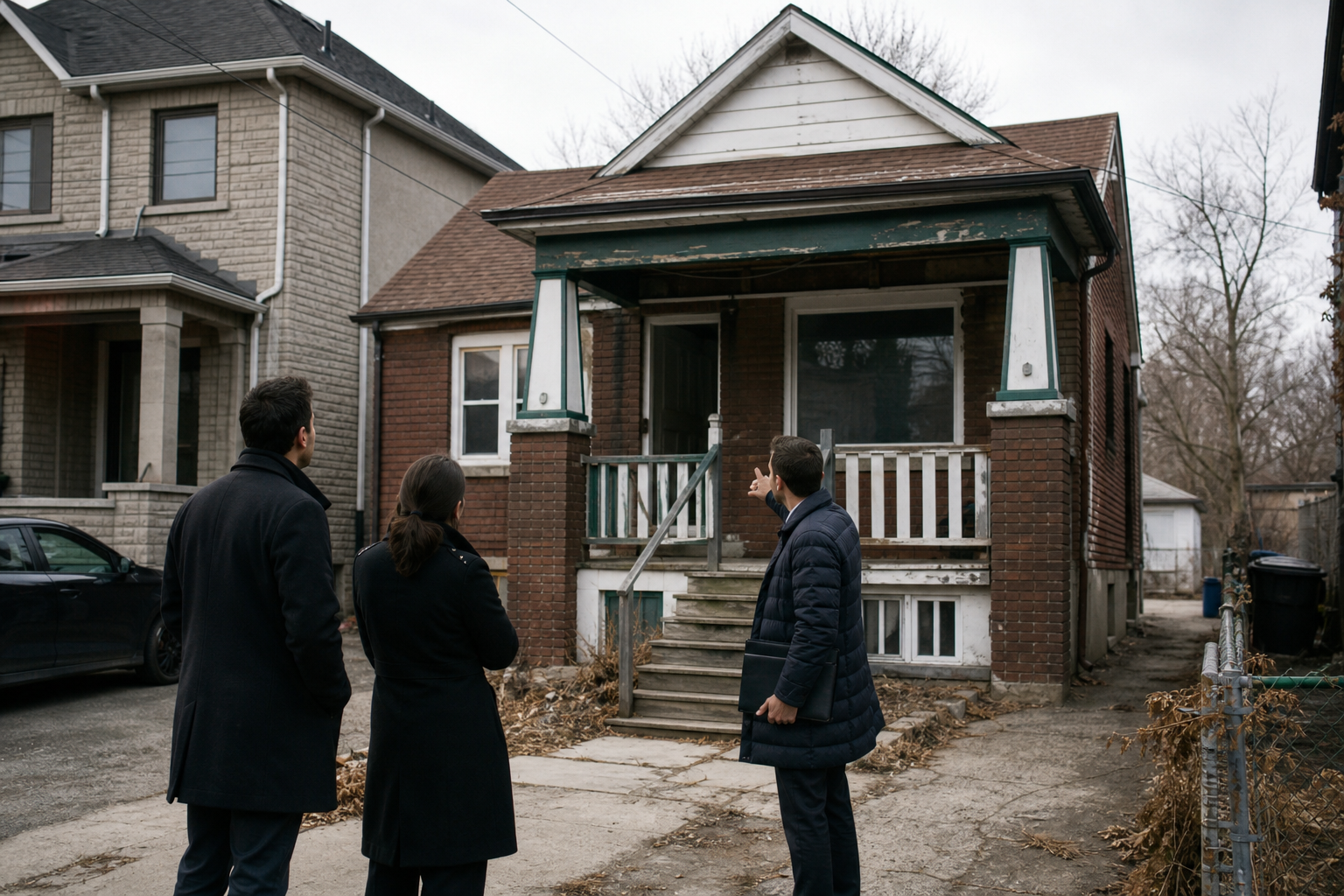
A detached house listed in the City of Toronto for $699,999 is priced close to the national average sale price for all homes in Canada, which CREA put at $668,219 in August 2026. Detached homes in Toronto typically sell for well over a million dollars. So when one shows up under $700,000, buyers notice, and the logic seems obvious. Buy the cheapest house in an expensive city, own the land, and you have found the lowest-risk way in.
That view gets a lot right. A smaller mortgage is a smaller obligation. In Toronto, much of a house's value sits in the land, and land does not wear out the way a condo building's elevators and roof do. You also avoid condo fees that tend to climb over time. For a buyer with steady income and good equity elsewhere, a modest detached house can be a sound long-term holding.
The belief breaks at a specific point. It treats the list price as the cost. At this end of the Toronto market, the list price is closer to an entry fee.
Where the real number comes from
Start with the price itself. Homes in this segment are often listed just under $700,000 to draw a crowd. With so few detached homes at that level, multiple offers are common, and the final price can land well above the asking price. That changes more than the mortgage. On an insured purchase, the minimum down payment at $700,000 is $45,000: 5% of the first $500,000 and 10% of the rest. At $800,000, the same formula asks for $55,000.
Then add closing costs. Toronto buyers pay land transfer tax twice, once to the province and once to the city. On a $700,000 purchase, a buyer who does not qualify for first-time rebates pays approximately $38,950 in combined provincial and Toronto municipal land transfer tax. That money comes out of cash. It does not go into the mortgage, and it does not build equity.
Next comes the house. Most listings at this price are small bungalows on narrow lots, homes that need major work, or both, and many are in outer areas like Scarborough, Etobicoke or Rexdale. Older homes can come with knob-and-tube wiring, a very old type of electrical system, along with dated plumbing or asbestos. Some insurers will charge more to cover these homes, and some will not cover them until the problem is fixed. A roof, a furnace and an electrical upgrade in the first two years can easily add up to tens of thousands of dollars.
Finally, there is qualifying. Under the federal stress test, you must show you can afford payments at your contract rate plus two percentage points, or the minimum qualifying rate, whichever is higher. If the bidding pushes the price up, your approval may not stretch with it. Higher earners should also not count on federal first-time buyer help, because many programs have income limits.
A better way to decide
None of this makes the cheap house a bad buy. It makes it a different kind of buy. Instead of asking whether you can afford the purchase price, ask a more useful question: what is the total capital this property needs in its first two years, and what can the lot do in return?
That second half matters. Toronto now allows garden suites, which are small separate homes in the backyard, on many residential lots, subject to size and bylaw rules. A plain bungalow on a decent lot may support a rental unit that helps with cash flow. A nicer house on a lot that cannot take one may not.
For owners who plan to rent the home out or use it as part of a wider plan, this is also where structure starts to matter. With a readvanceable mortgage and a strategy like the Smith Manoeuvre™, some homeowners borrow back the principal they pay down and invest it, so the interest on that borrowing may become tax-deductible. It adds risk and requires discipline. It should be planned before closing, not patched together afterward.
The conventional advice still holds for a buyer who has the cash reserve, can absorb a bidding war, and has priced the repairs honestly. That buyer may do very well. For everyone else, the sign under $700,000 is where the math starts. Build your budget on all of the costs above, not on the asking price.



A detached house listed in the City of Toronto for $699,999 is priced close to the national average sale price for all homes in Canada, which CREA put at $668,219 in August 2026. Detached homes in Toronto typically sell for well over a million dollars. So when one shows up under $700,000, buyers notice, and the logic seems obvious. Buy the cheapest house in an expensive city, own the land, and you have found the lowest-risk way in.
That view gets a lot right. A smaller mortgage is a smaller obligation. In Toronto, much of a house's value sits in the land, and land does not wear out the way a condo building's elevators and roof do. You also avoid condo fees that tend to climb over time. For a buyer with steady income and good equity elsewhere, a modest detached house can be a sound long-term holding.
The belief breaks at a specific point. It treats the list price as the cost. At this end of the Toronto market, the list price is closer to an entry fee.
Where the real number comes from
Start with the price itself. Homes in this segment are often listed just under $700,000 to draw a crowd. With so few detached homes at that level, multiple offers are common, and the final price can land well above the asking price. That changes more than the mortgage. On an insured purchase, the minimum down payment at $700,000 is $45,000: 5% of the first $500,000 and 10% of the rest. At $800,000, the same formula asks for $55,000.
Then add closing costs. Toronto buyers pay land transfer tax twice, once to the province and once to the city. On a $700,000 purchase, a buyer who does not qualify for first-time rebates pays approximately $38,950 in combined provincial and Toronto municipal land transfer tax. That money comes out of cash. It does not go into the mortgage, and it does not build equity.
Next comes the house. Most listings at this price are small bungalows on narrow lots, homes that need major work, or both, and many are in outer areas like Scarborough, Etobicoke or Rexdale. Older homes can come with knob-and-tube wiring, a very old type of electrical system, along with dated plumbing or asbestos. Some insurers will charge more to cover these homes, and some will not cover them until the problem is fixed. A roof, a furnace and an electrical upgrade in the first two years can easily add up to tens of thousands of dollars.
Finally, there is qualifying. Under the federal stress test, you must show you can afford payments at your contract rate plus two percentage points, or the minimum qualifying rate, whichever is higher. If the bidding pushes the price up, your approval may not stretch with it. Higher earners should also not count on federal first-time buyer help, because many programs have income limits.
A better way to decide
None of this makes the cheap house a bad buy. It makes it a different kind of buy. Instead of asking whether you can afford the purchase price, ask a more useful question: what is the total capital this property needs in its first two years, and what can the lot do in return?
That second half matters. Toronto now allows garden suites, which are small separate homes in the backyard, on many residential lots, subject to size and bylaw rules. A plain bungalow on a decent lot may support a rental unit that helps with cash flow. A nicer house on a lot that cannot take one may not.
For owners who plan to rent the home out or use it as part of a wider plan, this is also where structure starts to matter. With a readvanceable mortgage and a strategy like the Smith Manoeuvre™, some homeowners borrow back the principal they pay down and invest it, so the interest on that borrowing may become tax-deductible. It adds risk and requires discipline. It should be planned before closing, not patched together afterward.
The conventional advice still holds for a buyer who has the cash reserve, can absorb a bidding war, and has priced the repairs honestly. That buyer may do very well. For everyone else, the sign under $700,000 is where the math starts. Build your budget on all of the costs above, not on the asking price.
Sources
Read Next
Three CREA Downgrades in One Year Should Retire the 'Temporary Dip' Theory
Mortgage-Free in Retirement? The 4 Costs Your Home Still Charges You
Higher Rates, Softer Hiring: What 2026's Housing Shift Means for Your Equity
The Toronto Penthouse Premium: What Holds Value and What Is Just Status