Independent writing on tax-smart planning, mortgage strategy, and retirement building. For Canadian professionals who want the whole picture, not just a piece of it.
The Bank of Canada's Rate Hike Fights High Prices by Starving New Supply
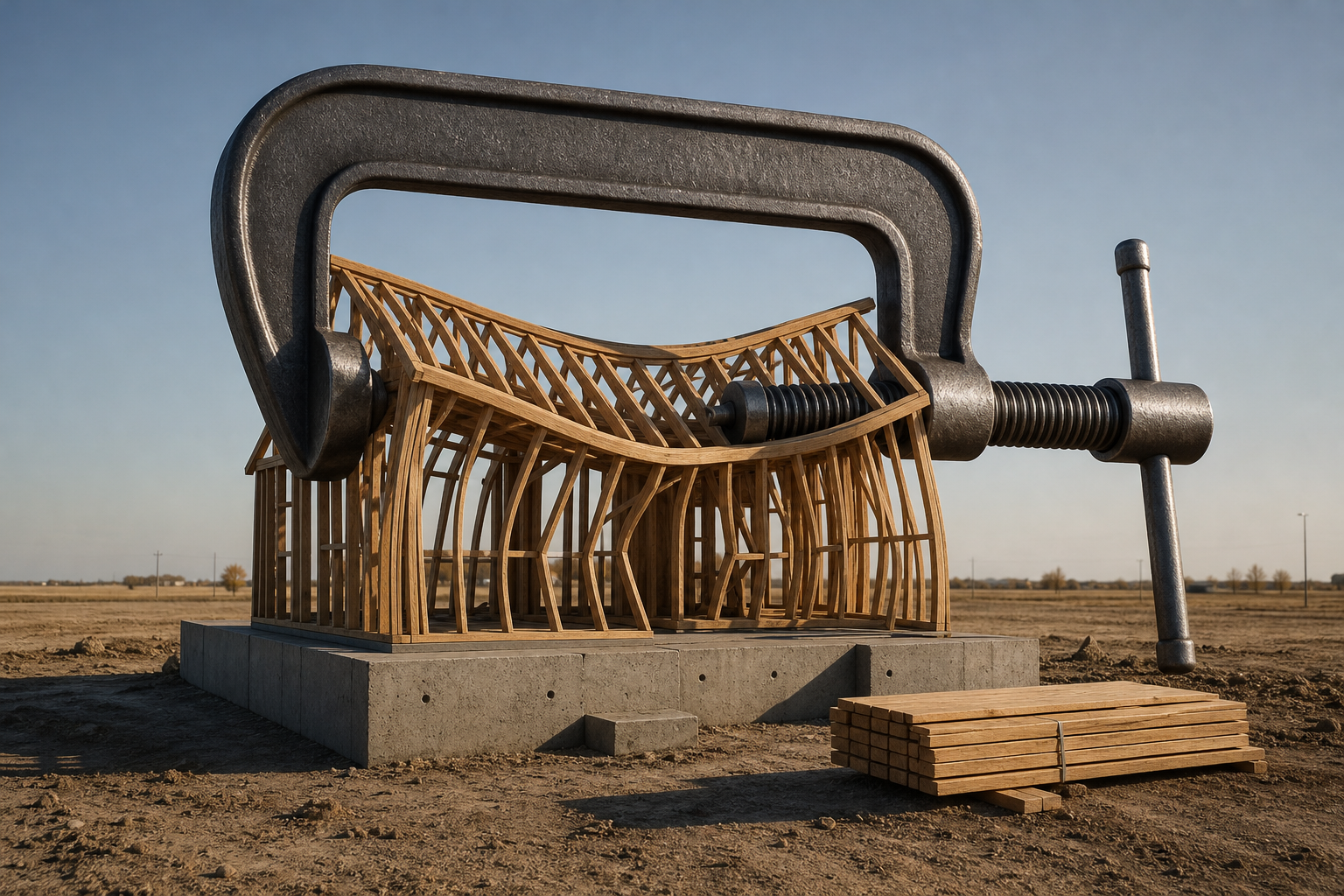
Housing can slow down and still get harder to afford. Listings sit longer, bidding wars thin out, sellers trim their asking prices, and the monthly cost of buying barely moves. That's because the borrowing cost went up in the same stretch the market cooled. Higher rates land on the buyer's mortgage. Meanwhile, builders are still paying elevated prices for materials on the homes buyers will eventually need.
If you've watched a Winnipeg listing drop its price, then run the numbers and found the payment still stretches your budget, you've felt this. The house got cheaper. Owning it didn't. That gap is what this piece is about: why a cooling market can still leave you with an unaffordable move, and how to judge your next purchase by more than the sticker. The tool the Bank of Canada uses works fast on demand. Its effect on supply runs slower, and in a direction most buyers never think about.
Why higher rates squeeze builders as well as buyers
The common view is that rate increases cool prices by thinning out the crowd of buyers, and that view is largely right. Fewer qualified buyers means less pressure on what sellers can ask. What gets missed is that builders borrow too, and they borrow for longer.
A new home is financed long before anyone moves in. The builder carries the land, then the construction loan, then the stretch between the last trade leaving and the buyer taking possession. Every month of that carries interest. When rates rise, that carrying cost rises with them. Stack it on top of already high building costs and some projects that looked sensible a year ago stop making financial sense. Those projects tend to get delayed or redesigned, and some never start.
Turn that toward your own next move. You aren't only competing with fewer buyers today. You may also be choosing from fewer newly completed homes later, if projects that should have broken ground this year get pushed back. That's a risk, and nobody can promise how it plays out in Manitoba. The country was already short before this, though. CMHC estimated in 2023 that Canada needs 3.5 million additional housing units by 2030 to restore affordability. Anything that makes building harder works against that number.
How to tell whether a cheaper house is actually cheaper to own
The Bank of Canada doesn't target house prices. Its job is keeping consumer price inflation at 2%, within a 1% to 3% range, and housing is usually the first sector to feel a rate change. That job is legitimate, and a blunt tool will catch things it wasn't aimed at.
Many buyers hold one assumption that deserves correcting: that a calmer market means a more affordable one. Cooling housing demand isn't the same as improving housing affordability, especially when borrowing costs also make new homes harder to build. Demand responds in weeks. Supply responds over years, and a costlier loan for the builder can slow it further. Equity and a strong income give you options, but neither makes your borrowing rate irrelevant.
So test affordability directly instead of predicting prices or rates:
Compare the monthly cost of moving. Add the new mortgage payment, property taxes, insurance and upkeep. A $30,000 price reduction can disappear inside a higher rate on a larger balance.
On a new build, ask what supports the completion date. Is construction underway or still pending? With financing tight, certainty of delivery is worth as much attention as the floor plan.
On an investment, run the cash flow at today's rate. Assume no rate cut and no quick appreciation. A possible future shortage doesn't make today's numbers work.
Go back to that reduced-price listing. Whether the seller will take less matters less than two other questions: does the home work at today's cost of borrowing, and are suitable alternatives actually being built? Start with one comparison this week. Put the full monthly cost of staying where you are beside the full monthly cost of moving, line by line. Rate headlines won't make that decision for you, and those two figures will.



Housing can slow down and still get harder to afford. Listings sit longer, bidding wars thin out, sellers trim their asking prices, and the monthly cost of buying barely moves. That's because the borrowing cost went up in the same stretch the market cooled. Higher rates land on the buyer's mortgage. Meanwhile, builders are still paying elevated prices for materials on the homes buyers will eventually need.
If you've watched a Winnipeg listing drop its price, then run the numbers and found the payment still stretches your budget, you've felt this. The house got cheaper. Owning it didn't. That gap is what this piece is about: why a cooling market can still leave you with an unaffordable move, and how to judge your next purchase by more than the sticker. The tool the Bank of Canada uses works fast on demand. Its effect on supply runs slower, and in a direction most buyers never think about.
Why higher rates squeeze builders as well as buyers
The common view is that rate increases cool prices by thinning out the crowd of buyers, and that view is largely right. Fewer qualified buyers means less pressure on what sellers can ask. What gets missed is that builders borrow too, and they borrow for longer.
A new home is financed long before anyone moves in. The builder carries the land, then the construction loan, then the stretch between the last trade leaving and the buyer taking possession. Every month of that carries interest. When rates rise, that carrying cost rises with them. Stack it on top of already high building costs and some projects that looked sensible a year ago stop making financial sense. Those projects tend to get delayed or redesigned, and some never start.
Turn that toward your own next move. You aren't only competing with fewer buyers today. You may also be choosing from fewer newly completed homes later, if projects that should have broken ground this year get pushed back. That's a risk, and nobody can promise how it plays out in Manitoba. The country was already short before this, though. CMHC estimated in 2023 that Canada needs 3.5 million additional housing units by 2030 to restore affordability. Anything that makes building harder works against that number.
How to tell whether a cheaper house is actually cheaper to own
The Bank of Canada doesn't target house prices. Its job is keeping consumer price inflation at 2%, within a 1% to 3% range, and housing is usually the first sector to feel a rate change. That job is legitimate, and a blunt tool will catch things it wasn't aimed at.
Many buyers hold one assumption that deserves correcting: that a calmer market means a more affordable one. Cooling housing demand isn't the same as improving housing affordability, especially when borrowing costs also make new homes harder to build. Demand responds in weeks. Supply responds over years, and a costlier loan for the builder can slow it further. Equity and a strong income give you options, but neither makes your borrowing rate irrelevant.
So test affordability directly instead of predicting prices or rates:
Go back to that reduced-price listing. Whether the seller will take less matters less than two other questions: does the home work at today's cost of borrowing, and are suitable alternatives actually being built? Start with one comparison this week. Put the full monthly cost of staying where you are beside the full monthly cost of moving, line by line. Rate headlines won't make that decision for you, and those two figures will.
Read Next
Your Diversified Portfolio Has No Defence Against a Tariff Announcement
Selling Your Bond ETF for GICs Swaps Price Swings for Reinvestment Risk
Why the Rate Hike Hits Your Line of Credit Before Your Fixed Mortgage
Stop Betting Your Mortgage on the Bank of Canada's Next Move