Independent writing on tax-smart planning, mortgage strategy, and retirement building. For Canadian professionals who want the whole picture, not just a piece of it.
In 43 of America's 50 Largest Cities, Minimum Wage Won't Cover a One-Bedroom
A 22-year-old in Phoenix working full-time at Arizona's $14.70 minimum wage earns $2,548 before tax. The average one-bedroom there runs $1,383. After federal income tax and FICA, monthly take-home is roughly $2,150. That leaves $767 for food, transit, phone, student loans, insurance, and everything else required to keep showing up. The math doesn't cover a baseline life, and Phoenix isn't an outlier.
Zoocasa ran the numbers across the 50 largest U.S. cities using Apartments.com rent data and local minimum wage floors. In 43 of them, a full-time minimum-wage worker cannot afford the average one-bedroom without exceeding the standard 30% affordability threshold, the rule housing counselors and lenders use to separate manageable from unsustainable. In most of those cities, the gap isn't close.
Where the Floor Holds
Seven cities make the cut. Wichita tops the list: $12 minimum wage, $745 average one-bedroom, requiring 62 hours of work per month to cover rent. That's 35% of a full-time schedule. Oklahoma City, Tulsa, and El Paso follow similar patterns, smaller metros where both wage floors and rental markets sit lower.
The pattern breaks in Seattle. The city's $19.97 minimum wage is the highest in the dataset, and while the average one-bedroom runs $1,899, a full-time worker clears the 30% bar with room to spare. San Francisco comes close at $18.07 per hour against a $3,000 median, landing just inside affordable range for a minimum-wage earner willing to stretch.
But those are the exceptions. Everywhere else, the structure doesn't work.
The Affordability Trap
The standard advice for someone priced out at minimum wage is roommates or a cheaper neighborhood. That advice assumes cheaper options exist within commuting distance and that splitting rent actually solves the equation rather than just redistributing it across two or three people facing the same wage floor.
Phoenix's $767 monthly remainder assumes zero healthcare premium, zero car payment, zero debt service. A $150 phone bill, $80 for basic groceries per week, and $100 in gas leaves $137. One surprise expense, a dental bill, a broken alternator, a bounced check fee, and the month goes negative. This isn't a budgeting failure. It's arithmetic.
The mismatch shows up starkest in the Sunbelt metros that absorbed the largest pandemic-era population inflows. Austin's average one-bedroom hit $1,429 against a $7.25 state minimum wage, the federal floor. A full-time worker there earns $1,257 pre-tax. Rent alone exceeds gross income before a single deduction. Charlotte, Nashville, and Raleigh share versions of the same gap: fast-growing cities where rent climbed with demand while wage floors stayed pinned to federal baseline.
What Changed
The federal minimum wage hasn't moved since 2009. It sat at $7.25 while metro rent growth compounded annually, driven by constrained supply, investor appetite, and a decade of historically cheap construction financing that built mostly at the higher end. Twenty-nine states and dozens of cities have enacted local wage floors above the federal rate, but the raises haven't kept pace with rent.
The result is a benefits cliff for anyone crossing from minimum wage into the next bracket. Earn $16 instead of $14.70 in Phoenix and rent suddenly pencils, but childcare subsidies, Medicaid eligibility, and SNAP phase out. Structurally, the system discourages the raise.
Cities with higher wage floors, Seattle, San Francisco, Denver, prove the concept works when both sides of the ratio move. Wichita proves it works when both stay low. The 43 cities in the middle have let one half of the equation drift while anchoring the other, and the gap is now wide enough that a full-time worker can't cover a studio in most of the country's largest metros. The minimum wage hasn't budged since 2009 while rent kept climbing, and now a full-time worker at the federal floor can't afford a studio in most major metros.


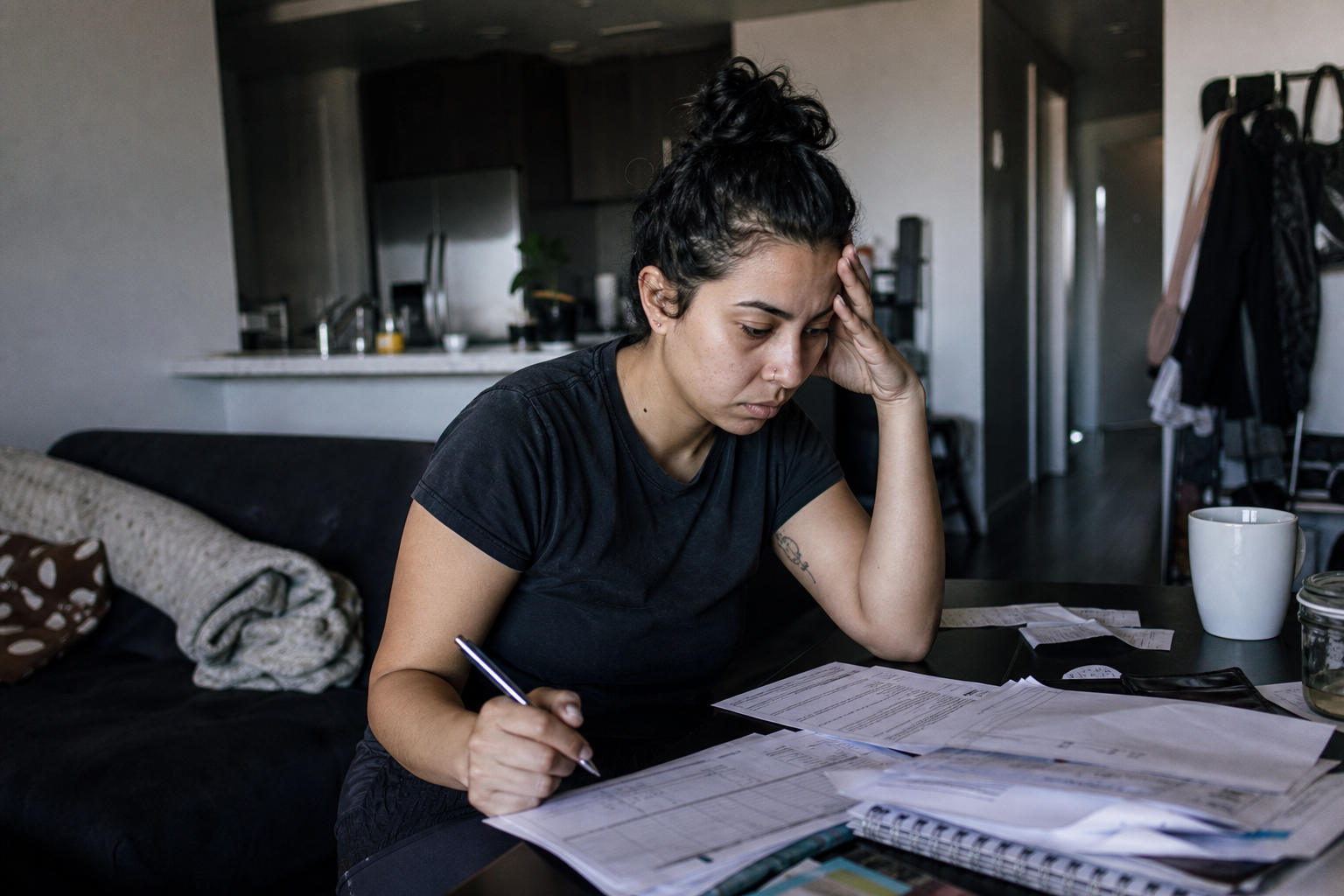

A 22-year-old in Phoenix working full-time at Arizona's $14.70 minimum wage earns $2,548 before tax. The average one-bedroom there runs $1,383. After federal income tax and FICA, monthly take-home is roughly $2,150. That leaves $767 for food, transit, phone, student loans, insurance, and everything else required to keep showing up. The math doesn't cover a baseline life, and Phoenix isn't an outlier.
Zoocasa ran the numbers across the 50 largest U.S. cities using Apartments.com rent data and local minimum wage floors. In 43 of them, a full-time minimum-wage worker cannot afford the average one-bedroom without exceeding the standard 30% affordability threshold, the rule housing counselors and lenders use to separate manageable from unsustainable. In most of those cities, the gap isn't close.
Where the Floor Holds
Seven cities make the cut. Wichita tops the list: $12 minimum wage, $745 average one-bedroom, requiring 62 hours of work per month to cover rent. That's 35% of a full-time schedule. Oklahoma City, Tulsa, and El Paso follow similar patterns, smaller metros where both wage floors and rental markets sit lower.
The pattern breaks in Seattle. The city's $19.97 minimum wage is the highest in the dataset, and while the average one-bedroom runs $1,899, a full-time worker clears the 30% bar with room to spare. San Francisco comes close at $18.07 per hour against a $3,000 median, landing just inside affordable range for a minimum-wage earner willing to stretch.
But those are the exceptions. Everywhere else, the structure doesn't work.
The Affordability Trap
The standard advice for someone priced out at minimum wage is roommates or a cheaper neighborhood. That advice assumes cheaper options exist within commuting distance and that splitting rent actually solves the equation rather than just redistributing it across two or three people facing the same wage floor.
Phoenix's $767 monthly remainder assumes zero healthcare premium, zero car payment, zero debt service. A $150 phone bill, $80 for basic groceries per week, and $100 in gas leaves $137. One surprise expense, a dental bill, a broken alternator, a bounced check fee, and the month goes negative. This isn't a budgeting failure. It's arithmetic.
The mismatch shows up starkest in the Sunbelt metros that absorbed the largest pandemic-era population inflows. Austin's average one-bedroom hit $1,429 against a $7.25 state minimum wage, the federal floor. A full-time worker there earns $1,257 pre-tax. Rent alone exceeds gross income before a single deduction. Charlotte, Nashville, and Raleigh share versions of the same gap: fast-growing cities where rent climbed with demand while wage floors stayed pinned to federal baseline.
What Changed
The federal minimum wage hasn't moved since 2009. It sat at $7.25 while metro rent growth compounded annually, driven by constrained supply, investor appetite, and a decade of historically cheap construction financing that built mostly at the higher end. Twenty-nine states and dozens of cities have enacted local wage floors above the federal rate, but the raises haven't kept pace with rent.
The result is a benefits cliff for anyone crossing from minimum wage into the next bracket. Earn $16 instead of $14.70 in Phoenix and rent suddenly pencils, but childcare subsidies, Medicaid eligibility, and SNAP phase out. Structurally, the system discourages the raise.
Cities with higher wage floors, Seattle, San Francisco, Denver, prove the concept works when both sides of the ratio move. Wichita proves it works when both stay low. The 43 cities in the middle have let one half of the equation drift while anchoring the other, and the gap is now wide enough that a full-time worker can't cover a studio in most of the country's largest metros. The minimum wage hasn't budged since 2009 while rent kept climbing, and now a full-time worker at the federal floor can't afford a studio in most major metros.
Read Next
Three CREA Downgrades in One Year Should Retire the 'Temporary Dip' Theory
Mortgage-Free in Retirement? The 4 Costs Your Home Still Charges You
Higher Rates, Softer Hiring: What 2026's Housing Shift Means for Your Equity
The Toronto Penthouse Premium: What Holds Value and What Is Just Status