Independent writing on tax-smart planning, mortgage strategy, and retirement building. For Canadian professionals who want the whole picture, not just a piece of it.
How Much Identity Protection Your Family Needs: Coverage Levels That Match Actual Risk
A single fraudulent SIN filing with the CRA can cost significant time to untangle, even when the dollar loss is zero. That's the gap most families miss: identity theft protection isn't insurance against money disappearing, it's coverage for the administrative nightmare of proving you are who you say you are after someone else has already claimed your identity.
Most Canadian home insurance policies include $10,000 to $30,000 of identity theft endorsement. That sounds protective until you read the fine print. The coverage reimburses recovery costs, legal fees, notary expenses, lost wages while you're on the phone with Service Canada, not the fraudulent charges themselves. Your bank's zero-liability policy already covers unauthorized credit card transactions. What you're buying is time.
The three coverage tiers that map to actual risk
Tier 1: Monitoring only. Free credit monitoring through your bank (RBC and Scotiabank both offer dashboards at no charge) plus annual credit report pulls from Equifax and TransUnion Canada. This works if you check your accounts daily, use two-factor authentication everywhere, and have frozen your credit with both bureaus. Recovery is on you if something breaks.
Tier 2: Monitoring plus recovery concierge. Standalone services like Aura or LifeLock cost approximately $144 to $350 per year for an individual, $345 to $900 for a family. The value isn't the dark web scan, it's the case manager who calls the CRA, files the police report, and disputes the fraudulent TFSA contribution on your behalf. Recovery insurance here typically covers $25,000 to $100,000 in legal fees and lost income. This tier makes sense if your household income depends on both adults working and neither of you has slack time to spend three weeks on hold.
Tier 3: High-net-worth protection. Coverage above $100,000, often bundled with cyber-insurance that includes ransomware and social engineering (the fraud where someone impersonates your mortgage broker and redirects your down payment). Pricing varies significantly based on coverage limits and provider. Useful if you're self-employed, hold professional licenses that can be suspended during an investigation, or manage a business where reputational damage from a breach has dollar consequences.
Who actually needs more than the baseline
Children and seniors. A child's SIN is worth more on the dark web than an adult's because it can be used to open accounts that won't be checked for a decade. Seniors are high-value targets because they have established credit limits and often monitor less frequently. A family plan that covers dependents under 18 and parents over 65 closes the gap your home insurance ignores.
Self-employed contractors. If your income stops when you stop working, the "lost wages" component of recovery insurance matters. PIPEDA requires Canadian organizations to notify you of breaches that create "real risk of significant harm," but the notification doesn't come with a cheque for the two weeks you spent restoring your CRA account.
The coverage most people skip and shouldn't
Fraud alert registration. Equifax and TransUnion Canada will place a flag on your file for free, requiring lenders to verify identity before opening new credit. It lasts 6 years. Costs nothing, takes 10 minutes, stops synthetic identity fraud cold. Most monitoring services include this as part of setup. If you're doing it yourself, do it now.
The actual risk isn't the credit card skimmed at a gas station, your bank already covers that. The risk is the identity that gets sold in a "fullz" package with your SIN, date of birth, and mother's maiden name, then used to file for benefits you didn't apply for. Protection that covers the restoration process is worth more than protection that covers the theft itself.


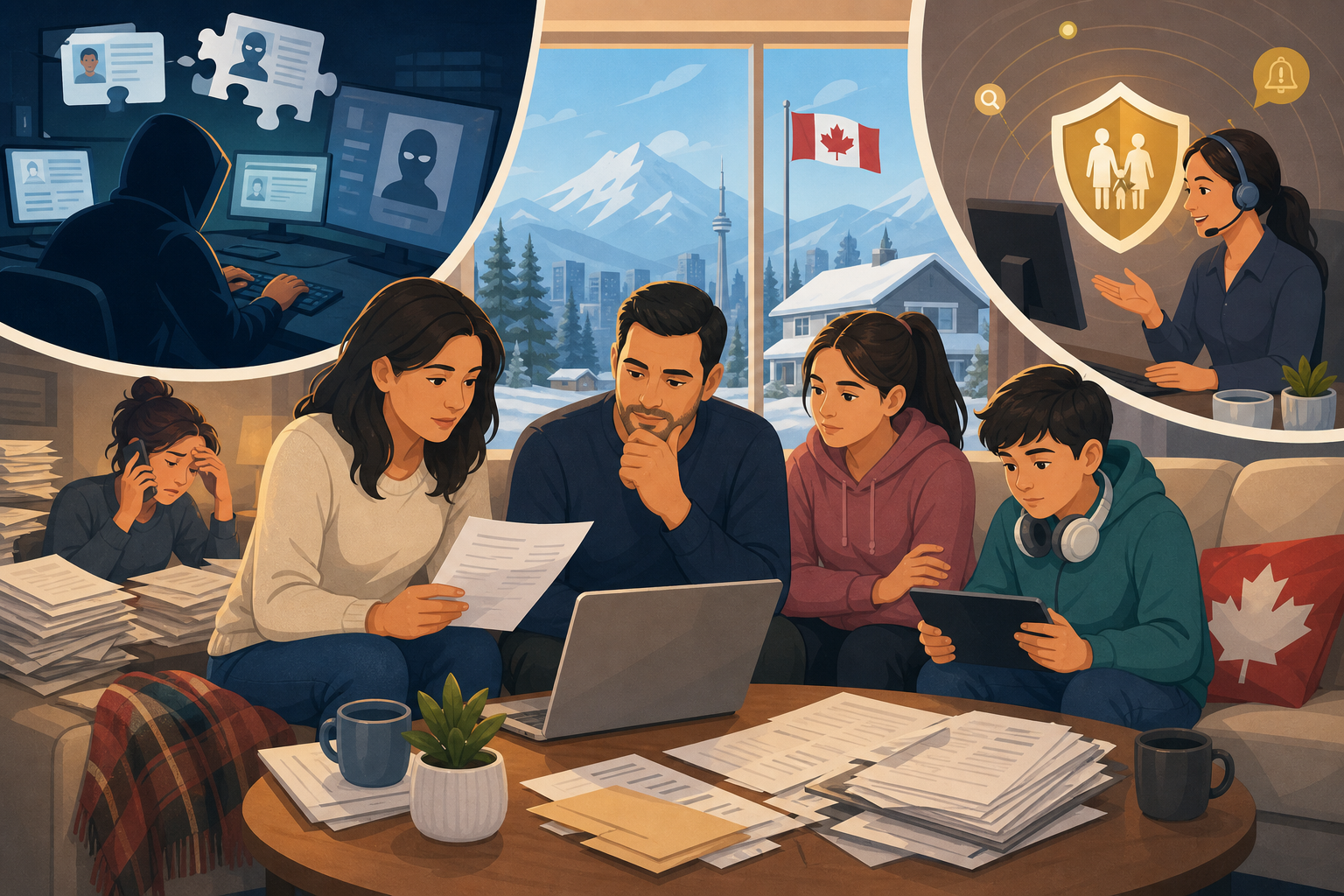

A single fraudulent SIN filing with the CRA can cost significant time to untangle, even when the dollar loss is zero. That's the gap most families miss: identity theft protection isn't insurance against money disappearing, it's coverage for the administrative nightmare of proving you are who you say you are after someone else has already claimed your identity.
Most Canadian home insurance policies include $10,000 to $30,000 of identity theft endorsement. That sounds protective until you read the fine print. The coverage reimburses recovery costs, legal fees, notary expenses, lost wages while you're on the phone with Service Canada, not the fraudulent charges themselves. Your bank's zero-liability policy already covers unauthorized credit card transactions. What you're buying is time.
The three coverage tiers that map to actual risk
Tier 1: Monitoring only. Free credit monitoring through your bank (RBC and Scotiabank both offer dashboards at no charge) plus annual credit report pulls from Equifax and TransUnion Canada. This works if you check your accounts daily, use two-factor authentication everywhere, and have frozen your credit with both bureaus. Recovery is on you if something breaks.
Tier 2: Monitoring plus recovery concierge. Standalone services like Aura or LifeLock cost approximately $144 to $350 per year for an individual, $345 to $900 for a family. The value isn't the dark web scan, it's the case manager who calls the CRA, files the police report, and disputes the fraudulent TFSA contribution on your behalf. Recovery insurance here typically covers $25,000 to $100,000 in legal fees and lost income. This tier makes sense if your household income depends on both adults working and neither of you has slack time to spend three weeks on hold.
Tier 3: High-net-worth protection. Coverage above $100,000, often bundled with cyber-insurance that includes ransomware and social engineering (the fraud where someone impersonates your mortgage broker and redirects your down payment). Pricing varies significantly based on coverage limits and provider. Useful if you're self-employed, hold professional licenses that can be suspended during an investigation, or manage a business where reputational damage from a breach has dollar consequences.
Who actually needs more than the baseline
Children and seniors. A child's SIN is worth more on the dark web than an adult's because it can be used to open accounts that won't be checked for a decade. Seniors are high-value targets because they have established credit limits and often monitor less frequently. A family plan that covers dependents under 18 and parents over 65 closes the gap your home insurance ignores.
Self-employed contractors. If your income stops when you stop working, the "lost wages" component of recovery insurance matters. PIPEDA requires Canadian organizations to notify you of breaches that create "real risk of significant harm," but the notification doesn't come with a cheque for the two weeks you spent restoring your CRA account.
The coverage most people skip and shouldn't
Fraud alert registration. Equifax and TransUnion Canada will place a flag on your file for free, requiring lenders to verify identity before opening new credit. It lasts 6 years. Costs nothing, takes 10 minutes, stops synthetic identity fraud cold. Most monitoring services include this as part of setup. If you're doing it yourself, do it now.
The actual risk isn't the credit card skimmed at a gas station, your bank already covers that. The risk is the identity that gets sold in a "fullz" package with your SIN, date of birth, and mother's maiden name, then used to file for benefits you didn't apply for. Protection that covers the restoration process is worth more than protection that covers the theft itself.
Sources
Read Next
Three CREA Downgrades in One Year Should Retire the 'Temporary Dip' Theory
Mortgage-Free in Retirement? The 4 Costs Your Home Still Charges You
Higher Rates, Softer Hiring: What 2026's Housing Shift Means for Your Equity
The Toronto Penthouse Premium: What Holds Value and What Is Just Status