Independent writing on tax-smart planning, mortgage strategy, and retirement building. For Canadian professionals who want the whole picture, not just a piece of it.
Close the Cottage Before Thanksgiving: A Winterizing Checklist That Prevents Burst Pipes
Thanksgiving weekend has passed, and in Manitoba that is the usual signal to close the lake place. If yours is still open, you have a short window before deep ground frost sets in, usually in November. The goal is simple: no standing water anywhere in the plumbing, no surprises in your insurance policy, and no mice in the mattresses come May.
Call your insurer before you lock the door. Ask two questions. How often does someone have to check the property for water damage to stay covered? And does the policy treat the cottage as "unoccupied" or "vacant"? Those are different terms. "Vacant" can mean you have no plans to return, and coverage can change sharply. Some policies require a check every few days unless the water is fully shut off and drained. Get the answer in writing.
Decide between a dry shutdown and low heat. Low heat, with the thermostat no lower than 10°C, is convenient, but it depends on the power staying on through a stretch of -30°C weather. A full dry winterization, with every line drained, is the only method that still works when the power fails. For a remote cabin in the Whiteshell or the Interlake, choose dry.
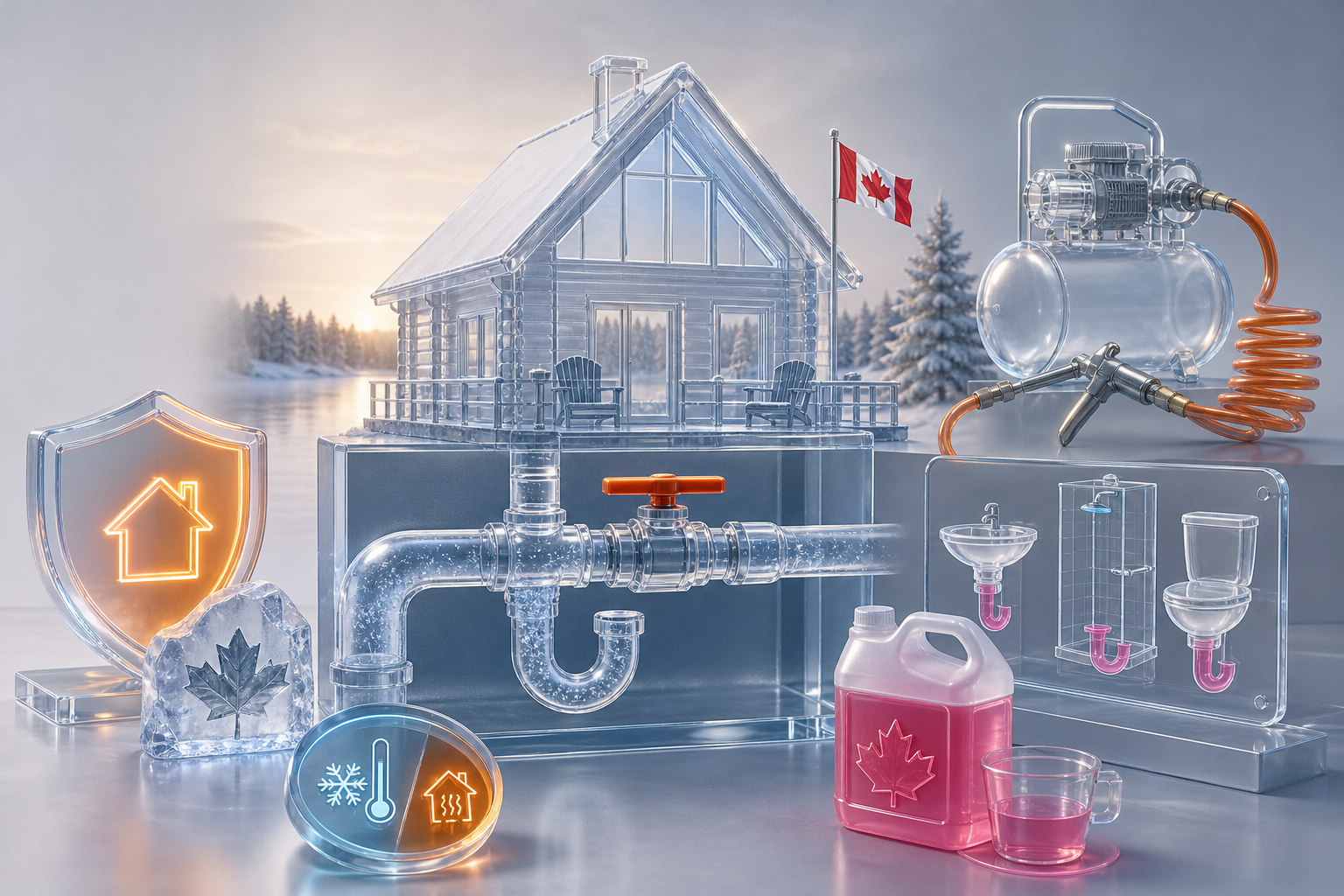
Shut the main valve, open every tap, then blow out the lines. Draining by gravity leaves water sitting in low elbows and valve bodies. Water expands about 9% as it freezes, and that small pocket is enough to split copper or PEX. Use an air compressor to push out what gravity misses. Open the taps one at a time, starting at the end of the line farthest from the compressor.
Cut the breaker to the water heater before you drain it. If the elements power on while the tank is empty, they burn out within minutes. Then open the drain valve and let the sediment flush out with the water.
Pour RV antifreeze into every P-trap. The P-trap is the U-shaped pipe under each sink, tub and shower. Toilet bowls and tanks need it too. Use the pink, non-toxic kind. Automotive antifreeze is toxic and does not belong in a septic system or anywhere near the lake.
Seal any gap you can fit a dime into. Deer mice get through openings about that size. Check where pipes and wires enter the building, around the dryer vent and under doors. Steel wool and caulk are cheap compared with chewed wiring.
Set out moisture-absorbing buckets. A sealed-up cabin traps humidity, and humidity leads to mildew on wood finishes and that musty smell in spring. Put one in each main room and one in the bathroom.
Install a low-temperature sensor that texts your phone. If you keep any heat on, this is how you find out the furnace quit before the pipes do. Pick one that works over cellular or that holds a charge on battery backup, since the alert has to reach you when the power is out.
Trim branches that hang over the roof or the power line. Heavy snow on overhanging limbs is a common cause of roof damage and outages in cottage country. You want those limbs cut before the snow arrives.
Walk the foundation and clear the drainage. In an unheated building, poor drainage can cause frost heave, where freezing soil lifts and shifts piers or footings. Clean out the eavestroughs and make sure downspouts send water away from the building.
File the receipts for any upgrades. New insulation, windows or a better well-pump enclosure count as capital improvements. They get added to the cottage's adjusted cost base, which is what you paid plus qualifying improvements. A higher cost base lowers the taxable capital gain when you sell or pass the property on. Repairs and routine upkeep do not count, so keep the two separate.
The item people skip is the first one. The plumbing work feels like the real job, so the insurance call gets put off. But a burst pipe at a property your policy treats as vacant is a cottage you pay to repair yourself, and the cost comes straight out of the equity you have built in it. Make the call this week, before you drive out to close up.



Thanksgiving weekend has passed, and in Manitoba that is the usual signal to close the lake place. If yours is still open, you have a short window before deep ground frost sets in, usually in November. The goal is simple: no standing water anywhere in the plumbing, no surprises in your insurance policy, and no mice in the mattresses come May.
The item people skip is the first one. The plumbing work feels like the real job, so the insurance call gets put off. But a burst pipe at a property your policy treats as vacant is a cottage you pay to repair yourself, and the cost comes straight out of the equity you have built in it. Make the call this week, before you drive out to close up.
Read Next
Three CREA Downgrades in One Year Should Retire the 'Temporary Dip' Theory
Mortgage-Free in Retirement? The 4 Costs Your Home Still Charges You
Higher Rates, Softer Hiring: What 2026's Housing Shift Means for Your Equity
The Toronto Penthouse Premium: What Holds Value and What Is Just Status