Independent writing on tax-smart planning, mortgage strategy, and retirement building. For Canadian professionals who want the whole picture, not just a piece of it.
Canada's Finance Minister Says We're Insulated From Bond Market Chaos. The Math Suggests Otherwise.
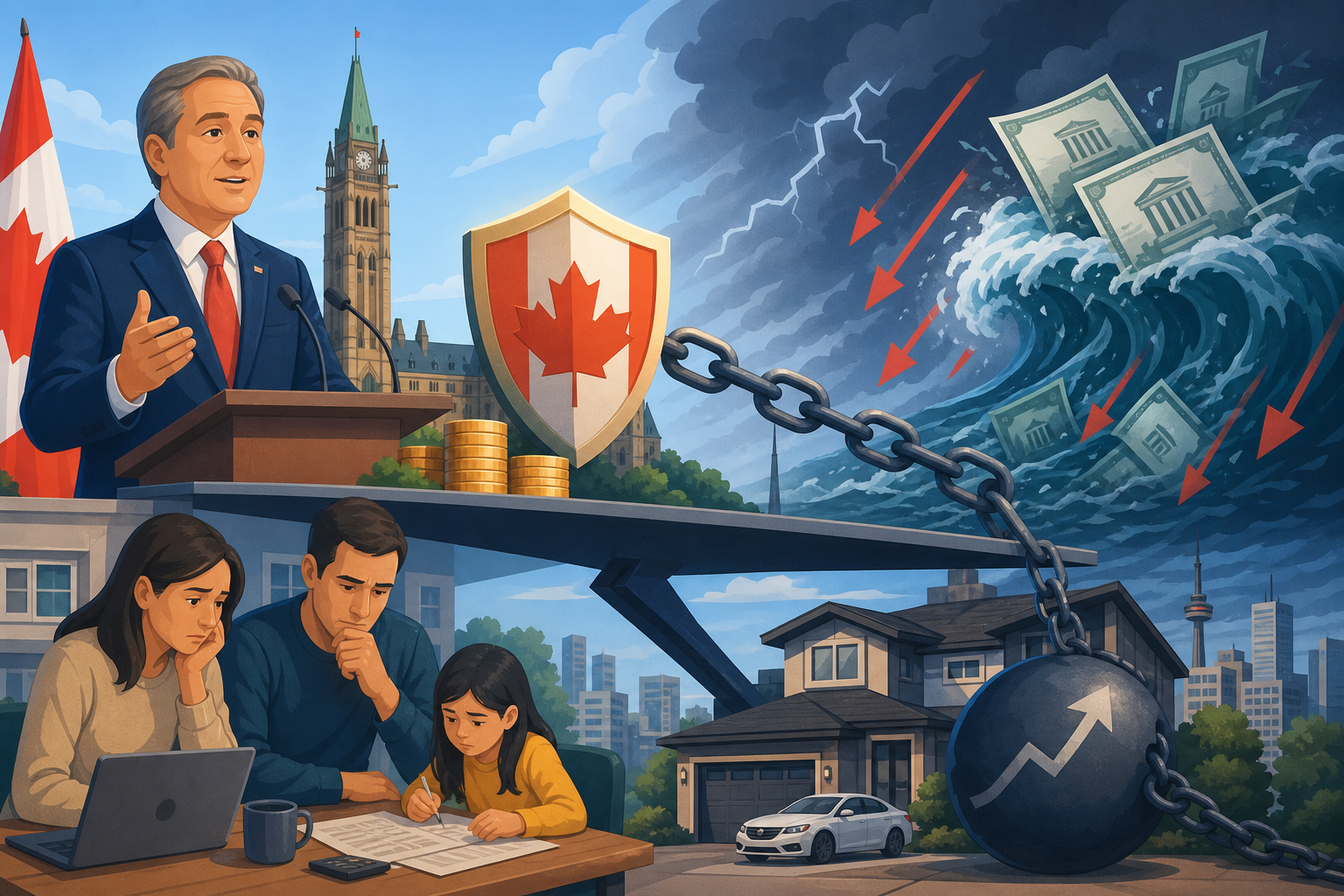
François-Philippe Champagne stood in front of Parliament Hill cameras last week and delivered the kind of reassurance finance ministers are paid to deliver: Canada's fiscal position is solid, investor sentiment remains positive, and the country can weather the global bond sell-off without breaking stride.
The problem is the arithmetic of how bond markets actually transmit into household Canada.
Why "positive sentiment" doesn't stop the math
Canada's net debt-to-GDP sits at 30.5%, the lowest in the G7. That's real. It matters. It means when Treasury yields spike and global capital repositions, some of that money flows into Canadian government bonds as a relative safe haven. This is what Champagne means by "positive sentiment," and he's not wrong that it exists.
But sentiment doesn't set your mortgage rate. The five-year Government of Canada bond does. And that yield, as of early September, sits at 3.41%, up meaningfully from the 2.8% range it held through spring. The Minister's confidence rests on the idea that Canada's strong balance sheet will keep that number from spiking further. The question is whether that cushion is thick enough when the shock is imported.
A bond rout doesn't usually start in Canada. It starts in the U.S. Treasury market, which is the anchor rate for global debt. When U.S. 10-year yields climb, driven by inflation that won't quit or Fed hawkishness or deficit concern, they pull Canadian yields up with them. Not because Canada's fiscal position changed, but because capital flows to where it's paid more. You can have the cleanest books in the G7 and still get dragged.
The refinancing wall nobody's talking about
Champagne's Spring Budget outlined a declining deficit-to-GDP path, which is meant to signal discipline to bond buyers. What it doesn't mention is the refinancing schedule. A large chunk of pandemic-era debt issued in 2020 and 2021, when yields were near zero, comes due for rollover in the next 18 months. Every basis point increase in the yield Canada pays adds billions in annual debt servicing costs. That's not sentiment. That's a line item.
The 2026 fiscal outlook assumes stable-to-declining interest expense as a share of revenue. If the global rout continues and Canadian five-year yields push toward 4%, that assumption breaks. The cost of servicing the debt crowds out other spending, or the government issues more bonds to cover the gap, which adds supply to a market that's already selling. Either path makes the "strong finances" claim harder to defend in 2027 than it is today.
The household transmission is immediate
For most Canadians, the bond market is an abstraction until it shows up in the mortgage renewal letter. Five-year fixed rates in Canada track the five-year Government of Canada bond yield almost perfectly, with a spread for the lender's margin. That yield at 3.41% translates to advertised five-year fixed rates in the low-to-mid 5% range for well-qualified borrowers. A household that locked in at 1.8% in 2021 and renews in 2026 will see their monthly payment jump by $800 to $1,200 on a $500,000 mortgage, depending on their remaining amortization.
The lag between bond market movements and consumer pain is six to eighteen months. Champagne's optimism reflects the present. The refinancing wave reflects the future. And if the U.S. rout continues, if Treasury yields climb another 50 basis points because inflation stays stubborn or the deficit picture worsens, Canada's "insulation" amounts to getting pulled under slightly more slowly than everyone else.
Positive sentiment is a real asset. But it's not a firewall. It's a discount on the shock, not immunity from it.



François-Philippe Champagne stood in front of Parliament Hill cameras last week and delivered the kind of reassurance finance ministers are paid to deliver: Canada's fiscal position is solid, investor sentiment remains positive, and the country can weather the global bond sell-off without breaking stride.
The problem is the arithmetic of how bond markets actually transmit into household Canada.
Why "positive sentiment" doesn't stop the math
Canada's net debt-to-GDP sits at 30.5%, the lowest in the G7. That's real. It matters. It means when Treasury yields spike and global capital repositions, some of that money flows into Canadian government bonds as a relative safe haven. This is what Champagne means by "positive sentiment," and he's not wrong that it exists.
But sentiment doesn't set your mortgage rate. The five-year Government of Canada bond does. And that yield, as of early September, sits at 3.41%, up meaningfully from the 2.8% range it held through spring. The Minister's confidence rests on the idea that Canada's strong balance sheet will keep that number from spiking further. The question is whether that cushion is thick enough when the shock is imported.
A bond rout doesn't usually start in Canada. It starts in the U.S. Treasury market, which is the anchor rate for global debt. When U.S. 10-year yields climb, driven by inflation that won't quit or Fed hawkishness or deficit concern, they pull Canadian yields up with them. Not because Canada's fiscal position changed, but because capital flows to where it's paid more. You can have the cleanest books in the G7 and still get dragged.
The refinancing wall nobody's talking about
Champagne's Spring Budget outlined a declining deficit-to-GDP path, which is meant to signal discipline to bond buyers. What it doesn't mention is the refinancing schedule. A large chunk of pandemic-era debt issued in 2020 and 2021, when yields were near zero, comes due for rollover in the next 18 months. Every basis point increase in the yield Canada pays adds billions in annual debt servicing costs. That's not sentiment. That's a line item.
The 2026 fiscal outlook assumes stable-to-declining interest expense as a share of revenue. If the global rout continues and Canadian five-year yields push toward 4%, that assumption breaks. The cost of servicing the debt crowds out other spending, or the government issues more bonds to cover the gap, which adds supply to a market that's already selling. Either path makes the "strong finances" claim harder to defend in 2027 than it is today.
The household transmission is immediate
For most Canadians, the bond market is an abstraction until it shows up in the mortgage renewal letter. Five-year fixed rates in Canada track the five-year Government of Canada bond yield almost perfectly, with a spread for the lender's margin. That yield at 3.41% translates to advertised five-year fixed rates in the low-to-mid 5% range for well-qualified borrowers. A household that locked in at 1.8% in 2021 and renews in 2026 will see their monthly payment jump by $800 to $1,200 on a $500,000 mortgage, depending on their remaining amortization.
The lag between bond market movements and consumer pain is six to eighteen months. Champagne's optimism reflects the present. The refinancing wave reflects the future. And if the U.S. rout continues, if Treasury yields climb another 50 basis points because inflation stays stubborn or the deficit picture worsens, Canada's "insulation" amounts to getting pulled under slightly more slowly than everyone else.
Positive sentiment is a real asset. But it's not a firewall. It's a discount on the shock, not immunity from it.
Read Next
Three CREA Downgrades in One Year Should Retire the 'Temporary Dip' Theory
Mortgage-Free in Retirement? The 4 Costs Your Home Still Charges You
Higher Rates, Softer Hiring: What 2026's Housing Shift Means for Your Equity
The Toronto Penthouse Premium: What Holds Value and What Is Just Status