Independent writing on tax-smart planning, mortgage strategy, and retirement building. For Canadian professionals who want the whole picture, not just a piece of it.
Canada's 4.7 Million Home Target Faces Construction Slowdown Just as Gap Begins to Close
The federal housing agency's latest figures show the national shortfall dropped by roughly 100,000 units in 2025, driven almost entirely by Ottawa's decision to trim temporary resident targets rather than any surge in building. The Canada Mortgage and Housing Corporation now pegs the deficit at 4.69 million homes by 2036 if the country is to return to 2004-level affordability, a year when the median household could buy a home without spending more than 30% of gross income on shelter.
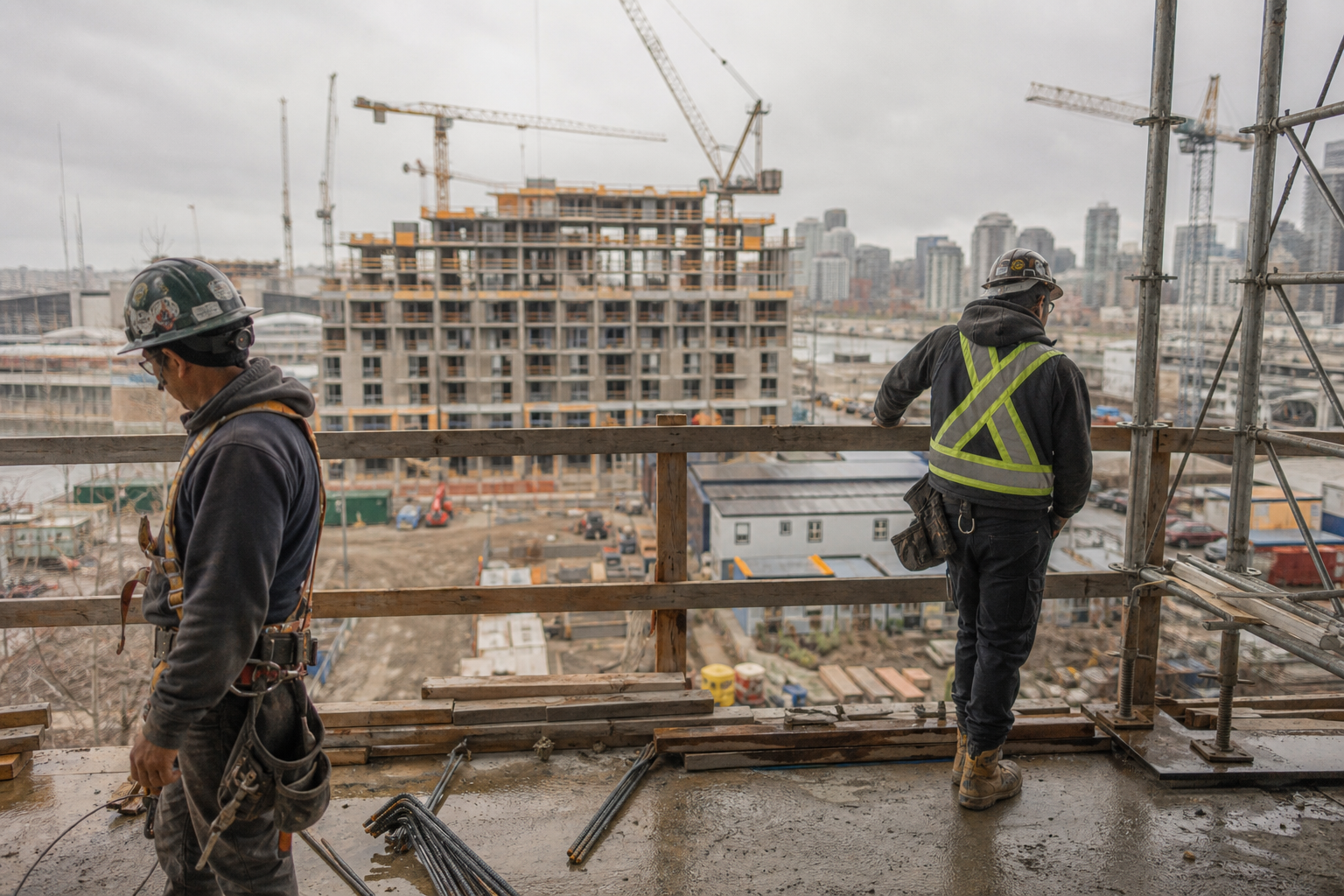
That marginal progress arrived at an awkward moment. Housing starts are projected to flatten or decline in several major markets through 2027, constrained by elevated financing costs and a skilled labor force that is aging out faster than it is being replaced. For every tradesperson entering the residential sector in Canada, several are reaching retirement. The arithmetic does not close.
Where the Gap Narrowed, and Why
The reduction in the supply gap came from the demand side. When Immigration, Refugees and Citizenship Canada revised its temporary resident projections downward in mid-2025, the housing system inherited roughly 100,000 fewer expected occupants over the planning horizon. Construction did not accelerate to meet demand. Demand was adjusted downward to meet construction.
In high-pressure metros, Toronto, Vancouver, and increasingly Montreal, this shift bought marginal relief. But the structural problem remains unchanged: the rate at which homes are being built is materially slower than the rate required to restore affordability by 2036. Current capacity sits well below the pace needed even after demand revisions.
The Financing and Labor Problem
Interest rates have stabilized in 2026, but they remain high relative to the prior decade. Developer margins are compressed. A project that penciled at 2.5% in 2021 now requires 5% or higher to justify the risk, and the math pushes many builds into the "wait and see" column. The federal removal of GST on new purpose-built rentals created an incentive, but it has not been enough to offset the cost of capital.
Labor is the deeper constraint. In the Greater Toronto Area, the timeline from permit application to occupancy for mid-rise and high-rise projects averages six to nine years. Much of that duration is regulatory, but a significant portion is driven by workforce bottlenecks. Concrete finishers, electricians, and plumbers are in short supply, and training programs are not keeping pace with attrition. This shortage means that even when a project clears municipal approvals, construction slows.
Water, Sewage, and Power
Building 4.69 million homes assumes the underlying systems can handle them. Several provinces are reporting that water, sewage, and electrical grid capacity are already stretched. In some municipalities, developers face delayed approvals because water mains, sewer lines, and substations do not exist. Expanding water treatment plants and substations takes years and significant capital. Secondary markets have land available but lack the water, power, and sewage lines needed to support new housing, and this shortage is becoming a binding constraint.
The Economic Catch-22
The policy goal is to restore affordability, which implies stabilizing or reducing prices. But falling prices discourage new construction by eroding developer returns. If prices drop 10%, projects at the margin become unviable, and starts decline. The system requires prices to soften to make homes accessible while simultaneously requiring prices to stay firm enough to justify building them. This tension has no clean resolution and explains much of the policy incoherence at the federal and provincial levels.
The 2036 target remains official policy. Whether the country can build its way there depends on how quickly construction crews can be trained, water treatment plants and substations can be funded, and financing conditions can stabilize. The demand side has been adjusted. The supply side has not caught up.



The federal housing agency's latest figures show the national shortfall dropped by roughly 100,000 units in 2025, driven almost entirely by Ottawa's decision to trim temporary resident targets rather than any surge in building. The Canada Mortgage and Housing Corporation now pegs the deficit at 4.69 million homes by 2036 if the country is to return to 2004-level affordability, a year when the median household could buy a home without spending more than 30% of gross income on shelter.
That marginal progress arrived at an awkward moment. Housing starts are projected to flatten or decline in several major markets through 2027, constrained by elevated financing costs and a skilled labor force that is aging out faster than it is being replaced. For every tradesperson entering the residential sector in Canada, several are reaching retirement. The arithmetic does not close.
Where the Gap Narrowed, and Why
The reduction in the supply gap came from the demand side. When Immigration, Refugees and Citizenship Canada revised its temporary resident projections downward in mid-2025, the housing system inherited roughly 100,000 fewer expected occupants over the planning horizon. Construction did not accelerate to meet demand. Demand was adjusted downward to meet construction.
In high-pressure metros, Toronto, Vancouver, and increasingly Montreal, this shift bought marginal relief. But the structural problem remains unchanged: the rate at which homes are being built is materially slower than the rate required to restore affordability by 2036. Current capacity sits well below the pace needed even after demand revisions.
The Financing and Labor Problem
Interest rates have stabilized in 2026, but they remain high relative to the prior decade. Developer margins are compressed. A project that penciled at 2.5% in 2021 now requires 5% or higher to justify the risk, and the math pushes many builds into the "wait and see" column. The federal removal of GST on new purpose-built rentals created an incentive, but it has not been enough to offset the cost of capital.
Labor is the deeper constraint. In the Greater Toronto Area, the timeline from permit application to occupancy for mid-rise and high-rise projects averages six to nine years. Much of that duration is regulatory, but a significant portion is driven by workforce bottlenecks. Concrete finishers, electricians, and plumbers are in short supply, and training programs are not keeping pace with attrition. This shortage means that even when a project clears municipal approvals, construction slows.
Water, Sewage, and Power
Building 4.69 million homes assumes the underlying systems can handle them. Several provinces are reporting that water, sewage, and electrical grid capacity are already stretched. In some municipalities, developers face delayed approvals because water mains, sewer lines, and substations do not exist. Expanding water treatment plants and substations takes years and significant capital. Secondary markets have land available but lack the water, power, and sewage lines needed to support new housing, and this shortage is becoming a binding constraint.
The Economic Catch-22
The policy goal is to restore affordability, which implies stabilizing or reducing prices. But falling prices discourage new construction by eroding developer returns. If prices drop 10%, projects at the margin become unviable, and starts decline. The system requires prices to soften to make homes accessible while simultaneously requiring prices to stay firm enough to justify building them. This tension has no clean resolution and explains much of the policy incoherence at the federal and provincial levels.
The 2036 target remains official policy. Whether the country can build its way there depends on how quickly construction crews can be trained, water treatment plants and substations can be funded, and financing conditions can stabilize. The demand side has been adjusted. The supply side has not caught up.
Read Next
Three CREA Downgrades in One Year Should Retire the 'Temporary Dip' Theory
Mortgage-Free in Retirement? The 4 Costs Your Home Still Charges You
Higher Rates, Softer Hiring: What 2026's Housing Shift Means for Your Equity
The Toronto Penthouse Premium: What Holds Value and What Is Just Status