Independent writing on tax-smart planning, mortgage strategy, and retirement building. For Canadian professionals who want the whole picture, not just a piece of it.
A Paddler Killed a Polar Bear in Self-Defense: What Manitoba's Investigation Will Actually Examine
A conservation officer in Churchill received the call late Friday afternoon. A recreational paddler, somewhere along the Hudson Bay coast, had just fired a rifle at a polar bear. The bear was dead. The paddler was reporting it voluntarily, as required under the Wildlife Act, and would surrender the pelt and skull. What happened between the moment the bear appeared and the moment the trigger was pulled is now the subject of a formal investigation by Manitoba Sustainable Development.
The legal standard is narrow. You can kill a polar bear in Manitoba if, and only if, there was an immediate threat to your life. Not a possible threat. Not a bear that looked aggressive from a distance. Immediate. The conservation officers handling this case will reconstruct the scene with that threshold in mind.
What the Investigation Will Measure
The first question is distance. How far was the paddler from the bear when the shot was fired? A bear fifty metres away moving toward you is different from a bear five metres away. The officers will look at the campsite layout, the angle of approach, and whether the paddler had time to deploy a deterrent. Bear spray, if carried, has an effective range of about six metres in calm conditions. On the Hudson Bay coast in August, the wind can render it useless. Firearms are the fallback, but using one means proving you had no other option.
The second question is behaviour. Was the bear stalking, or was it passing through? Polar bears in the Churchill region during the ice-free season are in a state of walking hibernation. They conserve energy. A bear that investigates a campsite out of curiosity is not the same as one that returns repeatedly or shows predatory intent. The paddler's account will be checked against physical evidence: tracks, the bear's stomach contents, and the position of the body relative to the camp.
The Legal Framework Is Unforgiving
Killing a polar bear without a defence claim is a federal offence under the Species at Risk Act. Even with a defence claim, the burden of proof sits with the shooter. Manitoba conservation officers are required to investigate every human-caused polar bear death, and they apply that standard without assuming good faith. The Western Hudson Bay subpopulation, according to the most recent 2021 aerial survey, is estimated at approximately 618 bears. The province treats each case as precedent.
Indigenous communities in the region hold constitutionally protected harvesting rights under strict quota systems. Recreational travellers are exercising a statutory exception that the province will evaluate on a case-by-case basis.
What This Incident Signals
The ice-free season in Hudson Bay has lengthened by roughly one day per year since the late 1970s. Bears are spending more time on land, and more of that time overlaps with the short summer window when paddlers, researchers, and tourists move through the coast. The town of Churchill manages encounters through the Polar Bear Alert Program and a holding facility that relocates problem animals. A paddler twenty kilometres up the coast has none of the trained staff, the holding pen, or the radio network.
Adventure tourism in the North is increasing. The routes are remote, the risks are non-theoretical, and the expectation that travelers will handle a close bear encounter correctly, under pressure, with the right tool, at the right moment, is optimistic. This investigation will determine whether one paddler met that standard. The larger question is whether the standard itself still makes sense when the conditions that shaped it no longer hold.
The paddler is cooperating. The rifle has been turned over. The officers are working the scene. In six to eight weeks, Manitoba will release a determination. If the evidence supports the claim, the case closes. If it does not, charges follow.


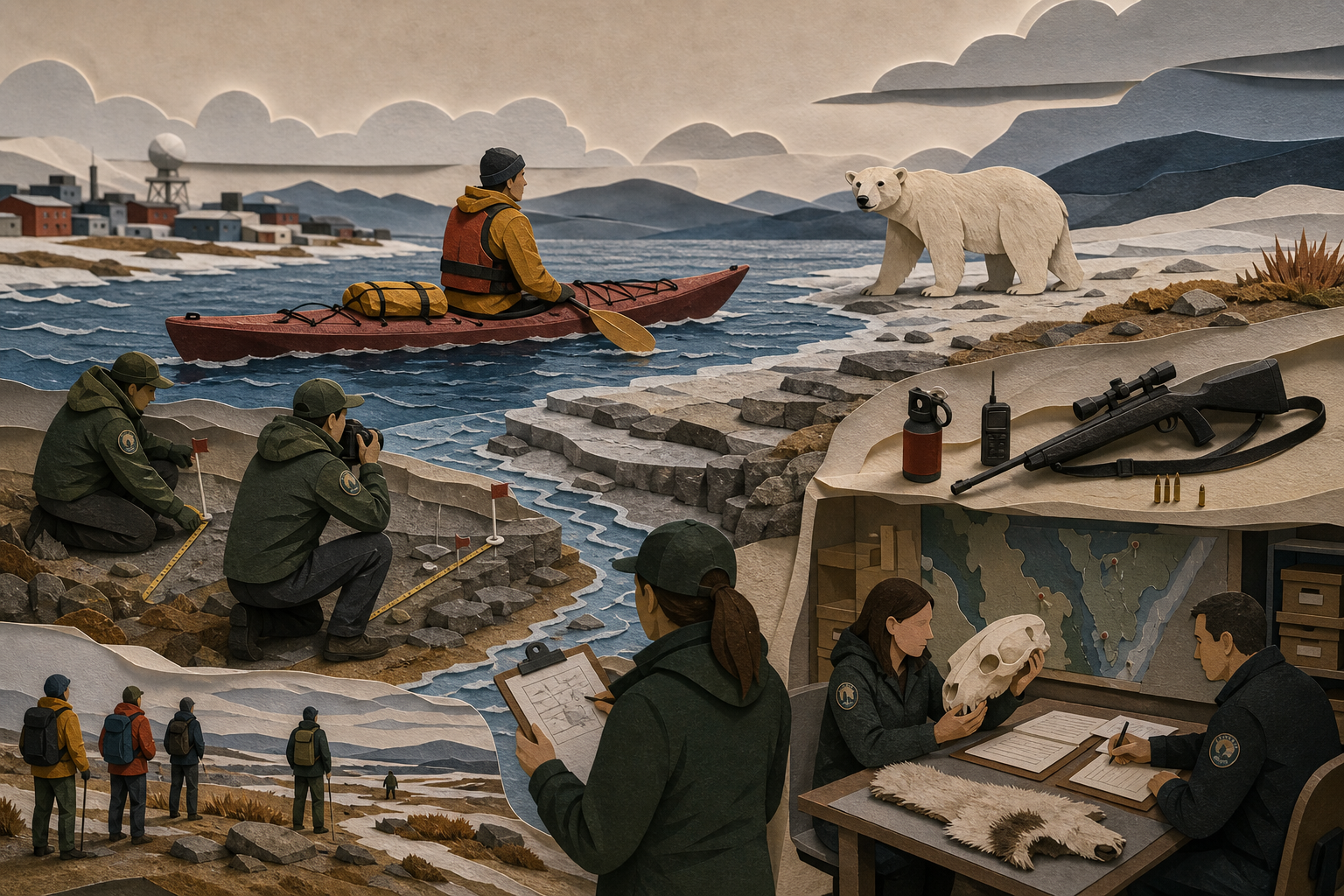

A conservation officer in Churchill received the call late Friday afternoon. A recreational paddler, somewhere along the Hudson Bay coast, had just fired a rifle at a polar bear. The bear was dead. The paddler was reporting it voluntarily, as required under the Wildlife Act, and would surrender the pelt and skull. What happened between the moment the bear appeared and the moment the trigger was pulled is now the subject of a formal investigation by Manitoba Sustainable Development.
The legal standard is narrow. You can kill a polar bear in Manitoba if, and only if, there was an immediate threat to your life. Not a possible threat. Not a bear that looked aggressive from a distance. Immediate. The conservation officers handling this case will reconstruct the scene with that threshold in mind.
What the Investigation Will Measure
The first question is distance. How far was the paddler from the bear when the shot was fired? A bear fifty metres away moving toward you is different from a bear five metres away. The officers will look at the campsite layout, the angle of approach, and whether the paddler had time to deploy a deterrent. Bear spray, if carried, has an effective range of about six metres in calm conditions. On the Hudson Bay coast in August, the wind can render it useless. Firearms are the fallback, but using one means proving you had no other option.
The second question is behaviour. Was the bear stalking, or was it passing through? Polar bears in the Churchill region during the ice-free season are in a state of walking hibernation. They conserve energy. A bear that investigates a campsite out of curiosity is not the same as one that returns repeatedly or shows predatory intent. The paddler's account will be checked against physical evidence: tracks, the bear's stomach contents, and the position of the body relative to the camp.
The Legal Framework Is Unforgiving
Killing a polar bear without a defence claim is a federal offence under the Species at Risk Act. Even with a defence claim, the burden of proof sits with the shooter. Manitoba conservation officers are required to investigate every human-caused polar bear death, and they apply that standard without assuming good faith. The Western Hudson Bay subpopulation, according to the most recent 2021 aerial survey, is estimated at approximately 618 bears. The province treats each case as precedent.
Indigenous communities in the region hold constitutionally protected harvesting rights under strict quota systems. Recreational travellers are exercising a statutory exception that the province will evaluate on a case-by-case basis.
What This Incident Signals
The ice-free season in Hudson Bay has lengthened by roughly one day per year since the late 1970s. Bears are spending more time on land, and more of that time overlaps with the short summer window when paddlers, researchers, and tourists move through the coast. The town of Churchill manages encounters through the Polar Bear Alert Program and a holding facility that relocates problem animals. A paddler twenty kilometres up the coast has none of the trained staff, the holding pen, or the radio network.
Adventure tourism in the North is increasing. The routes are remote, the risks are non-theoretical, and the expectation that travelers will handle a close bear encounter correctly, under pressure, with the right tool, at the right moment, is optimistic. This investigation will determine whether one paddler met that standard. The larger question is whether the standard itself still makes sense when the conditions that shaped it no longer hold.
The paddler is cooperating. The rifle has been turned over. The officers are working the scene. In six to eight weeks, Manitoba will release a determination. If the evidence supports the claim, the case closes. If it does not, charges follow.
Sources
Read Next
The 2027 Housing Recovery in Canada Runs Through Business Investment
A Small Cut to 0.9% Growth Points to Canada's Longer Problem
Ottawa Already Holds the Income Data That Could Curb Mortgage Fraud
Ferries, Septic and Storm Insurance: What a Vancouver Island Cottage Really Costs Yearly